Violin Fingering Chart
A clear first-position violin chart for young beginners, parents, private teachers, and school orchestra directors. Help students learn where each finger goes on the G, D, A, and E strings.
First-position notes at a glance
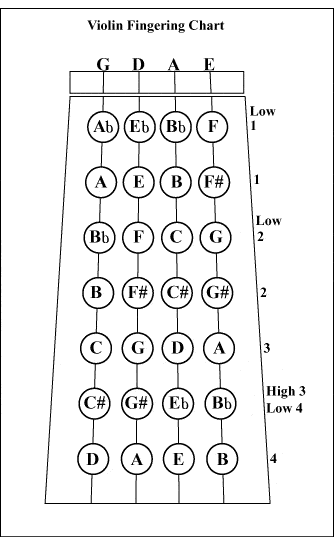
Use this as a quick reference during lessons, home practice, and beginning orchestra class.
A simple visual guide for new violin students
Learning finger placement is one of the first big steps for a beginning violinist. This chart makes the notes easier to see, name, and practice.
Clear note locations
Students can see where the fingers go in first position and how each finger creates a new pitch on the violin fingerboard.
Great for home practice
Parents can use the chart to guide short practice sessions, quiz note names, or help children find notes between lessons.
Teacher-friendly reference
Private teachers and orchestra directors can use the chart as a quick reminder for scales, first songs, and beginning note-reading.
Build confidence with first-position notes
Most beginner violin music is played in first position. The chart shows the notes students commonly need when they are learning simple songs, scales, and the basic building blocks of violin technique.
Each string is clearly labeled so students can connect the open strings with their fingered notes. With regular use, students begin to understand how finger placement changes pitch and how written notes connect to the instrument.
For younger students, try turning the chart into a short game. Point to a finger position and ask the child to name the note, play it, or find the same note in a song from their book.
Quick practice ideas
- Say the note name before playing it.
- Play short patterns on one string at a time.
- Find the notes from a familiar beginner song.
- Practice slowly with a steady bow.
- Use the chart with a beginning violin method book.
Violin Fingering Chart
Use this larger version as an easy-to-read reference during lessons, home practice, and beginning orchestra class.
Keep this chart open while practicing so students can quickly check note names and first-position finger placement without scrolling back to the top of the page.
Practice these notes in real songs
Pair the fingering chart with beginner-friendly violin books, free samples, and related learning pages from Music Fun Books.
Free music downloads
Preview beginning violin materials and other Music Fun Books resources before choosing a complete book.
Browse Free SamplesViolin books for beginners
Explore beginning violin books with large notation, fun songs, and play-along learning support.
Explore Violin BooksFind the right violin size
Before practicing, make sure your child has the correct size violin for comfortable hand position and technique.
View Sizing GuideBooks that match the needs of young violin students
If your student is just starting out, these beginner-friendly Music Fun Books titles can help turn finger placement into real music.
My First Violin Fun Book
A gentle first violin book for younger beginners, with large print, fun activities, and a friendly early-start approach.
View on AmazonThe Violin Fun Book for Young Students
A trusted beginning violin method with fun songs, clear notation, online audio/video support, and a step-by-step path for young players.
Learn MoreViolin fingering chart questions
What is a violin fingering chart?
A violin fingering chart is a diagram that shows where to place your fingers on the violin fingerboard to play specific notes. It helps beginners learn note locations and develop proper technique.
How do you read a violin fingering chart?
Each string is shown with finger positions marked by numbers. The chart shows which finger plays which note, making it easier for beginners to connect note names with finger placement.
Why do beginners use first position on violin?
Most beginner violin music is written in first position because it uses the simplest finger placements. First position allows students to play early scales and songs without shifting their hand.
How can parents use a fingering chart at home?
Parents can use the chart as a practice tool by pointing to notes and asking the student to name or play them. It is also helpful for practicing simple scales and short song patterns.
Should students use tapes on the violin fingerboard?
Many beginners use temporary fingerboard tapes while they are developing their ear and hand position. A fingering chart can reinforce those same note locations away from the instrument.
Use the chart, then make music with beginner violin songs.
Start with the first-position fingering chart, preview free samples, and explore Music Fun Books violin titles designed for children, parents, teachers, and beginning orchestra programs.