Music Fun Books Instrument Guide
Beginner’s Guide to the Violin
Help a young musician choose the correct violin size, begin with healthy posture and technique, and develop confident practice and care habits.
The correct violin size allows relaxed arms, curved fingers, and comfortable bow movement.
Renting from a string specialist makes size changes and proper setup easier.
A teacher-approved setup, shoulder support, and bow hold prevent avoidable frustration.
Meet the instrument
Why children enjoy the violin
The violin is expressive, portable, and central to orchestras, chamber music, folk traditions, film music, and many popular styles. Children can begin with plucked strings before adding the bow.
How the sound begins
The strings can be plucked with a finger, called pizzicato, or set in motion with the bow. The left hand changes pitch by placing fingers accurately on the strings.
Why setup matters
Bridge position, string height, pegs, fine tuners, bow condition, chin rest, and shoulder support all affect comfort and response. A well-set-up student violin is easier to learn on.
Helpful expectation: Early violin playing involves several new skills at once. Clear posture, short practice periods, and patient repetition matter more than rushing into difficult songs.
Before beginning
Is your child ready for violin?
Age matters less than physical fit, interest, and access to instruction. These four checks are more useful than choosing by grade level alone.
Correct instrument size
The child should reach the scroll and fingerboard without locking the elbow or stretching.
Balanced posture
The violin should rest securely without being squeezed between the chin and shoulder.
Fine-motor patience
Small finger and bow adjustments are part of every early lesson.
Willingness to listen
Students learn pitch and tone by comparing what they play with a teacher or model.
Choosing an instrument
Renting, buying, sizing, and setup
Young violinists often move through several fractional sizes. Fit and professional setup are more important than decorative appearance.
Renting may be best when…
- The child still needs a fractional-size violin.
- The rental plan allows size exchanges.
- Maintenance and repairs are included.
- The family wants expert setup from the start.
Buying may make sense when…
- The student is committed and the teacher approves.
- The violin is the correct current size.
- A string specialist checks the setup and condition.
- The seller provides service and a return policy.
What the setup should include
- A bow in safe playing condition
- Rosin appropriate for the bow
- A chin rest and suitable shoulder support
- Fine tuners that move smoothly
- A protective case and soft cleaning cloth
What to inspect
- The bridge stands straight and is not warped.
- Pegs and fine tuners hold pitch.
- Strings are not frayed or deeply worn.
- The bow hair has usable tension.
- The instrument has no open seams or major cracks.
Popular free references
Three essential violin guides
Use these Music Fun Books guides to answer three of the most common questions families have before and during the first lessons.
Before renting or buying
Find the right violin size
Use arm length—not age alone—to estimate the correct fractional violin size before renting or buying. A teacher or string shop should confirm the final fit.
- Compare arm length with common fractional sizes.
- Choose the smaller size when a child is between sizes.
- Have a teacher or string shop confirm the fit.
For lessons and home practice
Learn first-position finger placement
Use the fingering chart to see first-position notes on the G, D, A, and E strings and connect finger numbers with note names and pitch.
- Practice one string at a time.
- Say each note name before playing it.
- Find the same notes in a familiar beginner song.
Before practice and lessons
How to Tune the Violin
Learn how to tune the open G, D, A, and E strings safely using a reference pitch, tuning pegs, and fine tuners.
- Start with concert A at 440 Hz.
- Tune the remaining strings in perfect fifths.
- Make small peg and fine-tuner adjustments.
First lessons
How beginners get started
Good instruction separates the first skills into manageable steps before asking the student to read or perform a complete song.
Learn safe handling and posture
Hold the violin by the neck, support the body carefully, and establish relaxed standing or sitting posture.
Set the violin comfortably
Use the chin rest and teacher-approved shoulder support so the instrument feels balanced.
Begin with open strings and pizzicato
Pluck clear rhythms before asking the left hand and bow to work together.
Build a relaxed bow hold
Shape the fingers naturally and learn straight, controlled bow movement on open strings.
Add left-hand notes and songs
Place fingers carefully, listen for pitch, and combine a few notes into short familiar melodies.
How to Play the Violin: Video Lessons
Select any lesson below. The player changes while the Music Fun Books page address stays the same.
After every practice
Simple violin care
A violin is light and responsive, but its bridge, bow, finish, and wooden body can be damaged by pressure, heat, moisture, or careless handling.
Do after playing
- Loosen the bow hair before storing it.
- Wipe rosin dust from the strings and instrument with a soft dry cloth.
- Return the violin and bow to their fitted places.
- Close and latch or zip the case.
- Ask a teacher to check bridge position and string condition regularly.
Avoid
- Touching the bow hair
- Using furniture polish, alcohol, or household cleaners
- Leaving the violin in a hot or cold car
- Adjusting the bridge or sound post at home
- Placing books or objects on top of the case
If a string breaks or a peg slips: Ask the teacher or string shop for help. Changing several strings at once or moving the bridge carelessly can create additional problems.
Common questions
Violin FAQs for families
What size violin does a child need?
Violin size depends on arm length, hand reach, and posture, not age alone. A teacher or string specialist should measure and observe the child.
Should a beginner rent or buy?
Renting is often practical while a child is growing because reputable plans allow exchanges and include professional setup.
Can a child start without using the bow?
Yes. Pizzicato helps beginners learn posture, rhythm, open strings, and left-hand notes before adding bow technique.
How much rosin should go on the bow?
Use only enough for the bow to grip the string. Too much creates dust and a scratchy response; a teacher can demonstrate the right amount.
How long should a beginner practice?
Short, regular sessions are usually best. Several focused minutes with good posture are more useful than a long session built on tension.
Does a violin need professional maintenance?
Yes. Open seams, bridge problems, worn strings, slipping pegs, and bow damage should be handled by a string specialist.
Continue learning
Three useful books for beginning violin
These choices provide a clear starting path while the complete violin collection offers additional methods and repertoire.
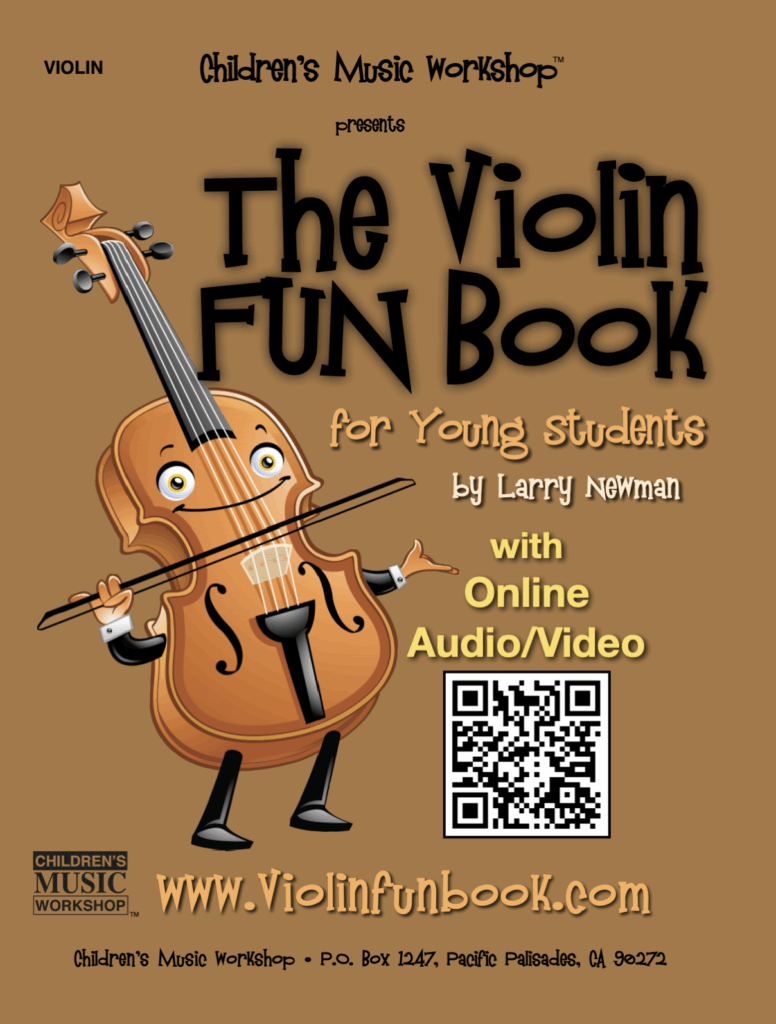
The Violin Fun Book for Young Students
A step-by-step first method with extra-large notation, free video lessons, and play-along tracks.
Learn more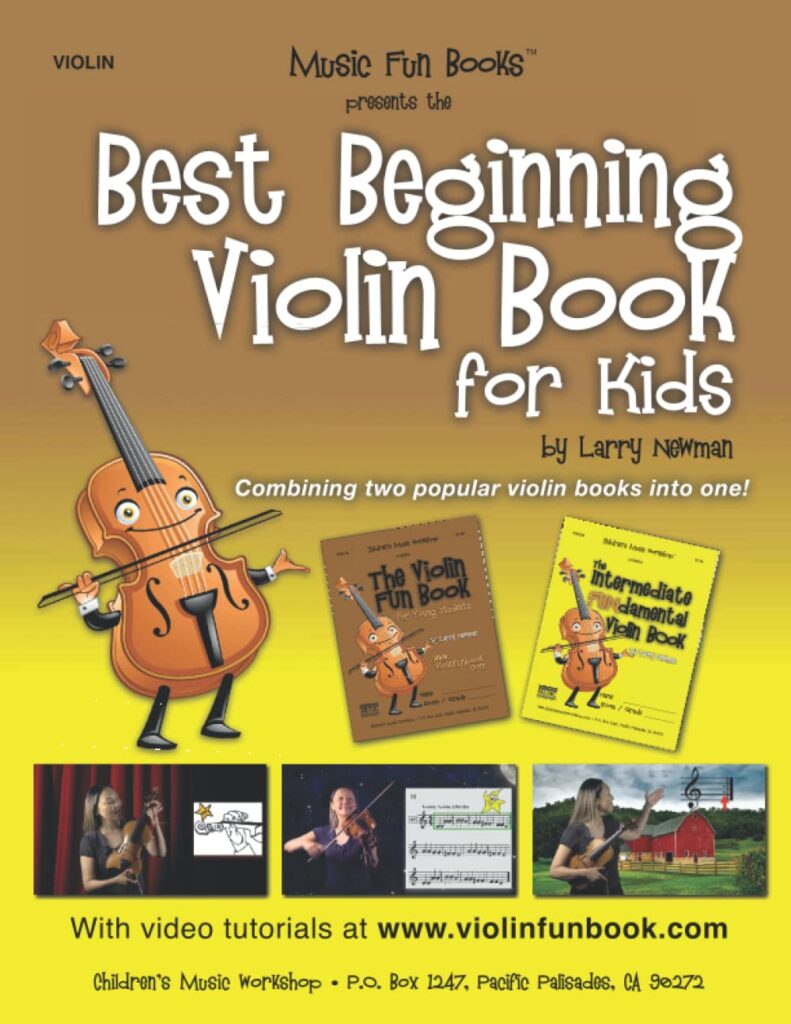
Best Beginning Violin Book for Kids
An expanded child-friendly method with clear visuals, simple songs, and gradual skill development.
Learn more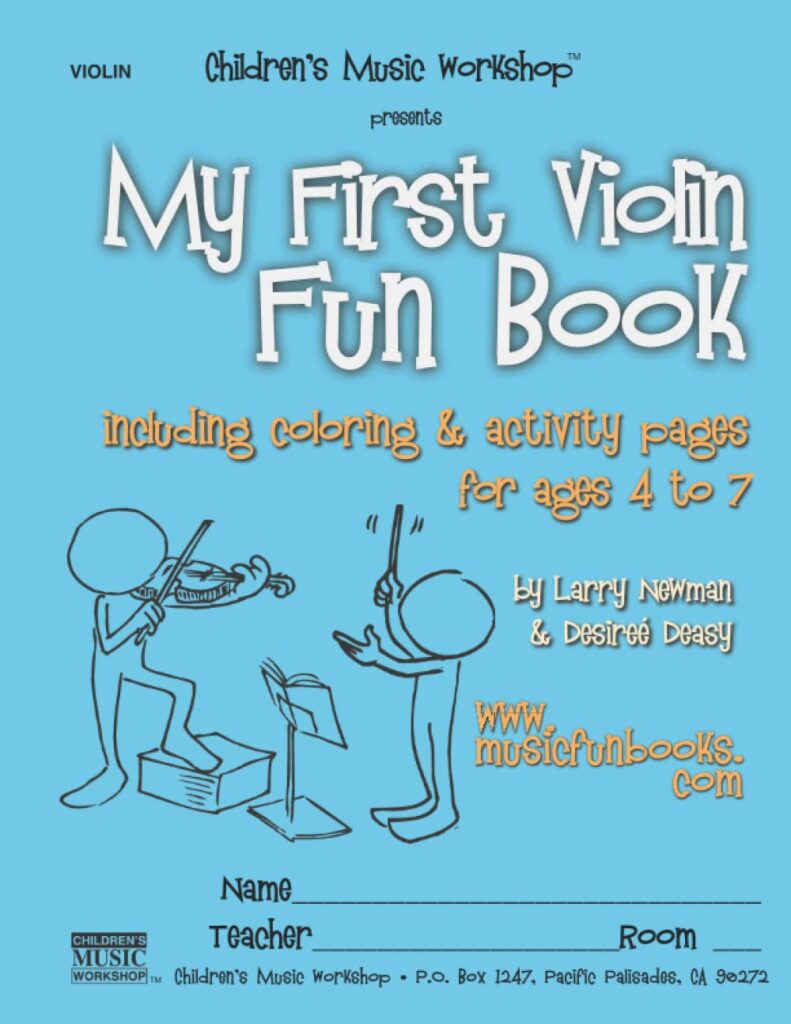
My First Violin Fun Book
A gentle introduction created especially for very young beginners who need large notes and small steps.
Learn moreBrowse all violin books
Explore beginner and intermediate methods, reading books, solos, duets, trios, classical music, and seasonal collections.
Visit Violin BooksUse the free practice support
Continue with Music Fun Books video, audio, or play-along resources created for beginning violin students.
Open Violin Lessons and MP3s