Music Fun Books Instrument Guide
Beginner’s Guide to the Trombone
Help a young musician decide whether trombone is a comfortable fit, choose a dependable instrument, learn the first slide skills, and build safe care habits.
The student must hold the instrument securely and reach the needed slide positions without strain.
A standard student tenor trombone is the usual school-band choice.
Protect the hand slide. Even a small dent can keep it from moving freely.
Meet the instrument
Why children enjoy the trombone
The trombone has a warm, powerful sound and a slide that makes it visually and physically engaging. It is heard in concert bands, orchestras, jazz ensembles, marching bands, and popular music.
How the sound begins
The player buzzes the lips into the mouthpiece while sending a steady stream of air through the instrument. The slide changes the length of the tubing and therefore changes the pitch.
Standard or smaller model?
Most school programs use a standard tenor trombone. A smaller student may benefit from a teacher-approved compact or short-reach model, but the teacher should confirm that it fits the program.
Helpful expectation: Accurate slide placement develops through listening and repetition. Beginners will not place every note perfectly at first, and that is a normal part of learning trombone.
Before beginning
Is your child ready for trombone?
Age matters less than physical fit, interest, and access to instruction. These four checks are more useful than choosing by grade level alone.
Secure left-hand grip
The child should support the instrument without squeezing or twisting the wrist.
Comfortable slide reach
The right arm should move the slide smoothly without leaning or losing posture.
Healthy front teeth
Loose front teeth or active dental work can make mouthpiece placement uncomfortable.
Careful movement
The student must understand that the long, delicate slide cannot be bumped or used as a toy.
Choosing an instrument
Renting, buying, and checking the slide
A reliable student trombone with a smooth hand slide is more useful than an inexpensive instrument that needs constant repair.
Renting may be best when…
- The child is trying trombone for the first time.
- The school has an approved rental program.
- Repairs or exchanges are included.
- The family wants time to confirm the fit.
Buying may make sense when…
- The student is committed.
- The teacher approves the model.
- A repair technician can inspect a used instrument.
- The seller provides service and a return policy.
What the setup should include
- A properly fitting mouthpiece
- Slide lubricant recommended by the teacher
- Tuning-slide grease
- A soft finish-safe cloth
- A sturdy fitted case
What to inspect
- The hand slide moves quietly and freely.
- The inner slide tubes are straight and undamaged.
- The bell section joins securely.
- The mouthpiece shank has no dents.
- The case holds both sections firmly.
A trusted choice for students
Considering Buying a Trombone? Look for a Recognized Brand
For a beginning trombone player, instrument quality matters. A dependable trombone should have a smooth, straight hand slide, secure braces and joints, solid construction, and ready access to service and replacement parts. A poorly made instrument can develop drag, alignment problems, air leaks, and other mechanical issues that make learning harder than it needs to be.
Why I recommend considering Yamaha: Yamaha is a long-established maker of student and professional musical instruments. Its student trombones are widely respected for consistent manufacturing, smooth slide action, durable construction, reliable response, and strong support from music stores and repair technicians. For a young beginner, that reliability is especially important: when the trombone works properly, the student can concentrate on breathing, buzzing, slide positions, rhythm, and reading instead of fighting equipment problems.

Shop Yamaha Trombones on Amazon
A standard student tenor trombone is the usual choice for school band. Compare the exact Yamaha model, seller, included mouthpiece and accessories, and return policy before purchasing, and ask the student’s music teacher or band director for guidance when possible.
View Yamaha Trombones on AmazonFirst lessons
How beginners get started
Good instruction separates the first skills into manageable steps before asking the student to read or perform a complete song.
Learn the parts and safe handling
Identify the bell section, hand slide, slide lock, tuning slide, mouthpiece, and water key before assembling.
Assemble with the slide locked
Join the bell and slide sections without forcing them, then tighten the connector only until secure.
Create a relaxed buzz
Use steady air and a natural lip vibration without excessive mouthpiece pressure.
Learn first slide positions
Move from the shoulder and elbow while keeping the wrist relaxed and the slide parallel.
Coordinate tonguing, air, and pitch
Begin notes with a light tongue stroke, listen carefully, and use short songs to reinforce accurate positions.
Free beginning band practice support: The Beginning Band Fun Book support page includes audio tracks and instrument videos that help students practice the same early skills at home. Open Band Practice Support.
After every practice
Simple trombone care
The hand slide is the trombone’s most delicate working part. Clean handling and teacher-approved lubrication protect its alignment and movement.
Do regularly
- Lock the slide whenever the instrument is not being played.
- Empty moisture through the water key.
- Wipe fingerprints with a soft cloth.
- Use only the slide lubricant recommended by the teacher.
- Return both sections to their fitted case.
Avoid
- Touching the exposed inner slide tubes
- Using household oil or petroleum jelly
- Trying to straighten or pull a stuck slide
- Standing the instrument on its bell
- Leaving music or loose objects inside the case
If the slide slows down: Do not force it. Ask the teacher whether it needs proper cleaning or lubrication. Dents and alignment problems require a repair technician.
Common questions
Trombone FAQs for families
Is trombone too large for a young child?
It depends on arm reach, hand strength, and posture. A teacher should check the fit and may recommend a compact model for a smaller student.
Does a beginner need an F-attachment trombone?
Usually not. A standard student tenor trombone is simpler, lighter, and appropriate for most beginning school programs.
Why does the first sound feel difficult?
The student is coordinating air, lip vibration, mouthpiece placement, and posture. Short guided attempts are more productive than pressing harder.
How does a child learn exact slide positions?
A teacher provides visual landmarks, but listening is essential because positions vary slightly by note and instrument.
How long should a beginner practice?
Short, regular sessions are best while the embouchure and arm coordination develop. Stop before fatigue causes poor posture or tone.
When does a trombone need professional repair?
Seek help for a dented or noisy hand slide, stuck mouthpiece, loose braces, damaged water key, or tuning slide that will not move.
Continue learning
Three useful books for beginning trombone
These choices provide a clear starting path while the complete trombone collection offers additional methods and repertoire.
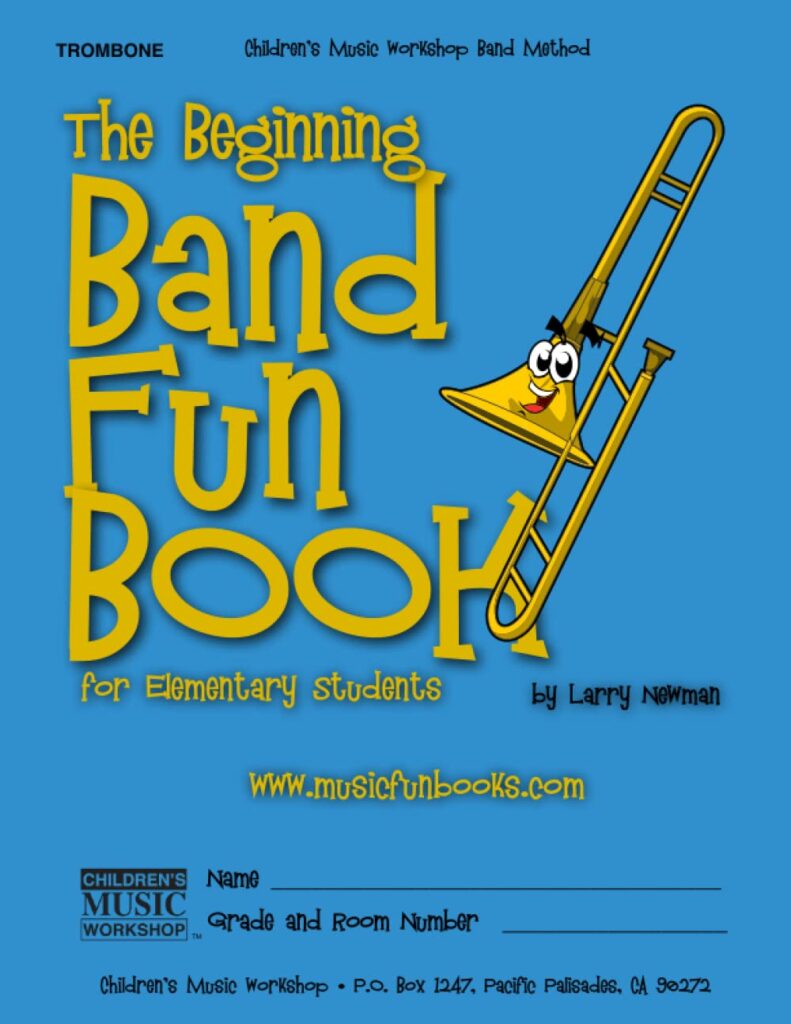
The Beginning Band Fun Book for Trombone
A first school-band method with large notation, slide-position help, simple songs, and online support.
Learn more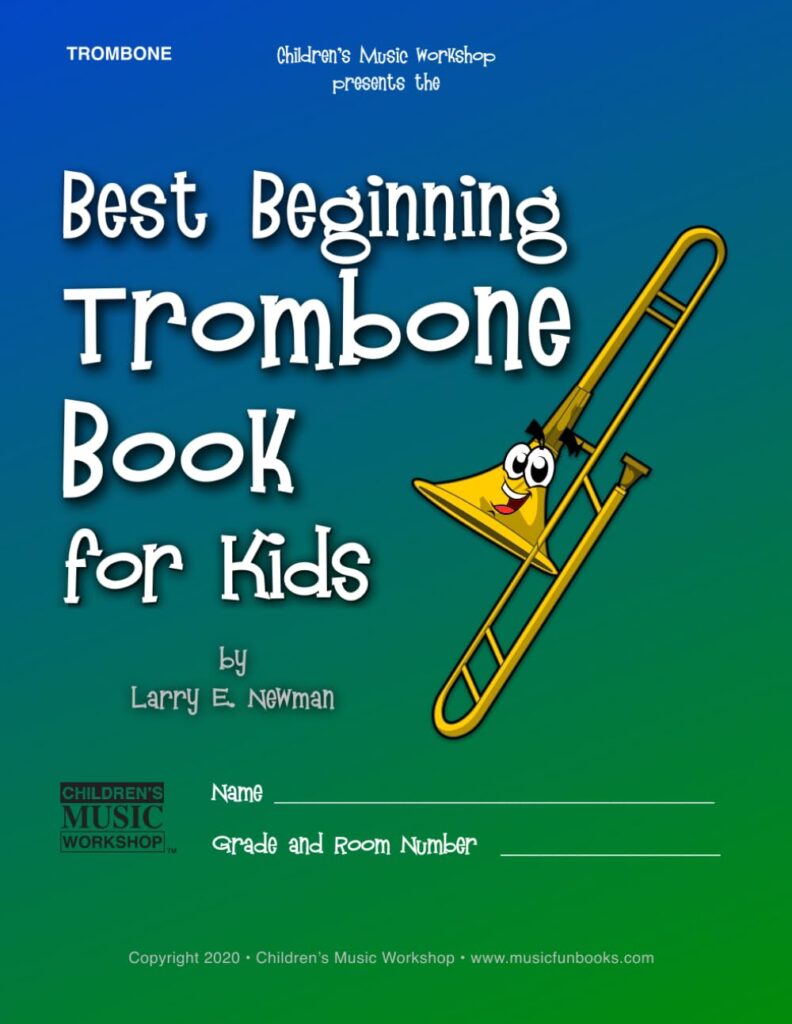
Best Beginning Trombone Book for Kids
A child-friendly method with clear instruction, graded exercises, and music for growing players.
Learn more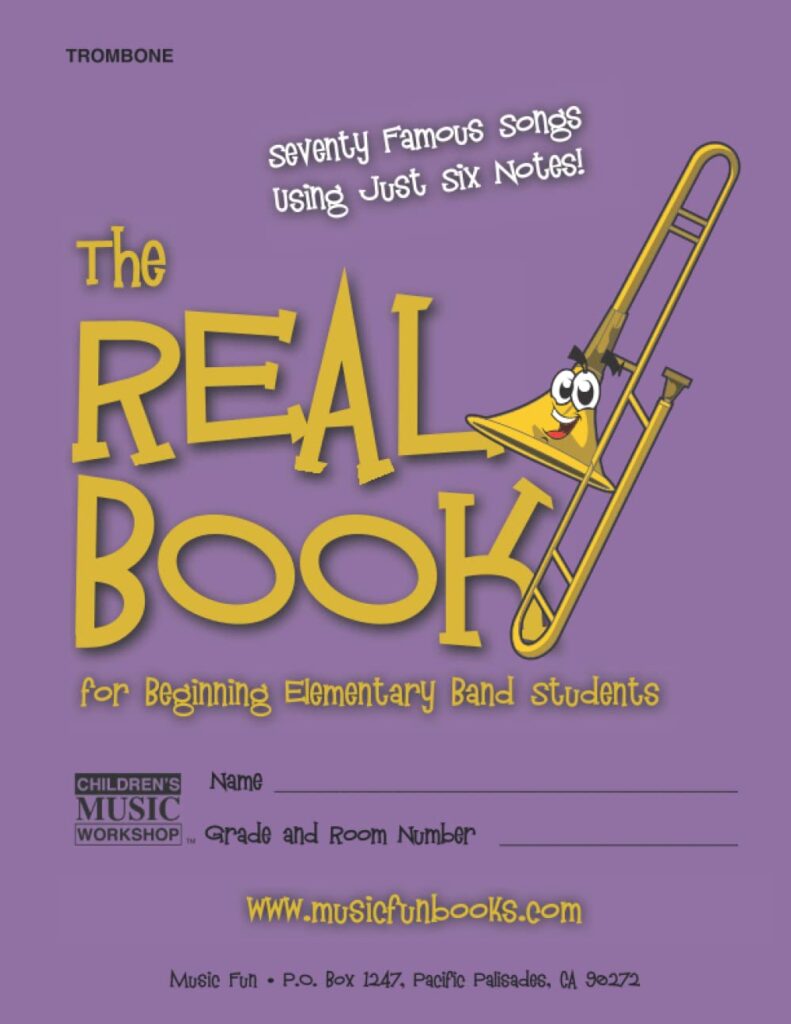
The Real Book for Beginning Elementary Band Students
Seventy familiar songs in a limited six-note range strengthen slide-position and reading confidence.
Learn moreBrowse all trombone books
Explore beginner methods, solos, duets, trios, classical music, and seasonal collections for trombone.
Visit Trombone BooksCompare another instrument
Return to the complete collection of beginner instrument guides for children, parents, and teachers.
View All Instrument Guides