Music Fun Books Instrument Guide
Beginner’s Guide to the Guitar
Help a young musician choose a comfortable guitar, begin with healthy posture and tuning, learn the first chords and notes, and care for the instrument.
The body, neck, and scale length should let the child reach the strings without shoulder or wrist strain.
Many young beginners find a teacher-approved nylon-string guitar comfortable.
A professional setup can make an affordable guitar easier to press, tune, and play.
Meet the instrument
Why children enjoy the guitar
Guitar lets beginners accompany songs with chords, play melodies one note at a time, and explore classical, folk, rock, jazz, country, and many other styles.
How the sound begins
The player plucks or strums the strings. Pressing a string behind a fret shortens the vibrating length and changes the pitch.
Acoustic, classical, or electric?
Nylon-string classical guitars are often comfortable for children. Steel-string acoustics have a brighter feel, while electric guitars require an amplifier but may use lighter strings. The teacher should match the instrument to the student and musical goals.
Helpful expectation: Tender fingertips are common at first, but sharp pain, numbness, or strong wrist strain is not. A good setup and short practice sessions help the hands adapt safely.
Before beginning
Is your child ready for guitar?
Age matters less than physical fit, interest, and access to instruction. These four checks are more useful than choosing by grade level alone.
Comfortable body size
The child should reach around the guitar without lifting the shoulder or twisting.
Relaxed fretting wrist
The hand should reach the first frets without a sharply bent wrist.
Enough finger control
The student should press one string at a time and release without excessive squeezing.
Interest in regular tuning
Guitar practice begins with checking pitch and learning to listen.
Choosing an instrument
Choosing size, strings, and a playable setup
A correctly sized, properly adjusted guitar is easier to play than a larger or more expensive instrument with high strings and poor tuning.
A smaller guitar may help when…
- The full-size body pushes the right shoulder upward.
- The first frets are difficult to reach.
- The child cannot balance the instrument securely.
- A teacher recommends a shorter scale length.
A full-size guitar may fit when…
- The student reaches the first fret comfortably.
- Both shoulders remain level.
- The body feels balanced while seated.
- The teacher confirms the neck and scale are manageable.
What the setup should include
- A clip-on or electronic tuner
- Teacher-approved strings
- A stable chair and optional foot support
- Picks if the method uses them
- A protective case or padded bag
What to inspect
- Strings are not excessively high above the frets.
- Tuning machines turn smoothly and hold pitch.
- Frets do not have sharp edges.
- The neck appears straight and stable.
- There are no cracks, loose parts, or severe buzzing.
First lessons
How beginners get started
Good instruction separates the first skills into manageable steps before asking the student to read or perform a complete song.
Balance the guitar and posture
Sit securely, keep both shoulders relaxed, and angle the neck so the fretting wrist stays comfortable.
Learn the strings and tune
Use an electronic tuner with adult or teacher help and learn the string names from low to high.
Create clear single notes
Press just behind the fret with the fingertip and pluck without squeezing harder than necessary.
Build the first chords and strums
Place one finger at a time, check each string, and use slow, even strumming patterns.
Combine chords, melody, and songs
Practice short changes and familiar music while keeping a steady beat and relaxed hands.
How to Play the Guitar: Video Lessons
Select any lesson below. The player changes while the Music Fun Books page address stays the same.
After every practice
Simple guitar care
Stable temperature, careful storage, clean strings, and correct string changes help a guitar stay playable and in tune.
Do regularly
- Wipe the strings and instrument with a soft dry cloth.
- Store the guitar in a case or padded bag.
- Use a secure stand only in a safe location.
- Check tuning before practice.
- Ask a teacher or technician about string changes and setup.
Avoid
- Leaving the guitar in a hot or cold car
- Leaning it against a wall or chair
- Using household polish or cleaners
- Forcing tuning machines or loose hardware
- Installing strings not intended for the guitar type
Important string warning: Never put steel strings on a guitar designed only for nylon strings. The additional tension can damage the instrument.
Common questions
Guitar FAQs for families
What size guitar does a child need?
Fit depends on body size, arm reach, hand span, and scale length. A teacher should observe the child with the instrument before purchase.
Are nylon strings easier for beginners?
They often feel gentler on the fingertips, but guitar type, neck width, musical goals, and setup also matter.
Should a beginner start on acoustic or electric guitar?
Either can work. Choose the instrument that fits comfortably, supports the music the student wants to play, and has teacher-approved setup.
Why do chords buzz?
A finger may be too far from the fret, touching another string, or not pressing firmly enough. High string action or uneven frets can also contribute.
How long should a beginner practice?
Short, regular sessions allow the fingertips and hands to adapt. Stop if posture collapses or pain replaces normal mild fatigue.
How often should guitar strings be changed?
It depends on use, string type, and condition. Replace strings when they sound dull, feel rough, corrode, or no longer tune reliably.
Continue learning
Three useful books for beginning guitar
These choices provide a clear starting path while the complete guitar collection offers additional methods and repertoire.
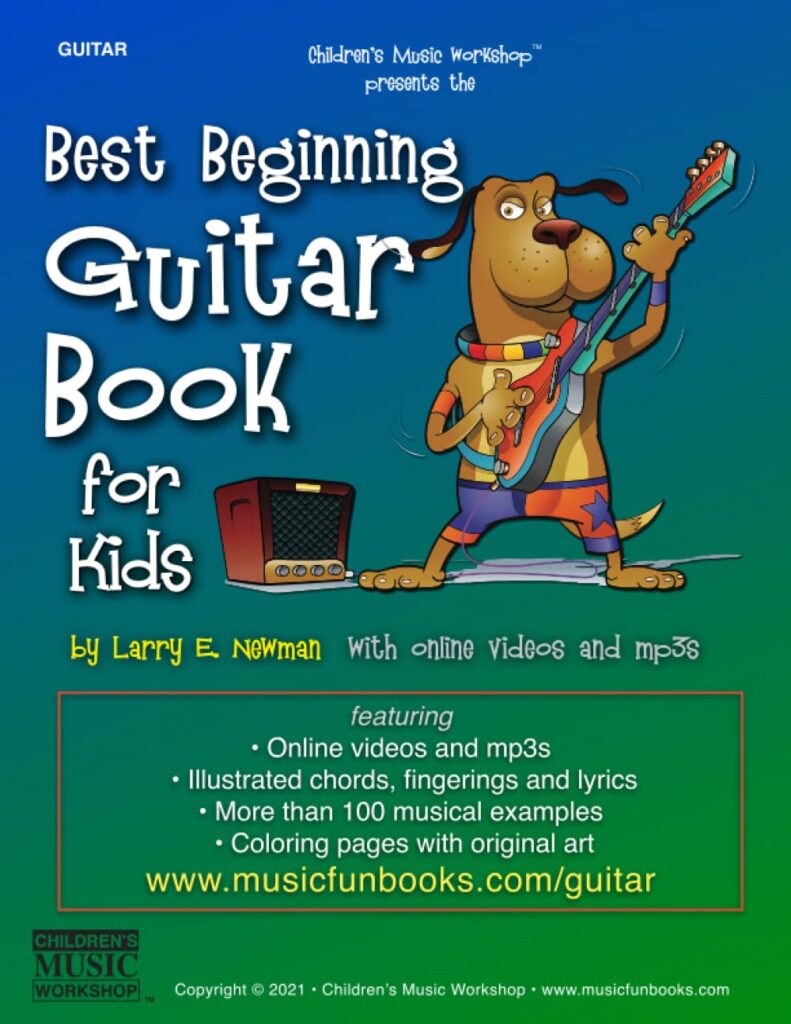
Best Beginning Guitar Book for Kids
A complete step-by-step method with chords, single notes, familiar songs, and free page-by-page video lessons.
Learn more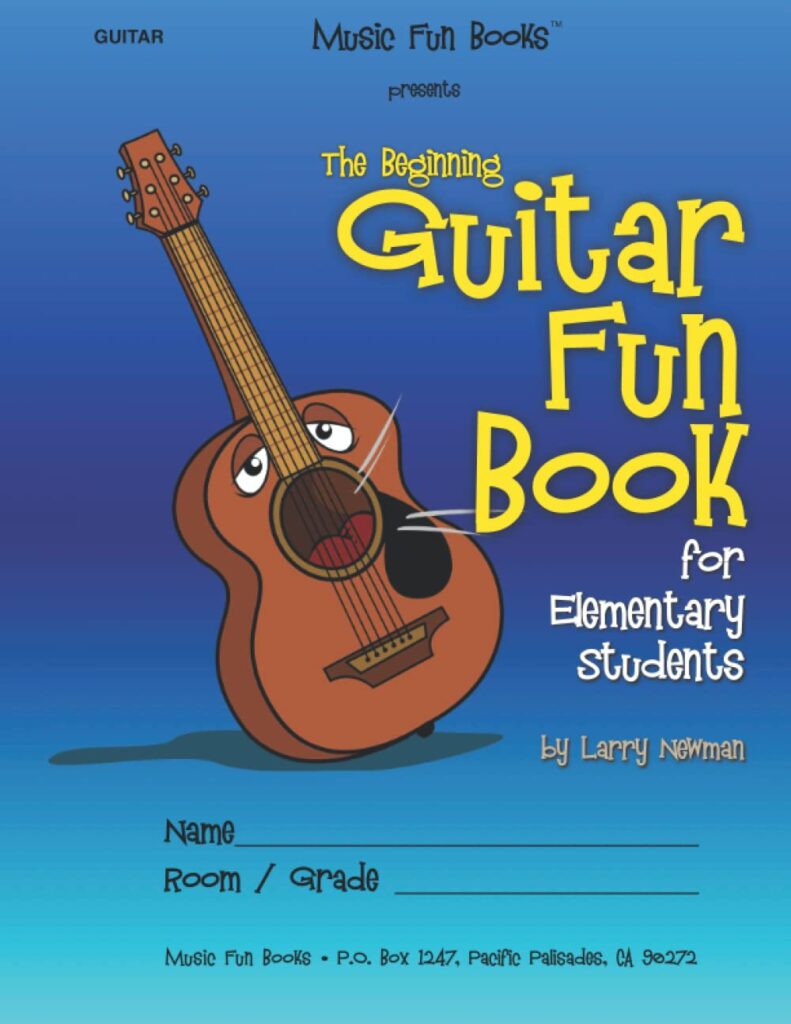
The Beginning Guitar Fun Book
A gentle elementary method with large notation, simple explanations, and approachable first songs.
Learn more
50 First Year Songs for Beginning Guitar
Familiar melodies, chords, and lyrics give first-year students more music to enjoy and practice.
Learn moreBrowse all guitar books
Explore methods, first-year songs, solos, classical themes, bluegrass, hymns, and seasonal guitar books.
Visit Guitar BooksUse the free practice support
Continue with Music Fun Books video, audio, or play-along resources created for beginning guitar students.
Open Guitar Lessons