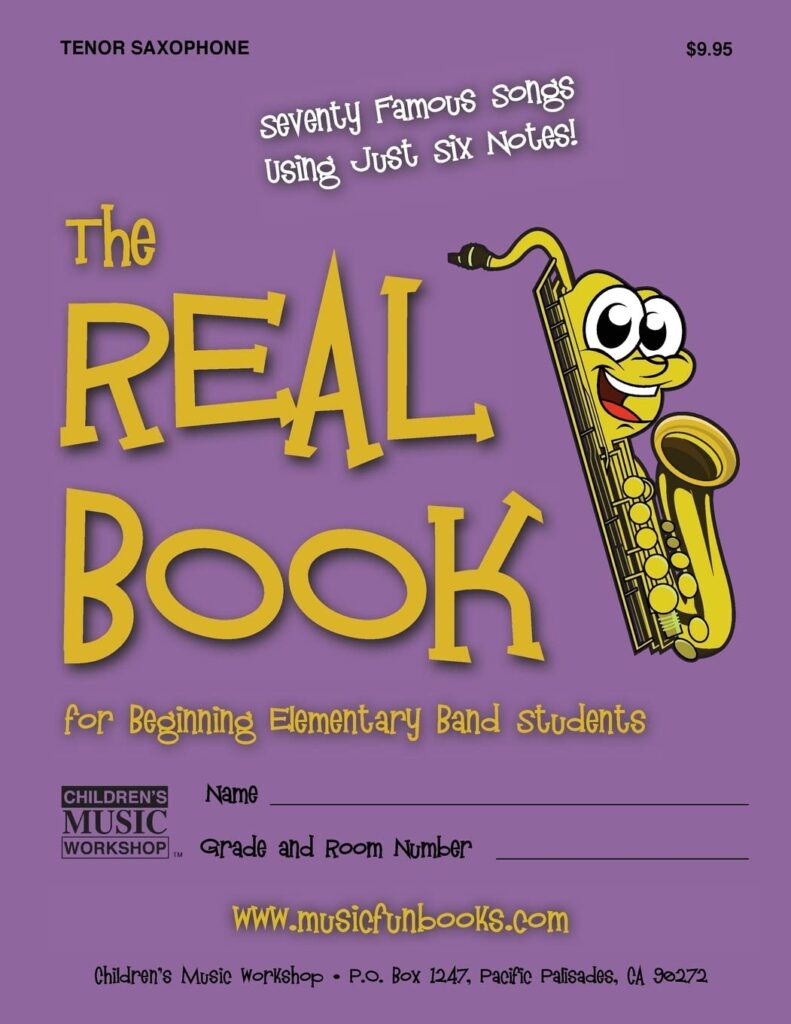
The Real Book for Beginning Elementary Band Students: Tenor Saxophone
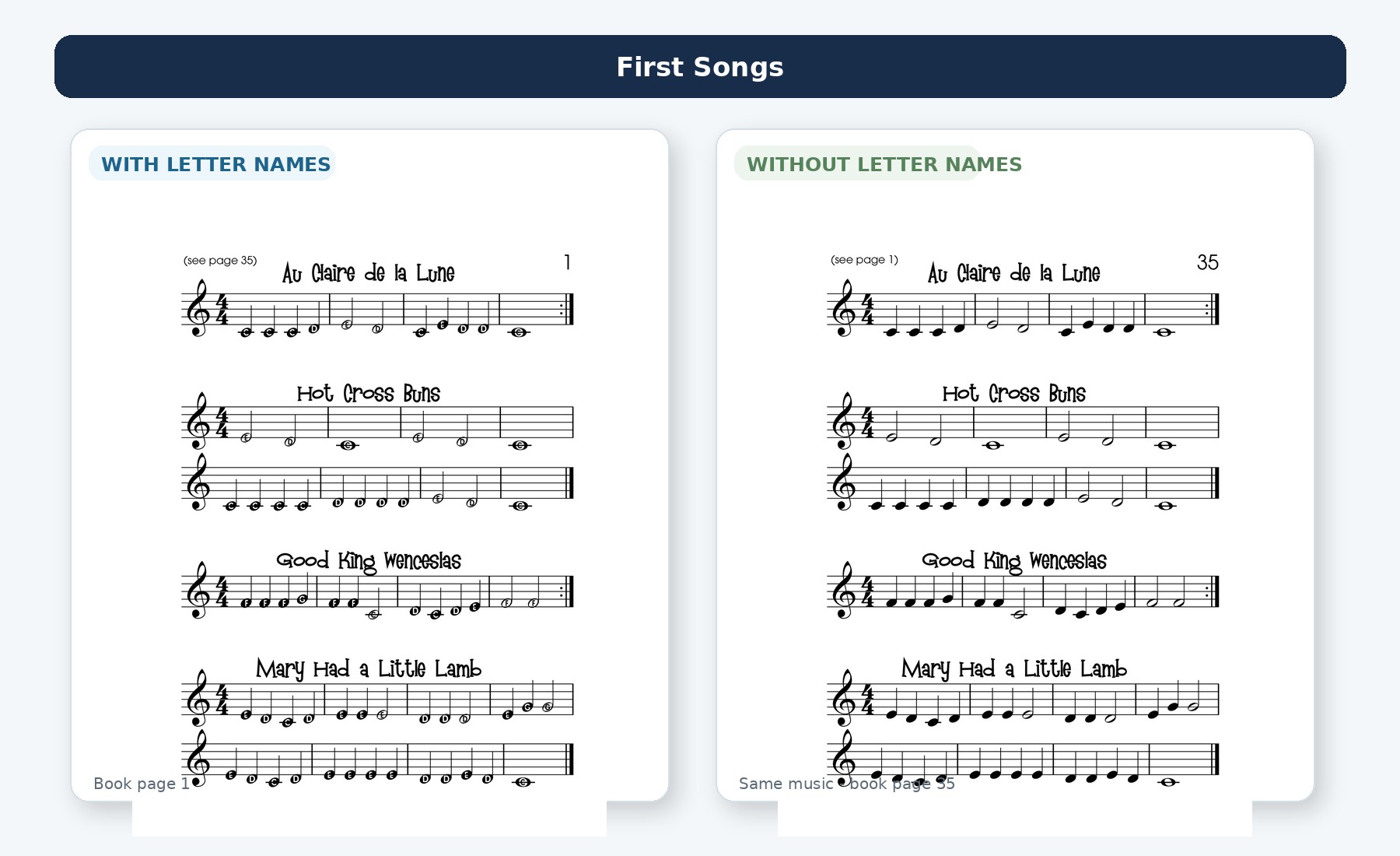
Seventy familiar songs using just six notes give young tenor saxophone players an unusually large amount of real music to read and enjoy. The first half provides letter names inside the noteheads; the second half repeats the same seventy songs without the letters.
- Extra-large, uncluttered notation
- Familiar music instead of endless exercises
- Letter-name support that eventually disappears
- Dedicated edition tailored for beginning tenor saxophone
70 Songs. Six Notes. Two Ways to Read Every Song.
Instead of continually adding more pitches, the book keeps the note vocabulary manageable and gives beginners a large amount of music to actually play.
Familiar Songs
Classical themes, folk songs, patriotic music and traditional favorites keep practice varied.
Notes to Manage
Students can focus on reading, rhythm and tone without being overwhelmed by an ever-expanding pitch range.
Reading Stages
Every song first appears with letter-name support and then returns without it.
Play It With the Letters. Then Play It Without Them.
The second half presents the same seventy-song repertoire again, giving students familiar musical material when the reading support disappears.
Letter Names Inside the Notes
Beginners connect each written note with its letter name while learning familiar songs.
Standard Notation
The letters disappear while the familiar songs remain. Students now read the same music directly from the staff.
The Same Music — With and Without Letter Names
This example uses actual pages from the Clarinet / Trumpet edition. Other instrument editions use the same reading approach with notation written for the appropriate instrument. Click the image to enlarge it.
Less Note-Chasing. More Actual Reading.
A beginning tenor saxophonist already has plenty to manage: embouchure, breath support, articulation, fingerings, rhythm, posture and tone.
Keeping the pitch range small reduces one source of difficulty while still providing a large amount of varied music.
- More repetition of essential first fingerings
- More attention available for rhythm and steady pulse
- More opportunities to recognize notes rather than guess
- Enough variety to keep practice interesting
Familiar Music Keeps Beginning Reading Interesting
First Favorites
- Hot Cross Buns
- Mary Had a Little Lamb
- Au Claire de la Lune
- Good King Wenceslas
- Long, Long Ago
Classical Themes
- Rondo alla Turca
- Morning from Peer Gynt
- Spring from The Four Seasons
- Ode to Joy
- Barcarolle
Traditional Music
- A Tisket, A Tasket
- Carnival of Venice
- Folk melodies
- Classroom favorites
Reading Variety
- Quarter and half notes
- Whole notes
- Eighth-note patterns
- Different meters
- Increasing rhythmic independence
Explore the Complete Real Book Series
The same six-note, seventy-song reading concept is available for beginning band and string players.
The Real Book for Elementary Band Students
Matching editions give teachers a consistent way to develop note reading across a mixed elementary band while using the written range appropriate for each instrument.
Choose an instrument below to see its Music Fun Books page.
The Real Book for Elementary String Students
Beginning violin, viola and cello editions use the same familiar-song approach, with versions organized around the strings and note ranges young players are learning.
Choose an instrument family or explore the complete string series.
Explore the String SeriesUse It as a Reading Book or Musical Supplement
School Band
Add familiar-song reading alongside the regular beginning method.
Private Lessons
Give students extensive reading without continually adding new notes.
Small Groups
Tenor saxophone students can use the same written material together.
Home Practice
Recognizable tunes make independent reading practice more rewarding.

Why I Created the Real Book Approach
Beginning students need repetition, but repetition does not have to mean playing the same exercise over and over.
By limiting the pitch vocabulary to six notes, I could give students seventy different songs while they continued reinforcing the same essential note-reading and fingering skills.
The letter names in the first half are temporary support. The goal is the second half, where the student returns to already familiar music and reads it without those letters.
Questions About The Real Book
Is this a complete beginning tenor saxophone method?
Why does the book use only six notes?
Are there really seventy different songs?
Why are the songs repeated?
Will students become dependent on the letter names?
Is a free sample available?
Give a Beginning Tenor Saxophone Player Seventy Reasons to Keep Reading
Six notes, seventy familiar songs and a built-in transition from note-name support to independent standard notation.