Beginning cello sight-reading on the D & A strings
The Real Book for Beginning Cello Students: D & A Strings
Seventy familiar songs using just six notes on the cello’s D and A strings. Letter names inside the noteheads provide early support, then the same music returns later without the letters to encourage independent standard-notation reading.
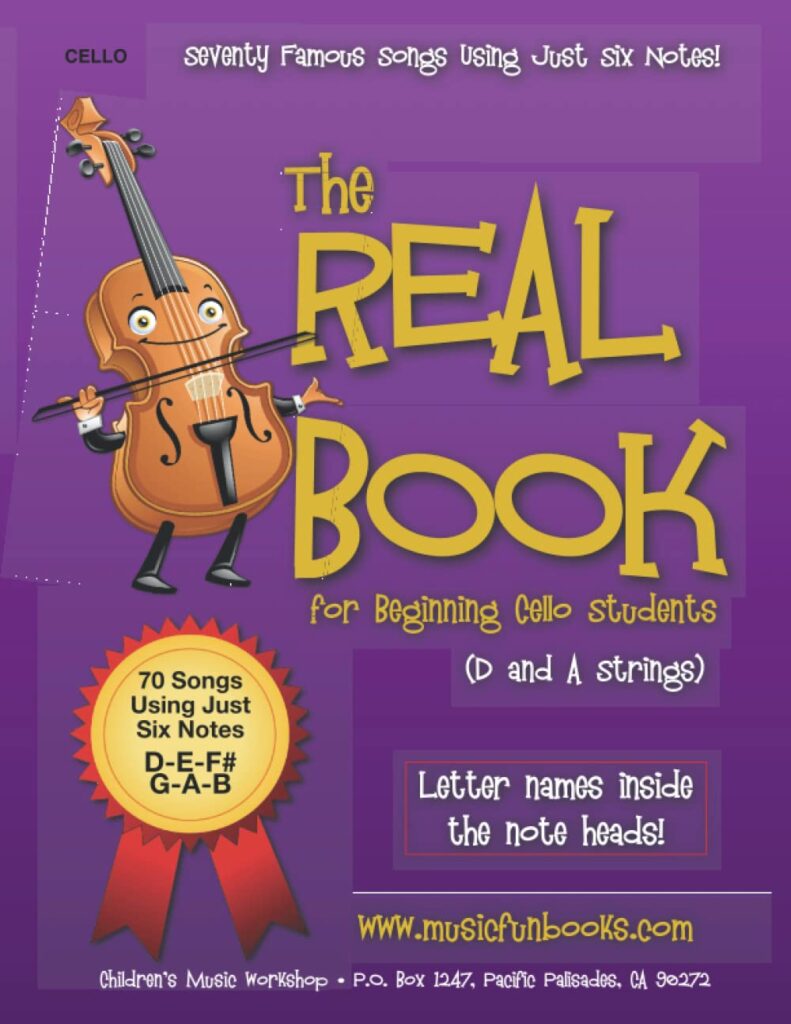
70 familiar melodies • 6 notes • D & A strings • ISBN-13: 978-1518723261
What is The Real Book for Beginning Cello Students: D & A Strings?
This beginner cello songbook teaches note reading through 70 familiar melodies using only six notes on the D and A strings. Students first encounter the music with letter names printed inside the noteheads, then revisit the same material later without the letters to develop more independent sight-reading. It is one of nine coordinated Real Book editions for violin, viola, and cello.
Why it works
Beginning cello students learn to read by playing real songs.
Instead of facing isolated drills or pages crowded with unfamiliar material, beginning cellists practice essential D- and A-string notes through melodies they recognize and want to play again.
Seventy familiar songs
Classic folk tunes, traditional melodies, and time-tested songs give beginning cellists a substantial first repertoire.
Only six notes
A deliberately limited note range lets students focus on staff reading, rhythm, fingering, and bow control without unnecessary overload.
Two strings at a time
This edition concentrates on the cello’s D and A strings. Other Real Book editions cover G & D or C & G for teachers who use a different starting sequence.
Built-in reading progression
From supported note reading to independent music reading
The same musical material becomes a bridge from early confidence to genuine notation skills.
See the note names
In the first half, letter names inside the noteheads help students connect staff position, pitch name, string, and finger placement.
Learn through repetition
Seventy recognizable melodies provide meaningful repetition of the same six notes and beginner rhythms.
Read without letters
In the second half, the letter names disappear so students can revisit familiar music and prove they can read standard notation independently.
See the reading progression in the music
The sample below is from The Real Book for Beginning Violin Students: D & A Strings. It demonstrates how the method works: the first version places letter names inside the noteheads, and approximately halfway through the book the same music returns without the letters so students can make the transition to independent notation reading. Each book edition has notes that are appropriate for that edition.
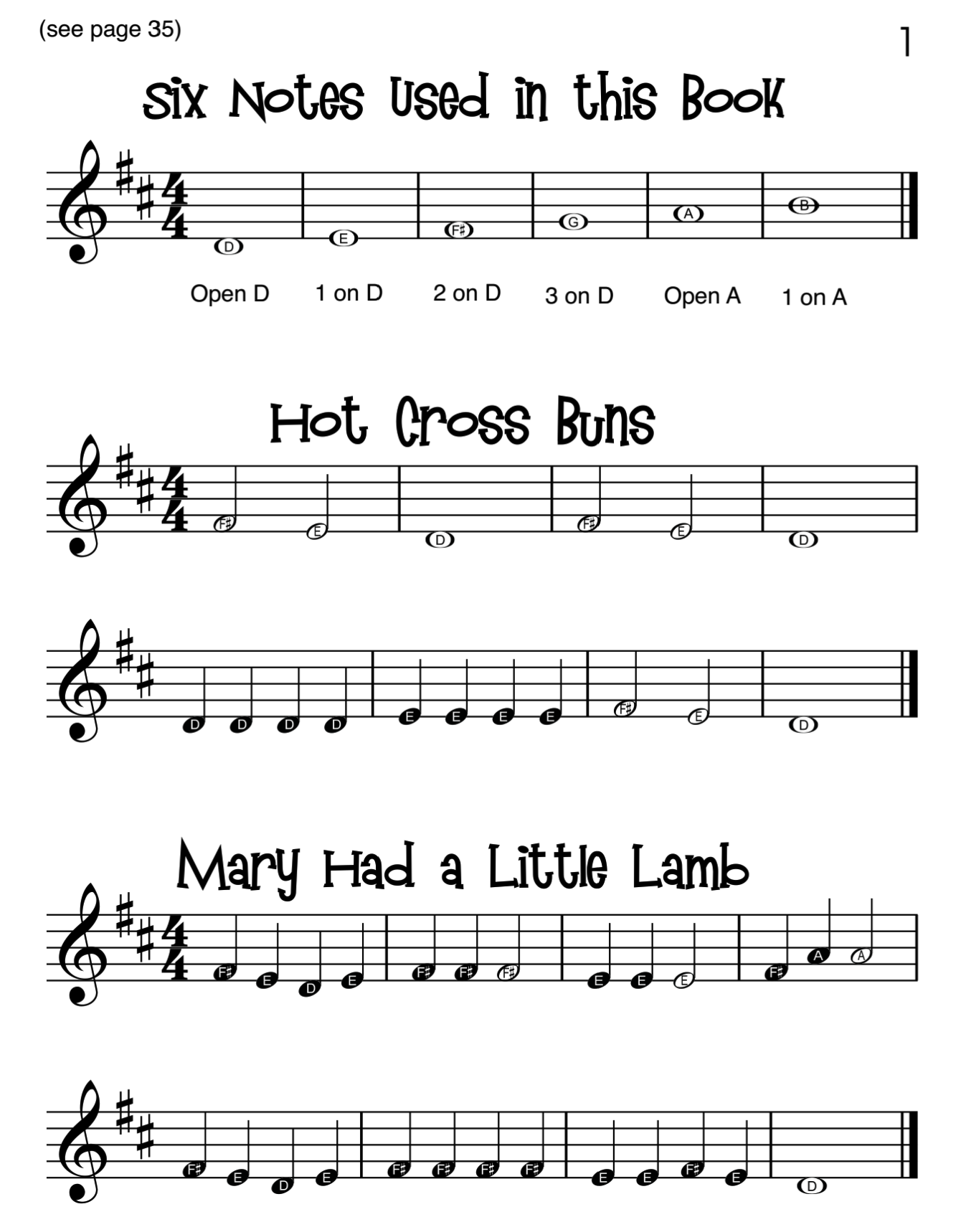
First: notes with letter names
Students see the pitch letters inside the noteheads while learning the staff positions, note names, strings, and fingerings.
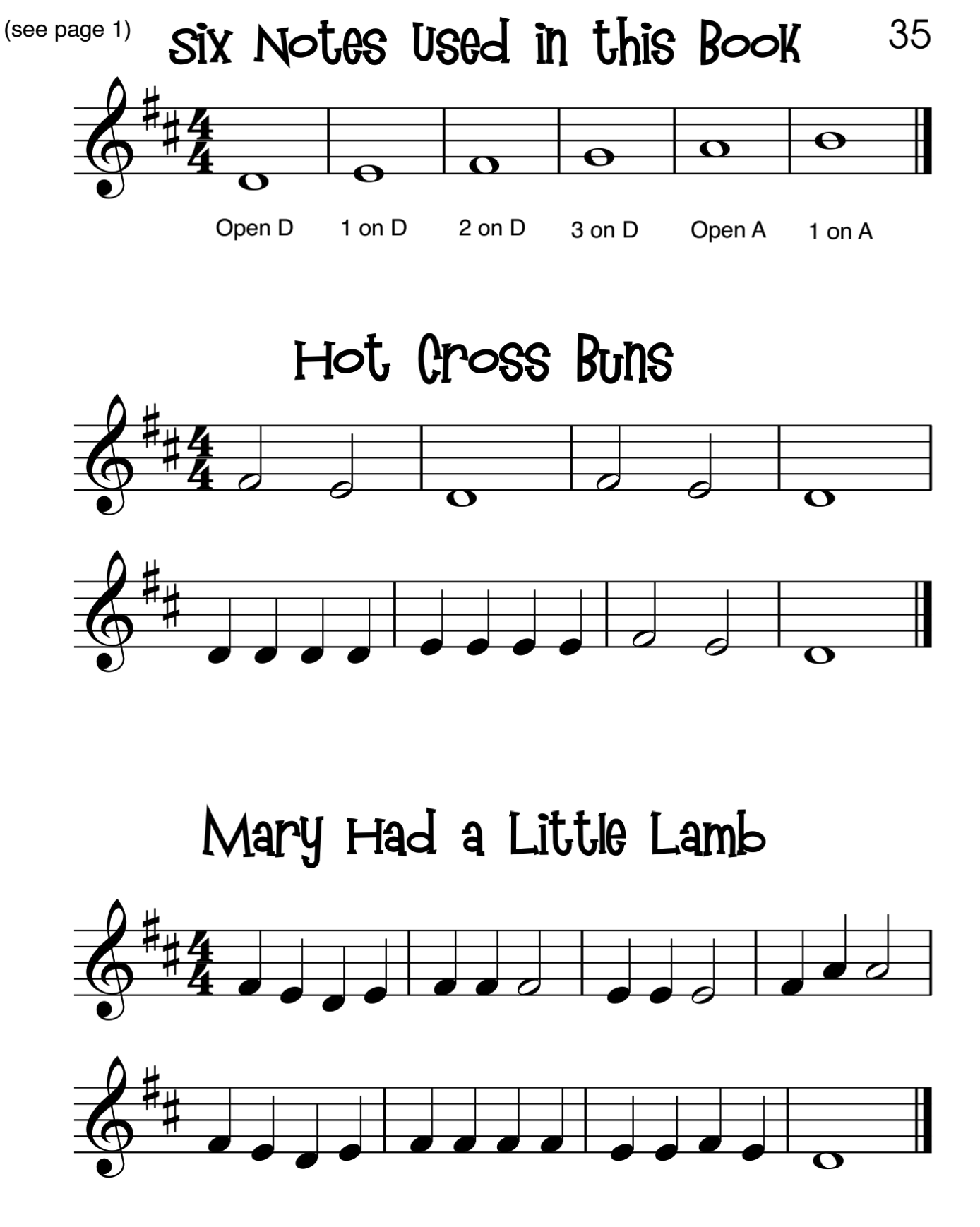
Then: the same music without letters
When the familiar material returns later, the letter names are gone, encouraging students to recognize and read the notation on their own.
Click either page to enlarge. These two sample pages are from the Violin D & A Strings edition, not from the D & A Strings book featured on this page. The D & A edition follows the same progression using the correct notes and letter names for its own D- and A-string material.
A focused solution
Extra music-reading practice without extra complexity
The D & A Strings edition works as a focused beginning note-reading book or as a supplementary cello songbook alongside Suzuki, Essential Elements for Strings, or another school or private-lesson curriculum.
Designed for early success
- ✓Extra-large notation for young eyes.
- ✓Clean pages with limited material and less visual overload.
- ✓Clear fingering charts, diagrams, and uncomplicated instructions.
- ✓Familiar songs that make repeated reading practice enjoyable.
- ✓Coordinated options for violin, viola, cello, and mixed string programs.
Book chooser
Which Real Book edition should I buy?
Choose the student’s instrument and the two strings being taught. If you are unsure, ask the student’s teacher which string pair matches the current method sequence.
| Instrument | Upper pair | Middle pair | Lower pair | Best choice |
|---|---|---|---|---|
| Violin | A & E | D & A | G & D | Match the strings introduced by the teacher or school method. |
| Viola | D & A | G & D | C & G | Use the two-string range currently being studied. |
| Cello | D & A | G & D | C & G | Choose the edition matching the student’s first-position string pair. |
All nine editions
Beginning violin, viola, and cello sight-reading books
Every card includes the official Music Fun Books information page, the individual Amazon ordering link, and the ISBN-13 for school, library, and studio purchasing.
Beginning Violin Books
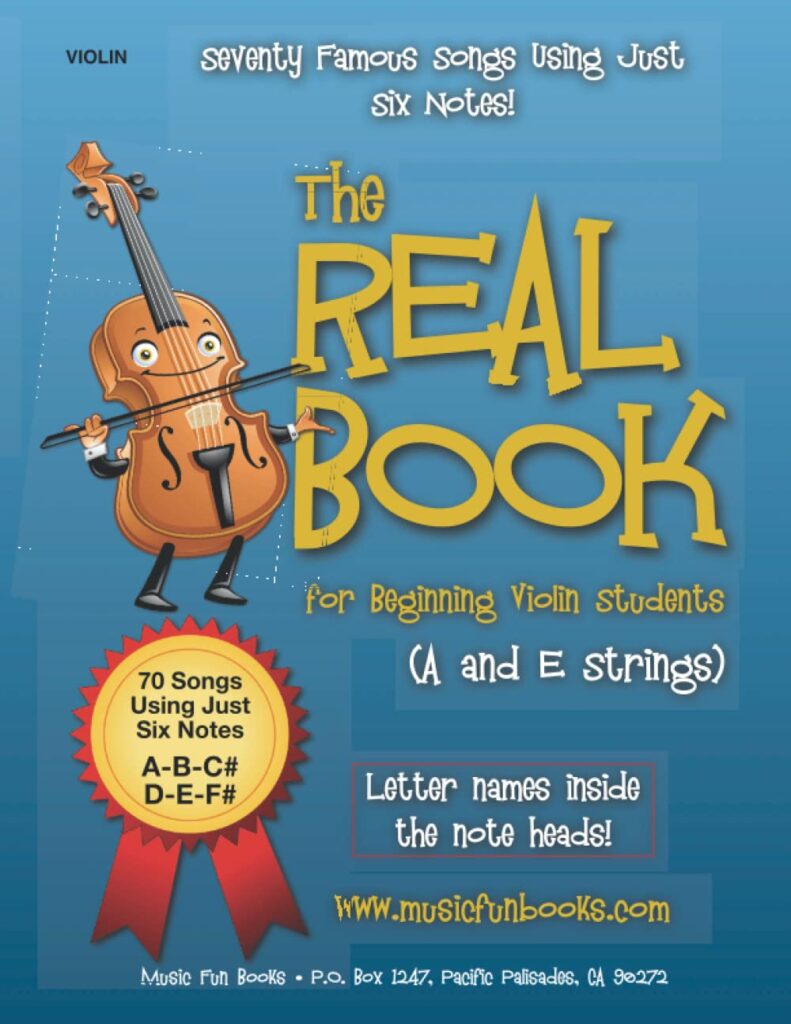
Violin: A & E Strings
Easy violin reading on the upper two strings using 70 songs and six notes.
ISBN-13: 978-1518684555
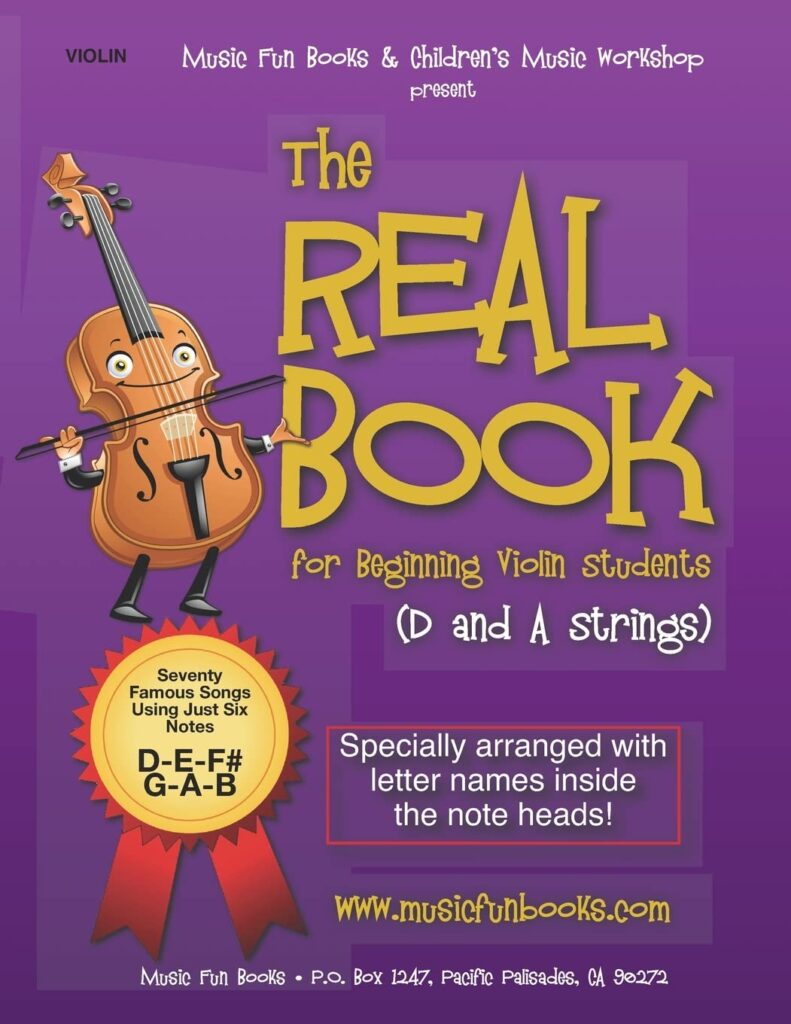
Violin: D & A Strings
A first violin songbook focused on the middle strings and beginner first-position notes.
ISBN-13: 978-1518682827
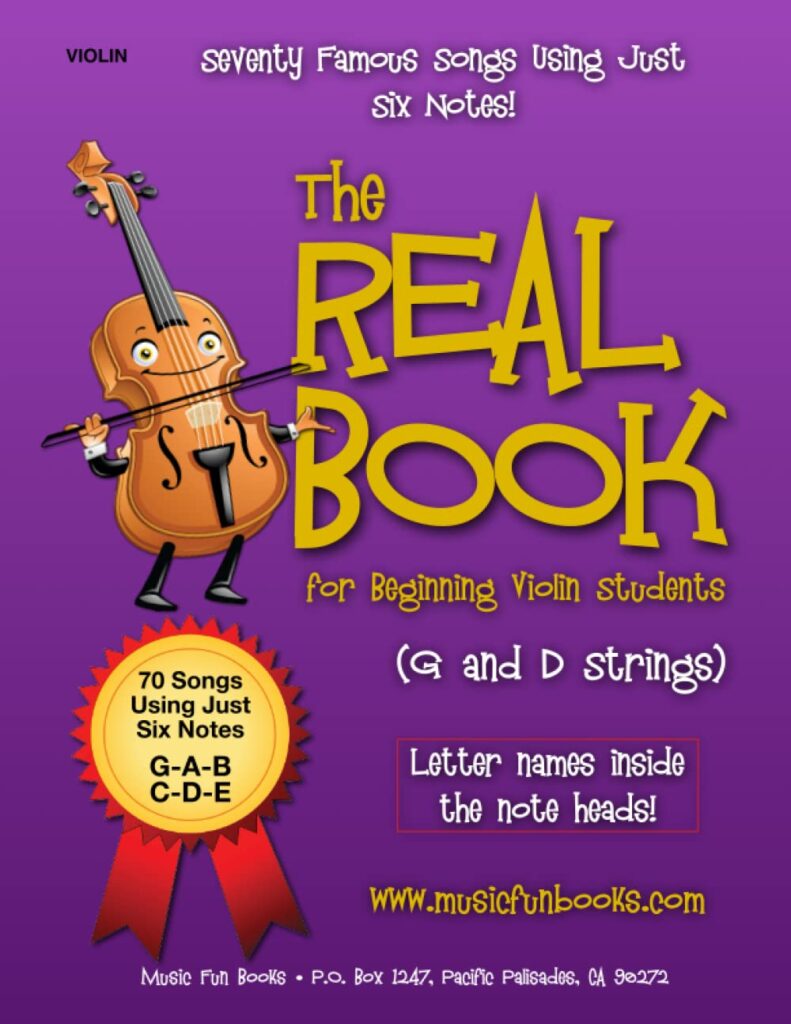
Violin: G & D Strings
Beginner violin songs and note-reading practice on the lower two strings.
ISBN-13: 978-1519359841
Beginning Viola Books
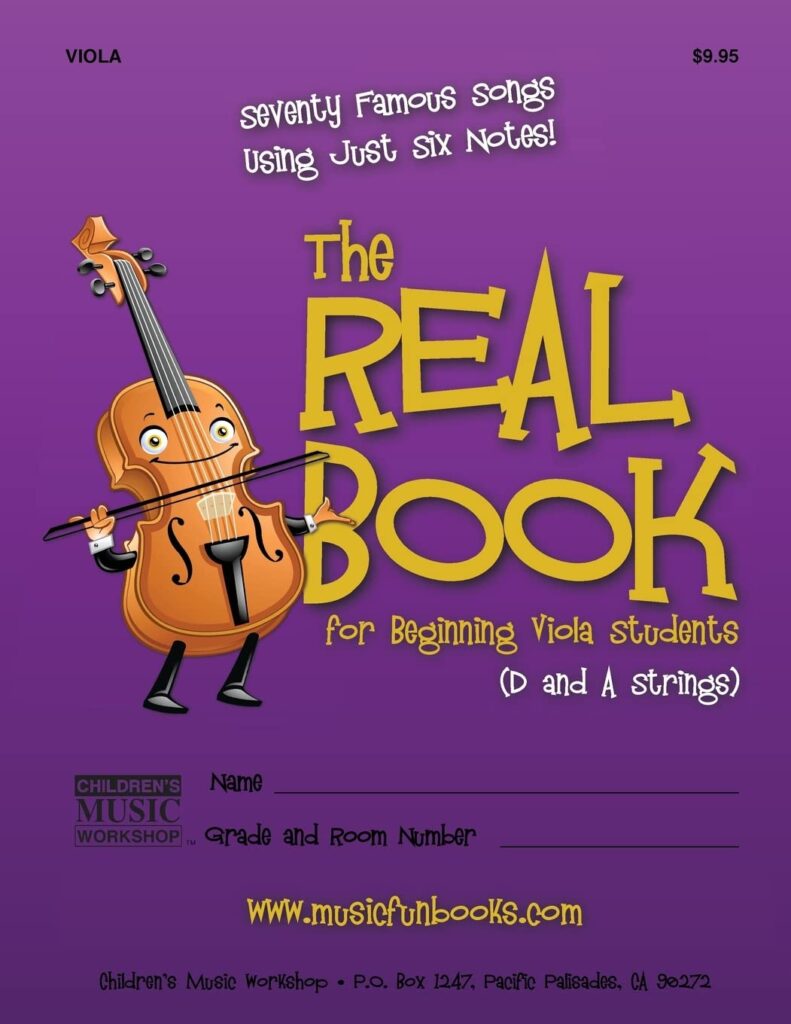
Viola: D & A Strings
A beginner viola songbook for learning notes on the upper two strings.
ISBN-13: 978-1518808241
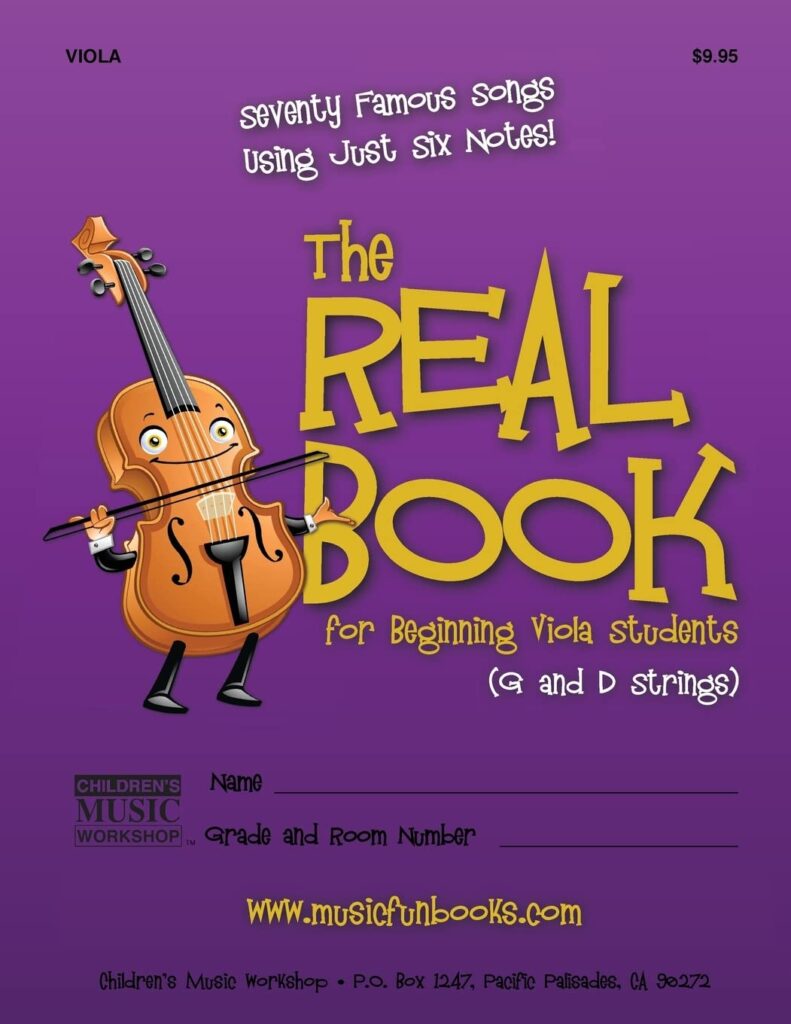
Viola: G & D Strings
Easy viola sight-reading and 70 familiar songs on the middle strings.
ISBN-13: 978-1518808326
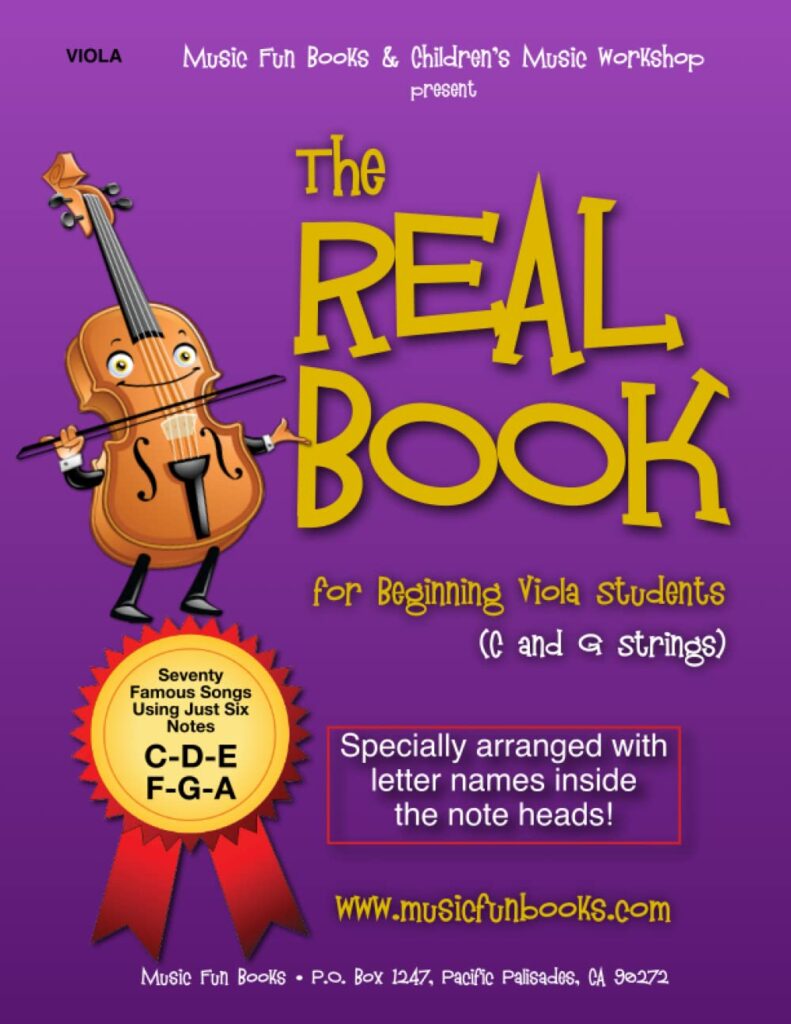
Viola: C & G Strings
Beginning viola music-reading practice on the instrument’s lower strings.
ISBN-13: 978-1519360021
Beginning Cello Books
Cello: D & A Strings
An easy cello songbook for reading notes on the upper two strings.
ISBN-13: 978-1518723261
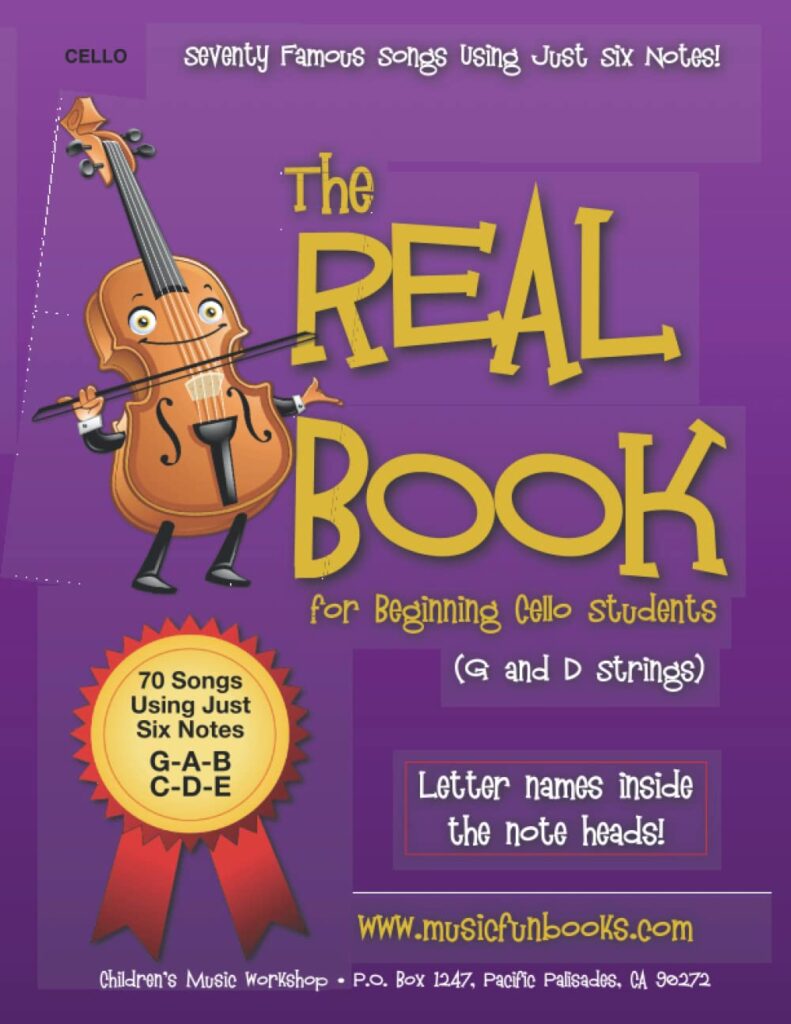
Cello: G & D Strings
Beginner cello sight-reading through 70 well-known songs on the middle strings.
ISBN-13: 978-1519359940
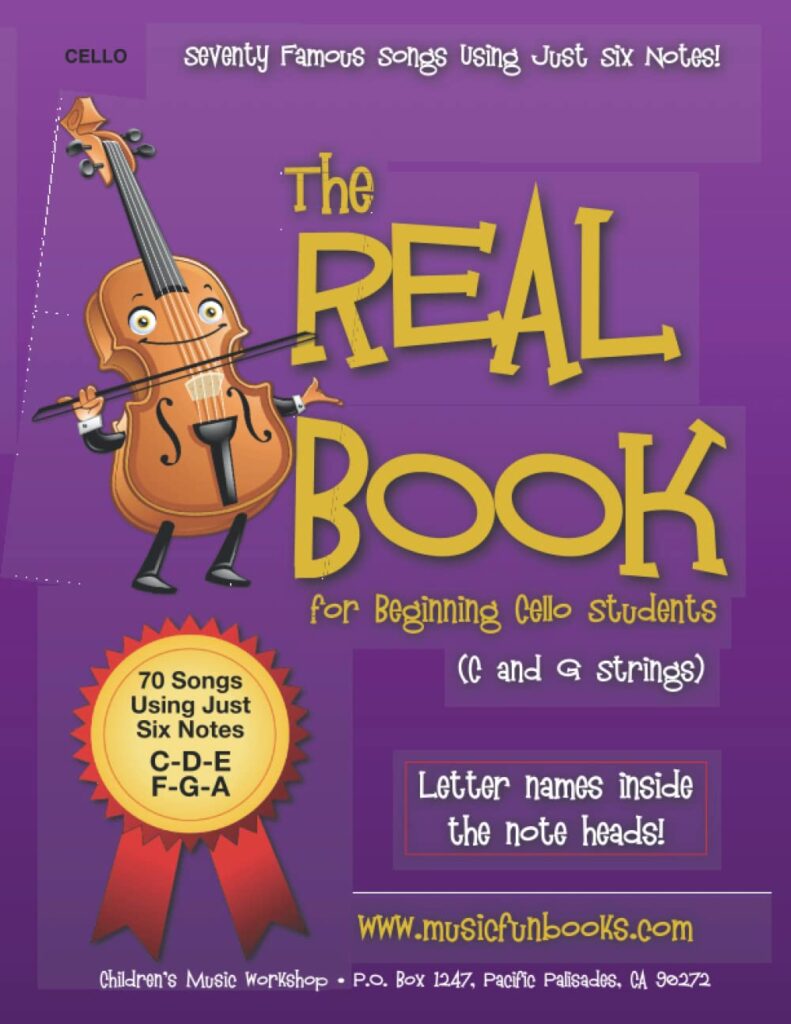
Cello: C & G Strings
Easy cello reading and familiar songs on the instrument’s lower two strings.
ISBN-13: 978-1519397546
Who it is for
Useful in cello lessons, school orchestra, and home practice
Young beginners
- Elementary cello students
- First-year players learning basic first-position notes
- Children who benefit from large, uncluttered notation
- Older beginners wanting a gentle visual approach
Teachers and directors
- Private string studios
- Elementary school orchestra programs
- Group lessons and sectionals
- Mixed-readiness beginning ensembles
Best use
Assign a few songs at a time as a note-reading supplement, then have students repeat the familiar music later without the printed letter names.
For music teachers
A practical way to reinforce sight-reading and retention
Because the technical range remains intentionally limited, teachers can use the songs for bow distribution, steady beat, pitch recognition, ensemble listening, and confident performance without introducing too many new notes at once.
The books also create an easy assessment cycle: teach with the letter-assisted version, then check true reading when the same song returns without letters.
Teaching possibilities
- ✓Weekly sight-reading assignments.
- ✓Warm-ups and review pieces for group class.
- ✓Informal performances using familiar tunes.
- ✓Extra reading support for students who need more repetition.
- ✓Flexible use alongside an existing string method.
Related resources
More cello books and related resources
FAQ
Questions about The Real Book for Beginning Cello Students: D & A Strings
What makes the D & A Strings edition different?
This edition teaches beginning cello note reading through 70 recognizable songs using only six notes on the D and A strings. Letter names appear inside the noteheads at first and are later removed, creating a gradual transition to standard music reading.
Is this a complete cello method book?
It can be used as a focused first note-reading method, but it is especially useful as a supplementary cello songbook alongside a comprehensive method that also teaches setup, posture, tone production, bow hold, and broader technique.
Which string-pair edition should I choose?
Choose the edition that matches the two strings the student is currently learning. Violin editions cover A–E, D–A, and G–D. Viola and cello editions cover D–A, G–D, and C–G. When in doubt, ask the teacher before ordering.
Are these books suitable for absolute beginners?
Yes. No previous music-reading experience is required. Students should still receive guidance on instrument setup, posture, bow hold, and healthy technique from a qualified teacher or experienced adult.
What ages are these beginning string books for?
The large notation and gradual pacing are designed especially for elementary-age students, commonly about ages 5–11. Older children and adult beginners can also benefit from the clear, confidence-building format.
Do the books really contain 70 songs with only six notes?
Yes. Each edition uses a carefully limited six-note range on its named pair of strings. Familiar melodies create variety and musical satisfaction even while the technical material remains manageable.
Why are letter names printed inside the notes?
The letters give first-time readers an immediate connection between note position and pitch name. Because the letters are removed later, they function as temporary support rather than a permanent substitute for reading notation.
Can these books be used in school orchestra and group lessons?
Yes. They work well for beginning string classes, orchestra sectionals, private studios, homeschool programs, and additional reading practice within mixed-readiness groups.
Is there a Real Book series for band instruments?
Yes. The Real Book for Elementary Band Students offers the familiar-song reading concept in keys and ranges suited to beginning woodwind and brass players.
Give beginning cellists 70 familiar songs on the D & A strings.
Use temporary letter-name support to build confidence, then let the same familiar music lead students toward independent note reading.