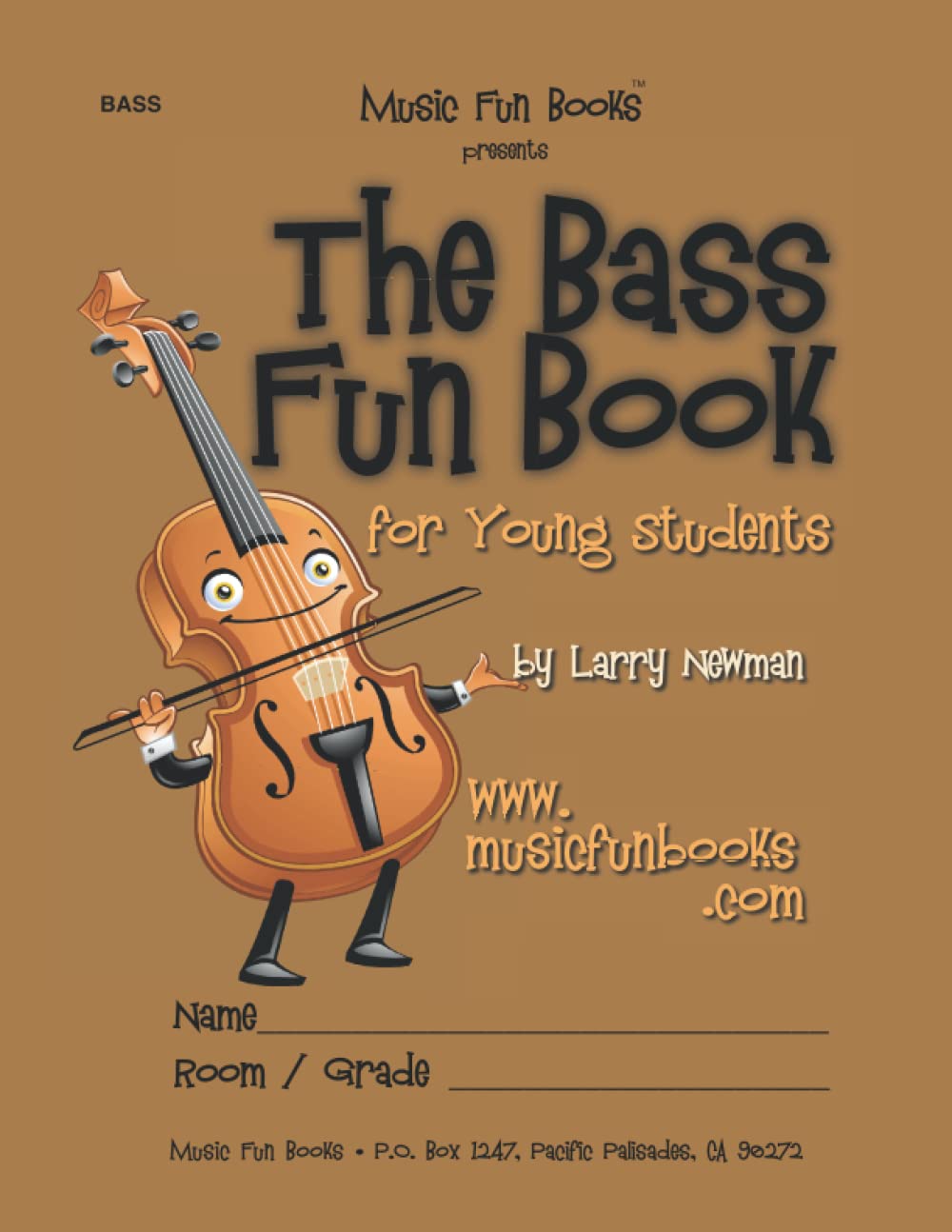
The Bass Fun Book
A child-friendly first-year double bass method that starts with simple plucking, then adds the bow, bass-clef reading, instrument-specific fingering and familiar songs. Extra-large notation, letter names inside early noteheads and short assignments help young beginners build reading and playing skills one step at a time.
- Begins with open-string pizzicato before adding the bow
- Extra-large bass-clef notation for young music readers
- Letter names gradually disappear as reading develops
- Useful for private lessons, home practice and school orchestra
Make the First Double Bass Lessons Feel Achievable
Beginning bass asks a young player to coordinate a large instrument, bass-clef reading, left-hand placement, rhythm and bow control. The Bass Fun Book separates those skills into short, visible steps so the student can concentrate on one new idea at a time.
Start With Simple Plucking
The first music uses open strings and basic rhythms so the student can focus on pulse and reading before coordinating the bow.
Add the Bow in a Separate Step
A dedicated bow-grip page introduces the right hand, then directs the student to go back and play the opening material again with the bow.
Learn Bass Fingering Gradually
New notes are paired with clear left-hand illustrations, including first finger E and later fourth-finger notes used in beginning bass technique.
Large, Friendly Bass Clef
Oversized notation and limited material per page make the staff easier for young eyes to track.
Reading Becomes Independent
Letter names inside early notes provide temporary support. Later exercises such as “Song Without Letters” move students toward standard notation.
Technique Leads to Real Music
Familiar pieces such as Twinkle, Jingle Bells, Old McDonald and Ode to Joy reward progress while new rhythms and musical markings are added.
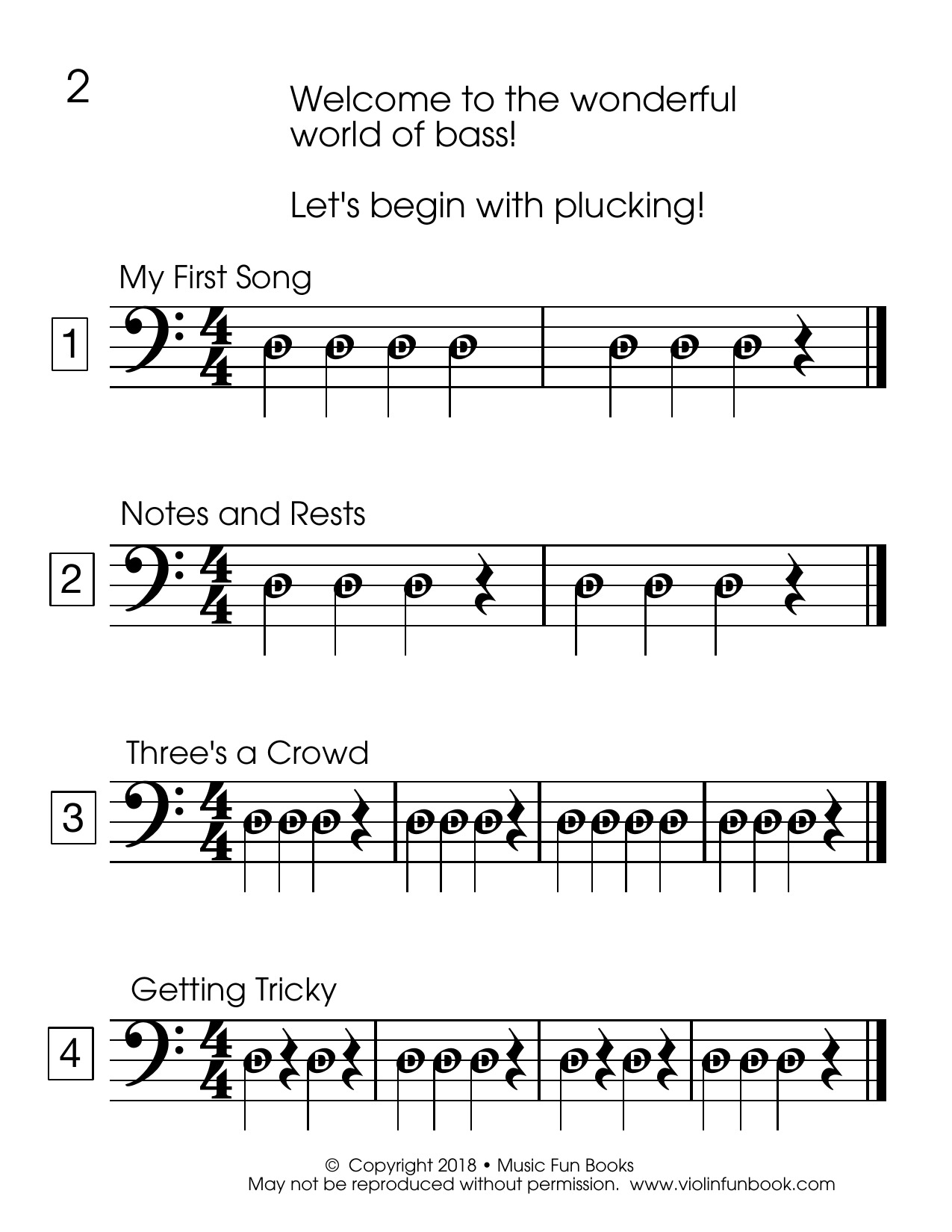
Start by Plucking — Then Play It Again With the Bow
Page 2 welcomes the student to the bass and says, “Let’s begin with plucking.” The first exercises use simple open-string notes and rests, allowing the beginner to concentrate on rhythm and reading without adding bow coordination immediately.
On page 7, the book introduces the bow grip and then tells the student to go back and play the first part of the book again with the bow. That gives the same easy music a second job: it becomes the student’s first bowing practice.
Begin With Pizzicato
Build pulse, open-string recognition and basic reading while keeping the physical task simple.
Return With the Bow
Learn the bow grip, then reuse familiar opening exercises to develop controlled bowed playing.
See Inside The Bass Fun Book
These six pages show the method moving from the first pizzicato exercises to bow grip, fingered notes, independent reading, position work and recognizable classical repertoire. Click any page to enlarge it.
A Clear First-Year Learning Path
The book keeps expanding the student’s job gradually so reading, left hand and bow skills develop together.
Pluck Open Strings
Begin with D and A, simple rhythms and short pizzicato exercises.
Add the Bow
Learn the bow grip and replay familiar beginning music with bowed sound.
Build First-Position Notes
Add notes such as E and F-sharp with bass-specific left-hand diagrams and repetition.
Read Without Letters
Move from note-name support toward ordinary bass-clef notation and independent reading.
Expand the Range
Add the G string and later third-position notes to broaden the student’s usable range.
Complete the First-Year Toolkit
Continue with eighth notes, dynamics, key signatures, slurs and longer familiar pieces.
Music Fun Books Resources
Explore current Music Fun Books video lessons, teaching resources and the broader collection of double bass books for young musicians.
Music Fun Books Video Lessons
Browse current beginner video lessons, demonstrations and instrument-learning resources from Music Fun Books.
Explore Video LessonsBass Books & Resources
Explore beginning and advancing double bass methods and elementary orchestra repertoire written for young bassists.
Explore Bass BooksA Consistent Format for Lessons and String Class
The Violin Fun Book Series provides coordinated beginning books for violin, viola, cello and bass, making the approach useful for private lessons and mixed beginning string classes.
The Violin Fun Book Series
The same large notation, gradual pacing, familiar music and coordinated first-year approach is available for all four orchestral string instruments.

Why the Fun Book Approach Works
Young students often understand a musical idea before they are comfortable processing a dense page of notation. I designed the Fun Book methods so each page presents a small, reachable goal.
The Bass Fun Book deliberately begins with plucking. That lets a student establish open-string reading and rhythm first. After the bow-grip lesson, the student returns to music that is already familiar and can concentrate on producing a bowed sound.
Bass-specific left-hand work is introduced gradually. New notes are shown with simple hand diagrams, reinforced in short exercises, and eventually expanded into later position work.
Letter names provide temporary reading support, but they are not intended to become permanent. As the student progresses, that help disappears and standard bass-clef reading takes over.
The objective is a confident young bassist who gradually learns to read, bow, listen and make music independently.
Questions About The Bass Fun Book
Is The Bass Fun Book suitable for a complete beginner?
What age is the book designed for?
Why does the book begin with pizzicato?
When is the bow introduced?
Does the book teach bass clef?
Do the note letters stay in the music throughout the book?
Does the book include position work?
Can this book be used in school orchestra?
What comes after The Bass Fun Book?
Give a Young Bassist a Clear First-Year Path
Large bass-clef notation, gradual pacing, a pizzicato-to-bow sequence, bass-specific fingering and familiar songs designed for young beginning double bass students.