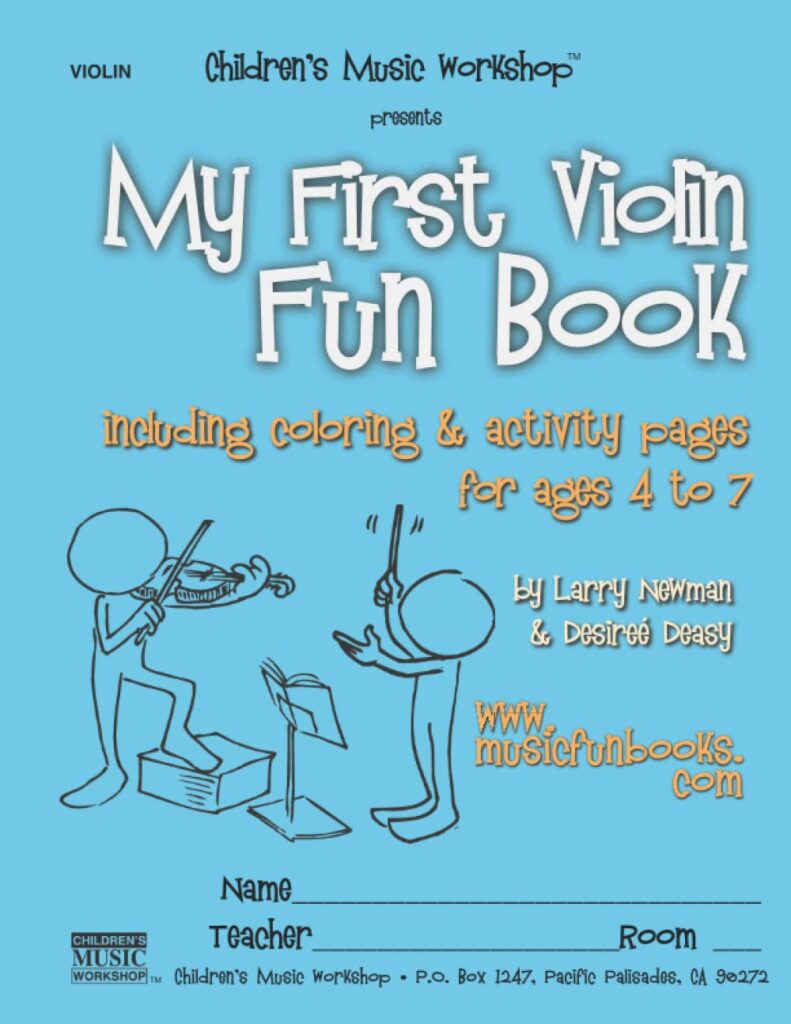
My First Violin Fun Book
A child-friendly introduction to violin that gives very young beginners a manageable first experience with the instrument, music reading, bowing, finger placement, familiar songs, coloring and activities.
- Extra-large, easy-to-see notation
- Letter names inside the note heads
- Coloring and activity pages
- Designed especially for ages 4 to 7
See Inside the Book
These five pages show how the book moves from simply meeting the violin to bowing, first music reading, finger placement and a complete familiar song. Click any page to enlarge it.
Watch the Video Lessons
Follow the book lesson by lesson with free demonstrations and guided practice. Use the playlist menu in the player to choose any lesson.
Choose a Video Lesson
Select any lesson below. The page will return to the player automatically so the student can keep the book open and practice along.
Loading the video lessons…
Why Very Young Violinists Succeed
Four- and five-year-old beginners do not process a music page the same way an older student does. This book intentionally reduces complexity and makes each new task feel achievable.
Extra-Large Notation
Oversized notes and generous spacing make the music easier for young eyes to follow and reduce unnecessary visual clutter.
Letter Names Inside Notes
Letter names help children connect the note they see with the note they are learning to play while still seeing its position on the staff.
One Small Step at a Time
New rhythms, fingers and musical ideas are introduced in short, manageable portions rather than crowded together on the page.
Coloring and Activities
Tracing, drawing, coloring, mazes and other simple activities turn early music study into something a very young child can enjoy.
A & E String Beginning
The limited string range helps small children concentrate on posture, bowing, rhythm and early finger placement without too many variables.
Real Songs and Real Reading
Children do more than complete exercises. Familiar melodies such as Twinkle, Twinkle, Little Star help early skills feel musical and rewarding.
Made for Real Young Beginners
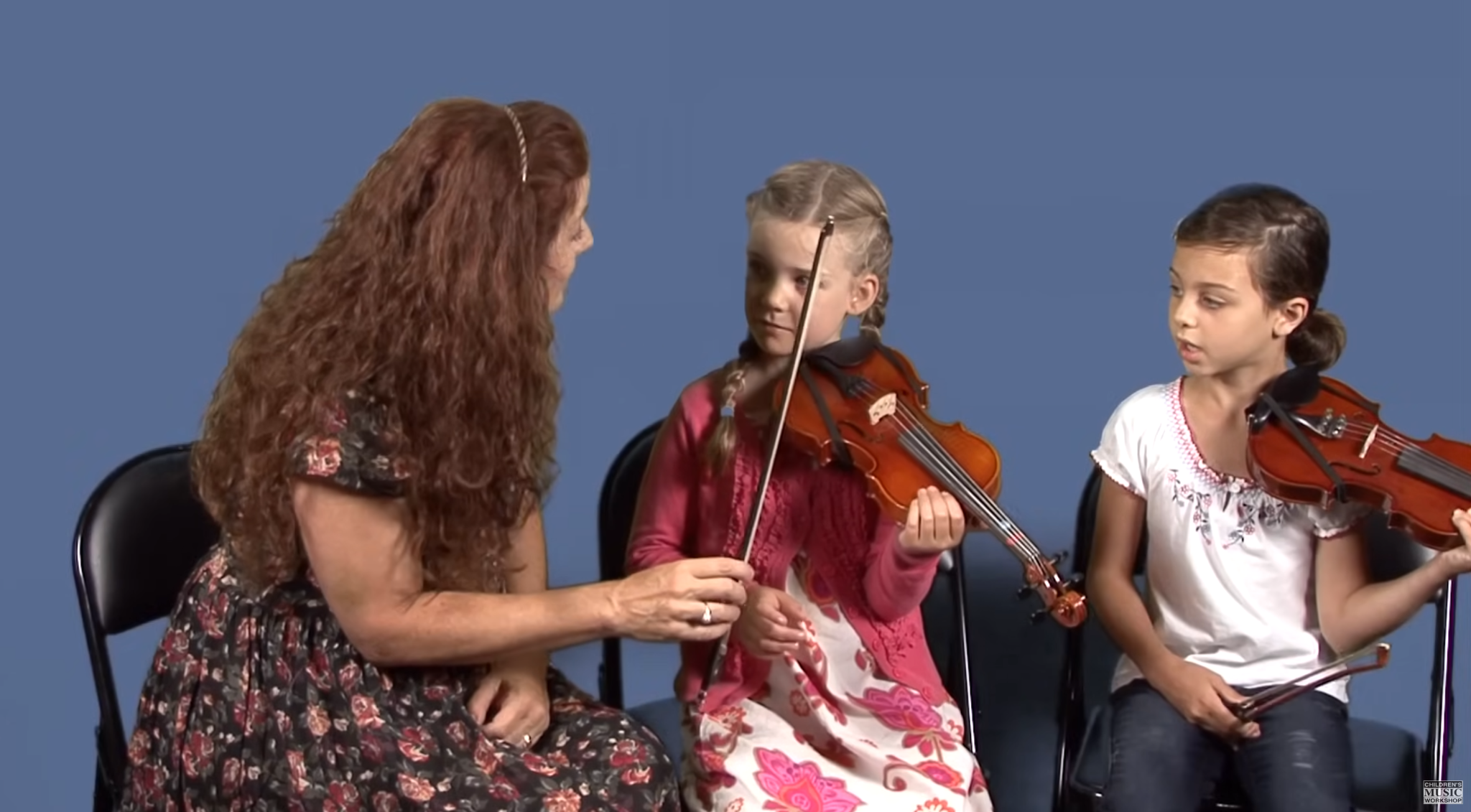
Learning violin asks a young child to coordinate posture, the bow, left-hand fingers, rhythm and written music all at once. My First Violin Fun Book deliberately breaks that large task into small successes.
The result is useful in a private lesson, a beginning string class, homeschool music or parent-supported practice.
- Kindergarten and early elementary beginners
- Private violin lessons
- Beginning school string programs
- Homeschool and parent-supported learning
- Children who benefit from a slower visual pace
A Step-by-Step First Musical Journey
The book starts before the first song and gradually combines instrument skills, rhythm, reading and finger placement into real violin playing.
Meet the Violin
Learn the instrument, strings and main parts before adding musical demands.
Holding and Bowing
Work on violin position, bow hold and long open-string bow strokes.
First Rhythms and Songs
Quarter notes, rests and simple open-string music become the first reading experiences.
Add Left-Hand Fingers
Clear diagrams introduce new finger positions and connect them to written notes.
Build Reading Skills
Students learn additional rhythms, staff concepts, key signatures and basic musical vocabulary.
Play Familiar Music
Recognizable pieces bring the early skills together and give young players a satisfying goal.
When It Is Time for the Violin Fun Book
These two books are not competing beginning methods. They are designed for different ages and different teaching situations, and many students can move naturally from one to the other.
My First Violin Fun Book
Designed for approximately ages 4 to 7, this book begins on the A and E strings, the two outside strings of the violin.
- Especially appropriate for ages 4-7
- Begins with the A and E strings
- Extra-large notation and letter names
- Coloring, tracing and activity pages
- Very gradual introduction of new skills
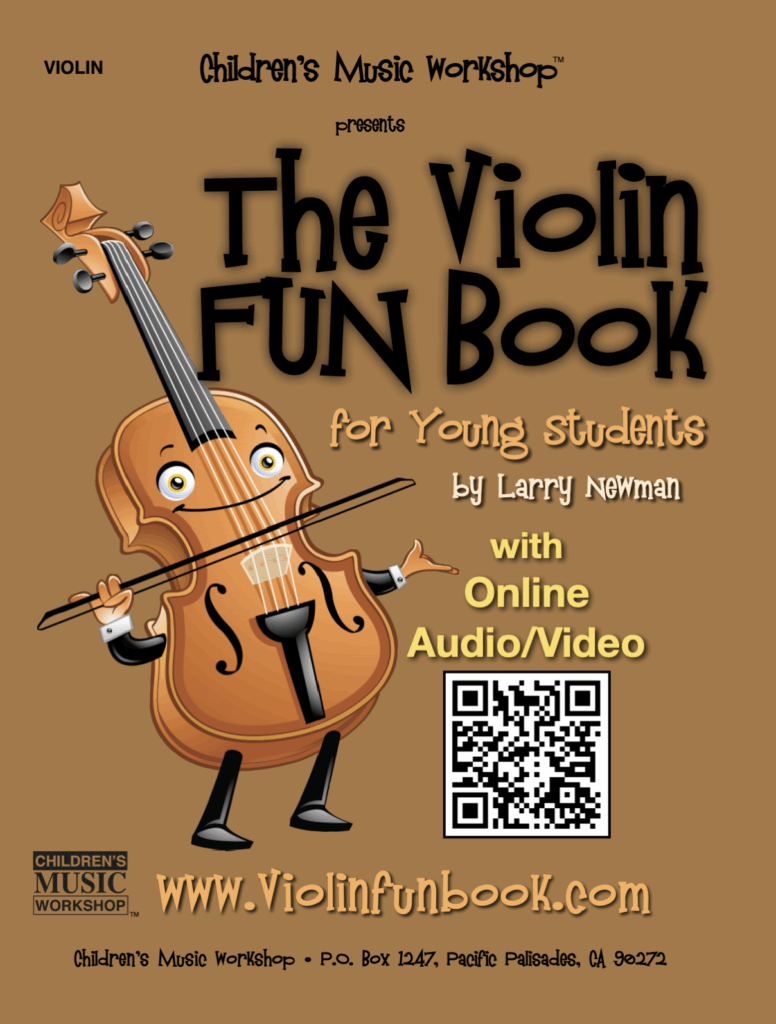
The Violin Fun Book
For many students, particularly around second grade and above, The Violin Fun Book becomes the natural next step.
- Generally suited to second grade and above
- Beginning focus on the D and A strings
- Well suited to elementary string classes
- Matching viola, cello and bass editions
- Free video lessons and play-along audio
Why the D and A Strings Matter in a Classroom
The Violin Fun Book focuses its early work on the D and A strings. Matching editions for viola, cello and bass allow students on different string instruments to work through coordinated material together. That makes the series especially useful for an elementary orchestra or mixed string classroom.
New to Violin? Start with the Right Tools
A young child also needs an appropriately sized instrument and clear finger-placement guidance. These free Music Fun Books resources can help.
Violin Sizing Guide
Use age and arm-length guidance to estimate an appropriate fractional violin size before renting or purchasing an instrument.
Open the sizing guide Practice HelpViolin Fingering Chart
A visual reference for beginning violin notes and finger placement that teachers, parents and students can use during practice.
Open the fingering chart More MusicExplore Violin Books
Browse Music Fun Books methods, song collections, solos, duets, orchestra books and other violin materials for developing students.
Browse the violin collection
Questions About My First Violin Fun Book
Is this book suitable for a complete beginner?
Yes. It starts with the violin itself, basic holding and bowing, open strings and very simple music-reading concepts. No previous violin or music-reading experience is required.
What age is the book designed for?
The book was created especially for children approximately ages four to seven. Older students who need an unusually gentle or visually simple introduction may also find the format helpful.
Why does the book focus on the A and E strings?
The A and E strings are the two outside strings on the violin. A limited starting range reduces the number of new things a very young player must manage at once and allows the child to concentrate on holding the violin, using the bow, keeping a steady rhythm and learning early finger patterns.
How is this different from The Violin Fun Book?
My First Violin Fun Book is designed specifically for very young beginners and begins with the A and E strings. The Violin Fun Book is generally more appropriate for older elementary beginners, often around second grade and above, and begins with the D and A strings. Matching viola, cello and bass editions also make The Violin Fun Book especially useful in mixed string classes.
Why are letter names printed inside the notes?
The letters give young readers an immediate connection between the pitch name and the written note while they become familiar with where notes sit on the music staff.
Does the book include activities as well as songs?
Yes. In addition to violin exercises and familiar music, the book includes tracing, drawing, coloring, games and other activities designed to keep very young children engaged.
Can this book be used for private lessons, school or home learning?
Yes. The short lessons and uncluttered pages work well with a private teacher, in an early string program, in homeschool music or with a parent helping a child between lessons.
Continue the Journey
Once a young violinist has a solid beginning, these books add ensemble playing and progressively more advanced violin study.
Easy Violin Duets
Beginner-friendly duet arrangements help developing violinists learn to listen, keep steady rhythm and enjoy making music with another player.
Learn more Later Orchestra StudyThe Orchestra Violin Fun Book
Exercises, solos and duets for advancing elementary and middle-school players moving into second- or third-year orchestra work.
Learn more Next-Level SkillsThe Violin Fun Book Level 2
Scales, arpeggios, etudes and additional practice support for students who have moved beyond their first beginning violin method.
Learn more
Give a Young Violinist a Gentle First Start
Extra-large notation, letter names, simple first songs, coloring and activities in a method designed specifically for ages four to seven.