Practical leadership for today’s band room
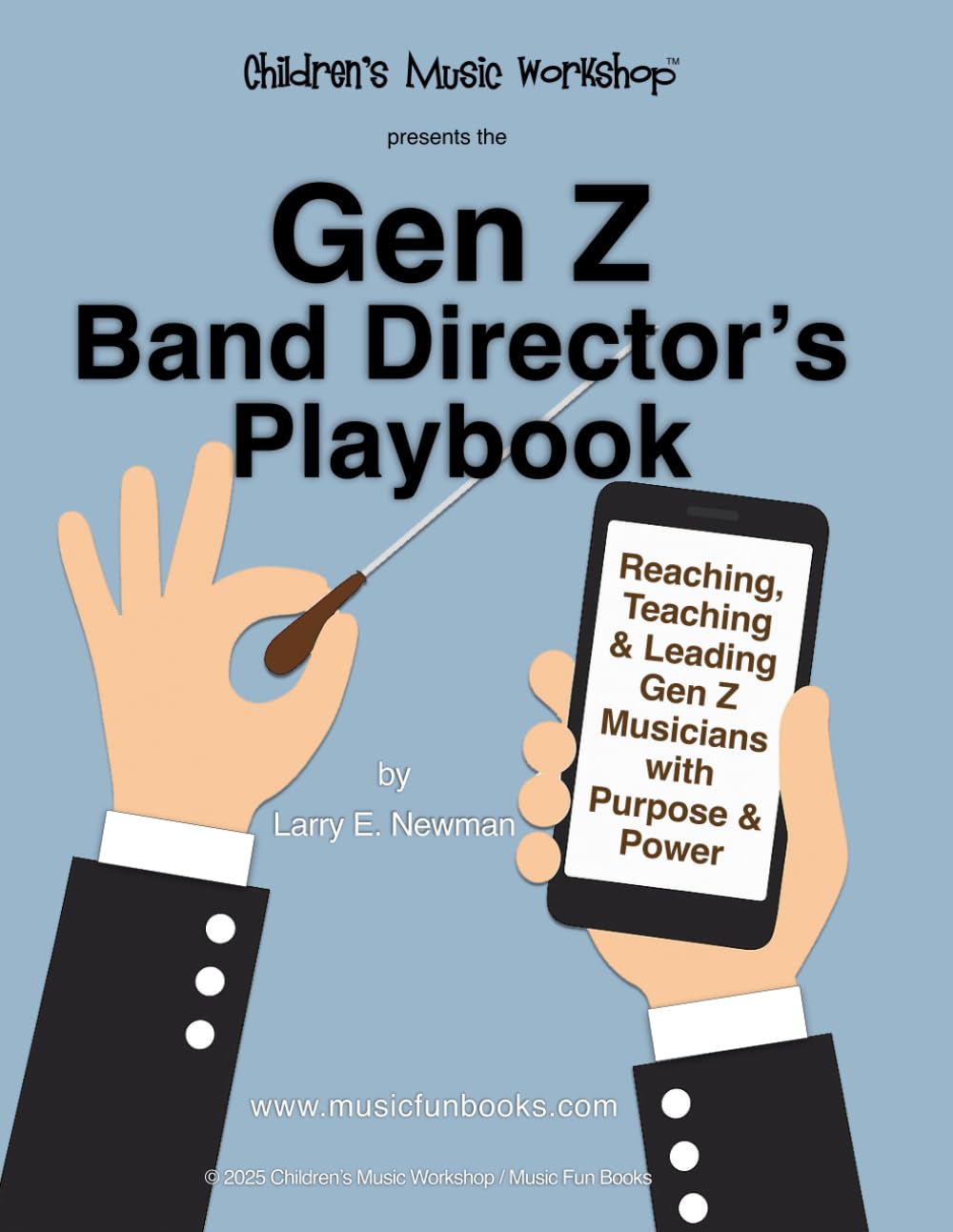
Gen Z Band Director’s Playbook
Connect with your students. Organize your program. Grow into the director you want to be.
By Larry E. Newman
Taking the podium means more than knowing the score. This practical guide explores the relationships, routines, and everyday decisions that help a school band program thrive—from your first weeks in a new job to the culture you build over time.
Visit Amazon for current pricing and purchase options.
A guide to the whole job
Lead the musicians—and the program behind them
Gen Z Band Director’s Playbook brings together twenty short, practical chapters on teaching, organization, communication, and leadership. Written in a conversational style, it addresses the real work that surrounds every rehearsal: earning trust, choosing priorities, supporting different learners, coordinating families, and keeping the program moving forward.
It is especially useful for new and early-career band directors, student teachers, and educators taking over an established program. Experienced directors can also revisit individual chapters to refresh their routines or work through a specific challenge.
From the first rehearsal to the next concert
What the playbook helps you work on
Build trust from day one
Learn students’ names, interests, and goals. Use conversations, surveys, and observation to understand the people behind the instruments—and establish a warm, professional presence.
Step into an existing program thoughtfully
Respect traditions, talk with the outgoing director when possible, and build relationships with school staff. Introduce changes gradually and explain how they will help.
Plan rehearsals with a clear purpose
Work backward from performance dates, balance fundamentals with repertoire, make room for sectionals, and use regular check-ins to adjust your pacing.
Organize the work beyond the podium
Create a manageable music library, identify equipment priorities, plan a realistic budget, communicate schedules, and coordinate concerts with clear goals.
Share responsibility with students
Develop meaningful roles for section leaders, student conductors, librarians, equipment managers, and event organizers. Support those roles with training and feedback.
Keep learning and improving
Find mentors, connect with colleagues, observe your own teaching, gather student feedback, and choose professional development that addresses your program’s needs.
Inside the book
Explore all 20 chapters
Open a chapter below for a summary of its focus. Read the book from beginning to end as you prepare for a new role, or return to the topics that match what your program needs now.
1. Know Your Kids – Like, Really Know Them
Build authentic relationships through student interest surveys, informal conversations, school events, and individual check-ins. The chapter encourages directors to be genuine, learn names quickly, and notice students who have not yet connected with the group.
2. Blend Before You Trend – Easing Into a New Program
Study the existing curriculum, rehearsal routines, repertoire, and traditions. Gather student feedback, establish dependable communication channels, and build a shared vision before introducing major changes.
3. The Switch-Up – Making the Transition
Navigate a new position with both confidence and humility. Get to know office staff, custodians, families, and students; plan early musical successes; and reflect on what you learn during the first month.
4. Watch, Listen, Level Up
Observe rehearsals and performances to understand tone, balance, rhythm, technique, engagement, and group dynamics. Use those observations to select appropriate repertoire, target warm-ups, and set realistic priorities.
5. From Survive to Thrive – Setting Goals That Actually Work
Connect specific short-term goals with a longer-term program vision. Invite students to help define success, make progress visible, and revisit goals as the ensemble develops.
6. Mastering the Music Library (Without Losing Your Mind)
Use consistent labels, organize selections by difficulty and style, track borrowed parts, and review what the collection needs. The chapter discusses digital organization, listening resources, and regular maintenance.
7. Rehearse Like a Boss – Crafting a Schedule That Works
Plan backward from concerts and divide rehearsals into purposeful blocks. Build in sectionals, choose repertoire that serves learning goals, and use assessments and student feedback to refine the plan.
8. Plug In – Connecting with Parents and Families
Make schedules, expectations, and updates easy to find. Begin with a welcome meeting or video, learn how families want to participate, and offer volunteer roles that fit different interests and availability.
9. Link Up – Building Your Music Ed Network
Develop a professional community through colleagues, local groups, professional organizations, mentorship, and collaborative projects. Share ideas and find support beyond your own classroom.
10. Recharge & Reignite – Why Conferences Still Matter
Approach conferences, workshops, and seminars with a learning goal. Consider funding and travel costs, leave room to connect with colleagues, and bring useful ideas back to your students.
11. Bridging the Gap – Getting Music the Respect It Deserves
Make student learning visible through performances, collaborations, progress examples, and a program portfolio. Invite administrators and colleagues into the experience and communicate the educational work behind the concert.
12. Grading Without the Mystery – Making It Make Sense
Clarify how participation, growth, playing assessments, rehearsal conduct, and reflection contribute to evaluation. Share rubrics early and explore recordings, portfolios, self-assessment, and peer feedback.
13. Budget Like a Band Boss
Audit instruments, equipment, and music before making purchases. Separate immediate needs from future upgrades, plan for repairs and ongoing expenses, and explain how funding requests support students.
14. Plan It. Play It. Promote It.
Give performances a clear purpose and involve students in themes, publicity, and event responsibilities. Explore collaborations, guest artists, small ensembles, community partnerships, and post-event feedback.
15. Real Talk Leadership – Giving Students the Baton
Create leadership opportunities that extend beyond first-chair playing. Train students to communicate, organize, mentor, and follow through, with clear expectations and regular opportunities to reflect.
16. Teaching All Kinds of Kids – Supporting Every Learner in Band
Teach concepts through demonstrations, visuals, listening, movement, and hands-on practice. Use individual goals, peer support, varied assessment, and collaboration with support staff to help more students participate successfully.
17. Keep It Real, Keep It Respectful
Establish understandable expectations for attendance, preparation, behavior, and care of the rehearsal space. Build predictable routines, redirect calmly, and recognize positive contributions.
18. Keep Growing or Get Stale
Continue developing through workshops, instrumental clinics, online learning, mentorship, reading, and collaboration. Choose opportunities that strengthen your teaching and your own musicianship.
19. Reflect, Reset, Repeat
Use rehearsal recordings, brief journals, student surveys, exit tickets, and colleague observations to evaluate your work. Adjust plans when needed and return to earlier notes to see what has improved.
20. Band Pride Vibes – Building a Culture That Lasts
Celebrate individual growth and collective effort through recognition, traditions, performances, mentorship, and alumni connections. Build a culture where students feel included and proud of their contribution.
Move from reading to doing
Practical examples you can adapt
A rehearsal with a clear structure
The book offers a sample 50-minute rehearsal outline:
- 10 minutes: Warm-up, tone, and tuning
- 15 minutes: Technique or sectional work
- 20 minutes: Repertoire with one or two specific goals
- 5 minutes: Sight-reading, listening, or reflection
Adapt the timing to your class length, ensemble, and current priorities.
A more useful student check-in
Ask what students enjoy about band, what frustrates them, what music interests them, and what they hope to accomplish. Use their answers to inform decisions and follow up so they can see that their input matters.
A short survey or a few minutes of conversation can reveal needs that are easy to miss from the podium.
A budget organized by priority
Begin with an inventory, then divide needs into three groups: replace now, upgrade soon, and consider later. Include repairs, maintenance, new music, recurring expenses, and a reserve for unexpected needs.
This gives you a clearer basis for purchase decisions and conversations with administrators.
A repeatable reflection routine
After rehearsal, take a few minutes to record what worked, where students struggled, and what you want to change. Combine your observations with student feedback and occasional input from a colleague.
Small, regular adjustments make improvement part of the routine.
Clarity, belonging, and shared ownership
Create a band room where students can contribute
The playbook connects strong musical expectations with clear communication and respectful relationships. Students need to understand the rehearsal routine, know what successful work looks like, and feel comfortable learning from mistakes.
Its chapters on student leadership and inclusive teaching offer ways to broaden participation: mentoring younger players, helping manage the music library, leading a warm-up, contributing concert ideas, or working toward an individual practice goal.
Recognition extends beyond the strongest players. Improvement, reliability, kindness, and work behind the scenes all contribute to the ensemble’s success.
Use technology to make the work easier
Throughout the book, digital tools are suggested for surveys, schedules, music inventories, recorded assessments, portfolios, and communication. QR-code ideas show how directors might give students and families easier access to their own resources.
These are suggestions for systems you can build and adapt. The book does not present them as a supplied package of downloadable templates, linked QR resources, or software access.
Choose your starting point
How to use the playbook
Preparing for your first position
Start with the chapters on relationships, observation, transitions, and goal setting. Use them to shape your first conversations and your opening weeks with students.
Taking over an established band
Focus on understanding the program’s history and routines. Identify what students value, preserve useful traditions, and choose changes you can explain clearly.
Solving an immediate challenge
Turn directly to rehearsal planning, grading, budgeting, family communication, or behavior expectations. Select an approach that fits the issue and review its effect.
Refreshing an experienced program
Revisit student voice, leadership, professional learning, and band culture. Use the reflection prompts to identify one area where a thoughtful adjustment could help.
About the author
Larry E. Newman
Larry E. Newman is the founder of Children’s Music Workshop and Music Fun Books, a music educator, author, and professional trumpet player. He has supervised music programs in more than eighty public and private institutions, with experience spanning kindergarten through college.
He holds a Bachelor of Music Education from Temple University, a Master of Arts in Music Performance from Eastern Illinois University, and a California teaching credential. His work combines classroom teaching, program leadership, and the practical demands of helping young musicians learn and perform together.
Questions about the book
Frequently asked questions
Is this book only for Gen Z directors?
No. Its conversational style speaks especially to a new generation of directors, but the chapters on planning, communication, leadership, and program culture can be useful to educators of different ages and experience levels.
Who will find it especially useful?
New and early-career band directors, music education students, student teachers, and educators entering an established program are natural audiences. Experienced teachers can use it as a reference for specific challenges.
Does it include sheet music or arrangements?
No. This is a professional resource about teaching and running a program, rather than a student method book or collection of performance music. Its ideas can be used alongside your existing repertoire.
Does it cover practical program management?
Yes. Dedicated chapters address the music library, rehearsal schedules, family communication, grading, budgeting, event planning, and student leadership.
Are there examples and reflection prompts?
Yes. The book includes sample goals, a rehearsal schedule, a grading breakdown, suggested questions, practical lists, and reflection prompts. These provide starting points to adapt to your school and students.
Are downloadable templates or working QR-code resources included?
The text suggests resources directors can create and link, such as surveys, calendars, rubrics, and leadership forms. Those suggestions are not a supplied digital toolkit or a promise of included downloads.
Does it address supporting different learners?
Yes. A dedicated chapter discusses varied teaching approaches, individualized goals, peer mentoring, flexible ways to demonstrate learning, and collaboration with support staff and families.
How is this different from Keeping Kids in Band?
Gen Z Band Director’s Playbook covers the broader responsibilities of directing a program across twenty chapters. Keeping Kids in Band: The Six Essentials focuses more specifically on why elementary and secondary students continue in music and how teachers can support retention.
Explore a related resource
For a closer look at student motivation, belonging, and the transitions that affect continued participation, explore Keeping Kids in Band: The Six Essentials.
Build your next chapter as a director
A practical place to start—and return to
Explore twenty chapters of ideas for connecting with students, organizing the work, and building a band culture with lasting value.
Current pricing and purchase options are available on Amazon.
As an Amazon Associate, Music Fun Books earns from qualifying purchases.