A practical guide for music educators
Keeping Kids in Band:
The Six Essentials
Help students find their place, hear their progress, and discover reasons to keep playing.
By Larry E. Newman
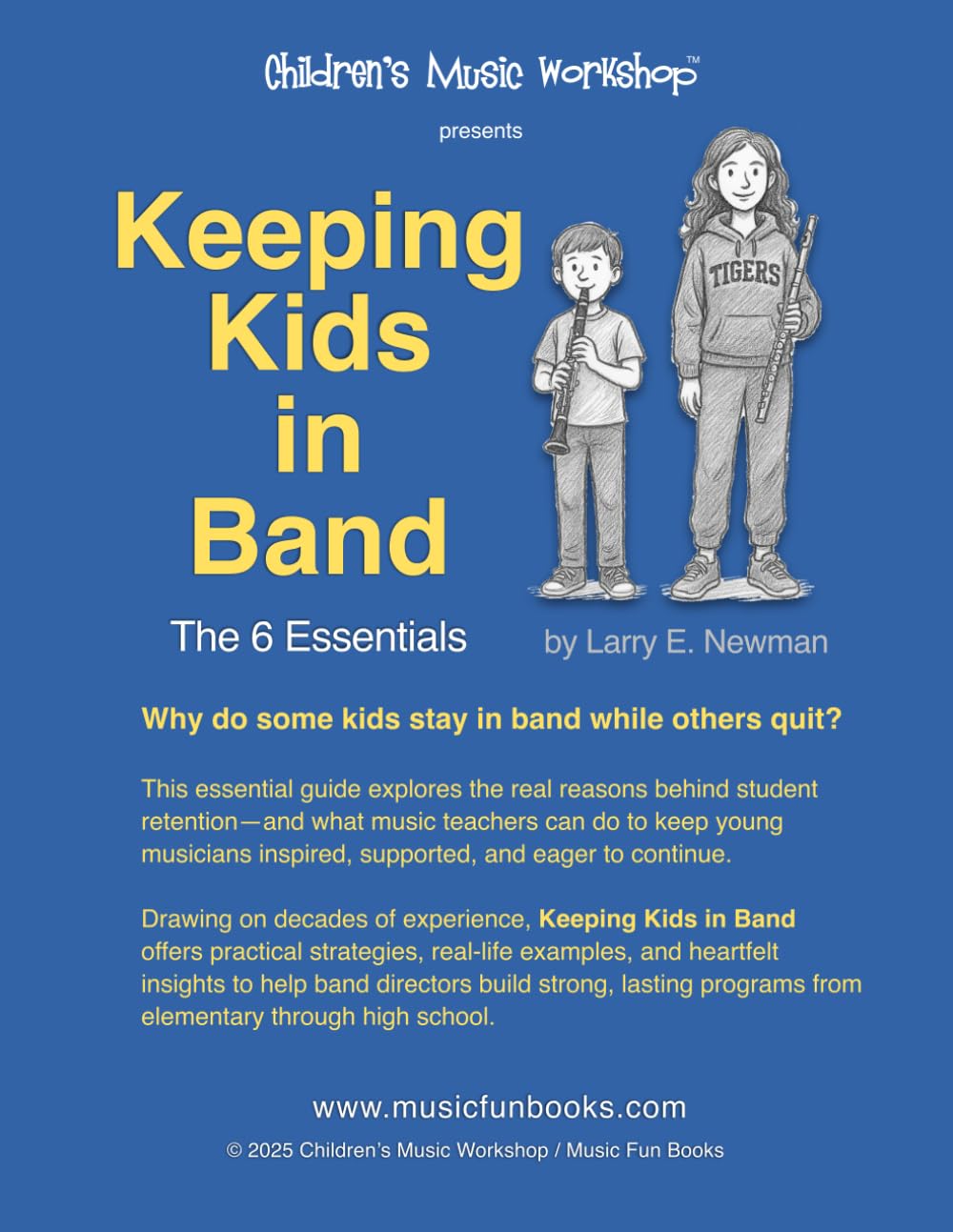
Recruiting students is only the beginning. Keeping them engaged takes a program where young musicians feel connected, capable, and excited to return. This book explores what makes students stay in band—and what teachers can do when that connection begins to fade.
Visit Amazon for current pricing and purchase options.
Beyond recruitment
Build a band experience students want to continue
Keeping Kids in Band: The Six Essentials is a professional resource for band directors, instrumental music teachers, and school music leaders. Drawing on decades of teaching and program leadership, Larry Newman looks at retention through the student’s experience: belonging, progress, friendship, choice, musical enjoyment, and support.
The book gives elementary and secondary students separate attention. Younger children need discovery, encouragement, and early success. Older students also need purpose, ownership, meaningful music, and understanding as their lives become more demanding.
What you’ll find inside
- Six reasons elementary students stay in band
- Six reasons secondary students stay in band
- Common reasons students quit and ways to respond
- Practical motivation and retention tools
- Advice for new band directors
- Beginning band and orchestra arrangement recommendations
- Strategies for the elementary-to-middle-school transition
- Sample parent emails for everyday program needs
- Reflections on the lasting value of music education
- Additional books and information about the author
The elementary years
Six reasons elementary students stay in band
For a beginning musician, this week’s experience matters. The book’s elementary essentials focus on making music feel welcoming, achievable, and worth returning to.
They feel like they belong
Band can be a child’s first experience of working toward a shared musical goal. A visible, valued ensemble helps students feel that they are part of something special.
In practice: Create opportunities to play at assemblies and school events. Use simple signs of group identity, such as band stickers or shirts, to build shared pride.
They see and hear their progress
Students need evidence that their effort is making a difference. Small, recognizable achievements can sustain motivation long before a polished concert performance.
In practice: Mark milestones with a goal chart. Compare an early recording with a later performance so students can hear how much they have learned.
Their friends are doing it, too
Friendships give young students another reason to show up. Learning and performing together can strengthen existing friendships and create connections across classrooms.
In practice: Take students’ social connections seriously when guiding instrument choices, and give classmates opportunities to succeed together.
They get to choose
Ownership begins when children have a voice in the instrument they play. Guidance matters, but a first instrument can be an exploratory step in a longer musical journey.
In practice: Introduce instruments with care, listen to each child’s interests, and help families understand that an initial choice need not be permanent.
They have fun
Warmth, humor, and musical play help students associate band with joy. Fun can reinforce learning while keeping the room encouraging and energetic.
In practice: Greet students by name. Include short rhythm games, friendly musical challenges, and achievable tunes they enjoy playing.
Their school treats band as important
Students notice when rehearsals are repeatedly canceled or they are not sent to class. Consistent schedules and reliable space communicate that their musical work matters.
In practice: Work with classroom teachers and administrators to protect rehearsal time, maintain a dependable meeting place, and support regular attendance.
Middle school and high school
Six reasons secondary students stay in band
As students grow, band competes with more demands on their time. The secondary essentials explore how a program can remain personally meaningful through those changes.
They belong to a real community
A strong band room becomes a dependable home base. Rehearsals, performances, trips, and shared responsibilities create relationships that extend beyond a class period.
In practice: Build a culture where students feel known by their director and supported by their peers.
They see a future in music
Students do not have to plan a music career to value continued participation. Music can remain a source of creativity, connection, and satisfaction alongside other ambitions.
In practice: Highlight adults in different professions who still value their own experiences in band, orchestra, or choir.
Their friendships and identity are in band
Older students begin to see themselves as musicians. Shared effort and the vulnerability of learning together can create friendships across the usual social groups.
In practice: Encourage students to support section mates, welcome different personalities, and respond kindly when someone makes a mistake.
They have a voice in the program
Students invest more deeply when they can contribute to the experience. Meaningful choice and responsibility help them become participants in shaping the ensemble.
In practice: Invite repertoire suggestions, give section leaders mentoring roles, or let students lead a warm-up or help plan a concert theme.
The music gives them something special
The experience of making a compelling piece come together can become a powerful reason to stay. Repertoire needs to reward effort and offer a satisfying musical experience.
In practice: Choose music for its quality, suitability, and connection with students. Reassess when the difficulty or arrangement prevents the group from sounding successful.
They feel supported when life gets hard
A steady rehearsal routine and a caring director can make band a welcome source of stability. Students need to feel valued even when outside pressures affect their participation.
In practice: Keep expectations clear and the atmosphere supportive. Notice changes, listen with care, and help students remain connected to the group.
Recognize the warning signs
Why students quit—and how to respond
The book encourages teachers to look beneath missed practice, disengagement, or a sudden request to leave. A student who appears unmotivated may actually feel behind, isolated, or overwhelmed.
Elementary students
- They fall behind. Offer a short individual lesson, involve parents, and set an achievable two-week comeback goal.
- A close friend quits. Acknowledge the loss, help the student make new connections, and reinforce their own place in the group.
- A new activity conflicts with band. Explain the importance of consistent attendance and explore workable alternatives where possible.
Secondary students
- Outside demands become overwhelming. Have a direct, understanding conversation and explore realistic practice expectations.
- Progress seems to stop. Recognize growth and offer an appropriate solo, duet, small ensemble, or mentoring opportunity.
- The group or repertoire no longer feels meaningful. Ask for input and create opportunities for musical ownership and social connection.
Ideas you can put to work
Practical tools for motivation and connection
Make progress visible
Gold-star charts, stickers, and small rewards give younger students tangible recognition. Before-and-after performance videos help them hear improvement that might otherwise go unnoticed.
Give practice a clear shape
Seven-day or thirty-day practice challenges provide a simple structure. Achievable musical goals and appealing reward songs give students something specific to work toward.
Build pride in participation
Instrument day, band buttons, shirts, and opportunities to perform around the school can help students feel recognized as members of the ensemble.
Keep parents connected
The book includes sample emails addressing behavior, holiday distractions, instrument problems, forgotten materials, missed classes, and weekly homework updates.
Help students take the next step
Keep the connection strong from elementary to middle school
A student can enjoy elementary band and still miss the opportunity to continue. The book treats this transition as an active partnership between programs, with a personal invitation and clear information for families.
- Let younger students hear the next ensemble. Invite the middle school band to perform or demonstrate a rehearsal.
- Introduce the next director. A classroom visit makes next year’s program feel familiar and approachable.
- Create a shared musical experience. A combined concert gives younger students a chance to play alongside older musicians.
- Explain enrollment clearly. Coordinate information about how and when families can sign up.
- Support a personal handoff. Help the receiving teacher understand students’ progress and where encouragement is needed.
If the connection between schools is limited, the book suggests inviting a counselor or administrator to a concert and providing families with a clear guide to continuing in music.
For teachers building their programs
Encouragement for new band directors
The advice for new directors returns to the foundations of a sustainable program: recruit throughout the year, give retention as much attention as enrollment, involve parents early, and use limited teaching time purposefully.
Celebrate small victories, establish trust before expecting extraordinary effort, and recognize how strongly your own attitude shapes the room. Consistency, care, and a willingness to learn can make a meaningful difference.
Repertoire that helps young ensembles succeed
The book also introduces beginning band and orchestra arrangements by Larry Newman, including Bavarian Castle, Minka Medley, River Trip, and Super Hero Blues. It describes accessible repertoire, flexible instrumentation, reproducible student parts, and accompaniment tracks as resources for young ensembles.
These are recommendations for separately available arrangements; the retention guide itself is a teacher resource rather than a student method book or collection of performance parts.
About the author
Larry E. Newman
Larry E. Newman is the founder of Children’s Music Workshop and Music Fun Books, a music educator, author, and professional trumpet player. His experience includes supervising music programs in more than eighty public and private institutions, with teaching spanning kindergarten through college.
He holds a Bachelor of Music Education from Temple University, a Master of Arts in Music Performance from Eastern Illinois University, and a California teaching credential. This book brings together observations, classroom examples, and practical approaches developed through his work with young musicians and school music programs.
Questions about the book
Frequently asked questions
Who is this book for?
It is written primarily for band directors and instrumental music teachers. School music coordinators and administrators can also use its discussion of schedules, school support, family communication, and transitions between programs.
Does it cover both elementary and secondary band?
Yes. The book presents six reasons elementary students stay in band and a separate set of six reasons for middle and high school students, reflecting their different needs and motivations.
Is this a student method book?
No. It is a professional guide to student retention and program culture. It recommends beginning ensemble arrangements, but it is not a playing method or a book of student parts.
Does the book include parent communication examples?
Yes. It includes sample emails about behavior, holiday practice reminders, instrument repair or replacement, forgotten instruments, missed classes, and weekly homework updates.
Can orchestra teachers use these ideas?
Many of the ideas about belonging, progress, student choice, parent communication, and school support can be adapted to orchestra. The book also includes beginning orchestra arrangement recommendations.
Does it address the move to middle school?
Yes. A dedicated section discusses visits, shared performances, coordinated enrollment communication, and ways to connect students with their next music program.
Is the book based on classroom experience?
Yes. Larry Newman draws on his teaching and program-directing experience, observations of students, and conversations with colleagues. The emphasis is on practical approaches teachers can adapt to their own settings.
Where can I purchase the book?
Use the Amazon button below to view the listing, current pricing, and available purchase options.
Give students reasons to keep playing
Strengthen the experience behind the music
Explore the six essentials, practical retention tools, and everyday conversations that help young musicians feel connected to their band program.
Current pricing and purchase options are available on Amazon.
As an Amazon Associate, Music Fun Books earns from qualifying purchases.