Music Fun Books Instrument Guide
Beginner’s Guide to the Piano
Help a young musician choose a suitable piano or keyboard, establish healthy posture and hand position, begin reading and playing, and create dependable practice habits.
A well-maintained acoustic piano or a digital piano with full-size weighted keys supports long-term learning.
Bench height and distance should let the forearms approach the keyboard comfortably.
An instrument that is ready, in tune, and easy to access encourages regular practice.
Meet the instrument
Why children enjoy the piano
Piano gives beginners immediate access to melody, chords, rhythm, and harmony. The keyboard is visually organized, and students can create a clear sound from the first lesson.
How the sound begins
On an acoustic piano, each key activates a hammer that strikes strings. On a digital piano, key sensors trigger recorded or modeled sounds through speakers or headphones.
Acoustic or digital?
A good acoustic piano offers natural touch and resonance but needs tuning and space. A quality digital piano offers headphones, stable pitch, and easy placement. Either can support a beginner when the action and size are appropriate.
Helpful expectation: A small portable keyboard can introduce musical ideas, but narrow keys, too few keys, or an unweighted action may limit technique. Ask the teacher what is needed for the chosen course of study.
Before beginning
Is your child ready for piano?
Age matters less than physical fit, interest, and access to instruction. These four checks are more useful than choosing by grade level alone.
Comfortable bench position
The child should sit tall with feet supported and shoulders relaxed.
Basic left-right awareness
The student will coordinate two hands and read patterns moving in both directions.
Finger independence
Early playing asks individual fingers to move without stiffening the whole hand.
Regular access
The instrument should be available for short, frequent practice without complicated setup.
Choosing an instrument
Choosing an acoustic piano or digital keyboard
Touch, key size, pedal compatibility, sound quality, stability, and service matter more than a long list of electronic features.
An acoustic piano may fit when…
- The instrument is in good mechanical condition.
- Regular professional tuning is practical.
- The home has suitable space and climate.
- The student values natural touch and resonance.
A digital piano may fit when…
- Headphone practice is important.
- The family needs easier placement or moving.
- Full-size weighted keys are available.
- A stable stand, bench, and pedal can be used.
What the setup should include
- A stable adjustable bench
- Foot support for a smaller child
- A secure music rest
- A suitable sustain pedal when needed
- Headphones used at a safe listening level
What to inspect
- All keys play evenly and return correctly.
- The stand and bench do not wobble.
- Pedals work consistently.
- Speakers and headphone connections are clear.
- An acoustic piano can hold tuning and has been inspected.
First lessons
How beginners get started
Good instruction separates the first skills into manageable steps before asking the student to read or perform a complete song.
Set bench height and distance
Sit near the front of the bench with balanced posture, relaxed shoulders, and supported feet.
Explore the keyboard pattern
Find groups of two and three black keys, then locate middle C and other landmark notes.
Shape relaxed hands
Use naturally curved fingers and avoid collapsing joints or lifting the shoulders.
Coordinate rhythm, fingers, and reading
Begin with short patterns and simple notes before adding more hand movement.
Combine two hands and musical details
Add simple harmony, dynamics, phrasing, sharps, flats, and familiar songs gradually.
How to Play the Piano: Video Lessons
Select any lesson below. The player changes while the Music Fun Books page address stays the same.
After every practice
Simple piano and keyboard care
Clean hands, stable placement, moderate climate, and professional service protect both acoustic and digital instruments.
Do regularly
- Wash and dry hands before playing.
- Dust keys with a soft dry or manufacturer-approved cloth.
- Keep liquids and food away.
- Use a fitted cover if appropriate.
- Schedule professional tuning for an acoustic piano.
Avoid
- Spraying cleaner directly on keys
- Using alcohol or household chemicals without maker approval
- Placing drinks, plants, or heavy objects on the instrument
- Exposing the instrument to heat, moisture, or direct sun
- Attempting internal repairs at home
For digital instruments: Protect power cords and use the specified adapter. For acoustic pianos, internal tuning and repairs should be done by a qualified piano technician.
Common questions
Piano FAQs for families
Does a beginner need 88 keys?
A full 88-key instrument supports long-term study and standard repertoire. A smaller keyboard can introduce basics, but the teacher should confirm that it meets lesson needs.
Are weighted keys important?
Weighted or graded hammer-action keys help students develop control that transfers to an acoustic piano. They are a strong choice for sustained piano study.
Is an acoustic piano better than a digital piano?
Both can be effective. Condition, touch, sound, practice access, space, maintenance, and the teacher’s requirements matter more than category alone.
How high should the bench be?
The student should sit with relaxed shoulders and forearms roughly level with the keyboard. A smaller child may also need a stable footrest.
How long should a beginner practice?
Short, focused daily practice is best. A simple routine of review, one new skill, and enjoyable music builds consistency.
How often does an acoustic piano need tuning?
Tuning needs vary with climate, instrument condition, and use. A piano technician can recommend a schedule for the specific instrument.
Continue learning
Three useful books for beginning piano
These choices provide a clear starting path while the complete piano collection offers additional methods and repertoire.
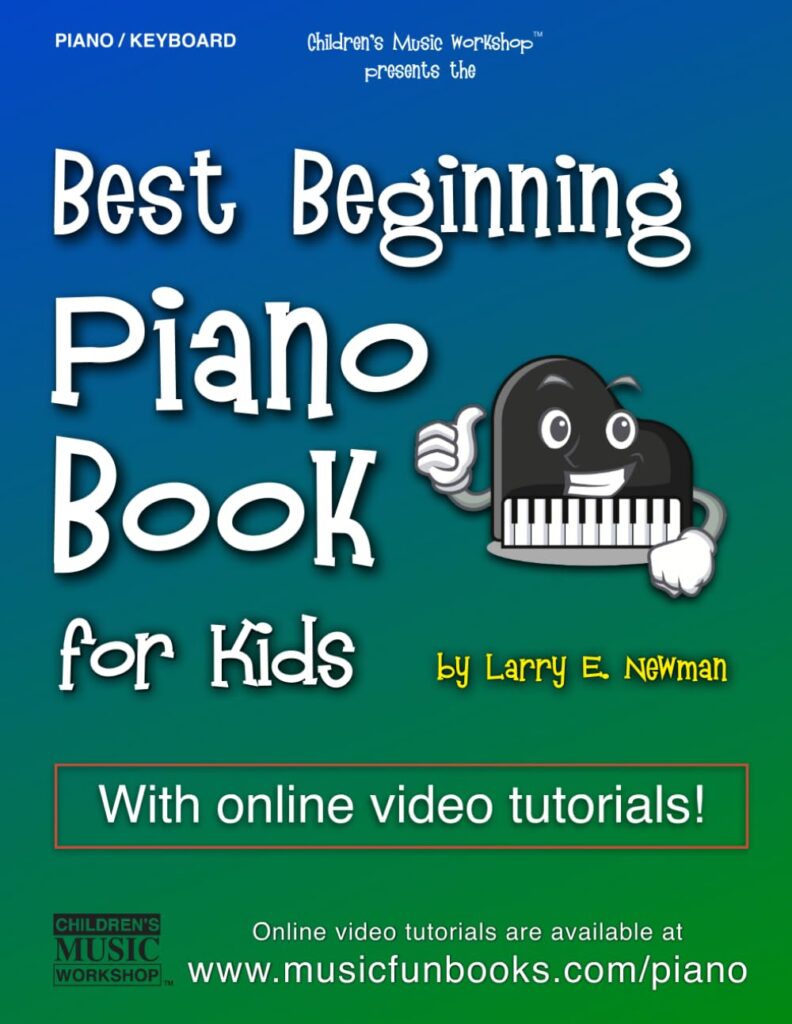
Best Beginning Piano Book for Kids
A step-by-step first method with large notes, familiar songs, and free page-by-page video lessons.
Learn more
Easy Piano Solos for Kids and Beginners
Simplified classical pieces with large notation and online MP3 practice support.
Learn more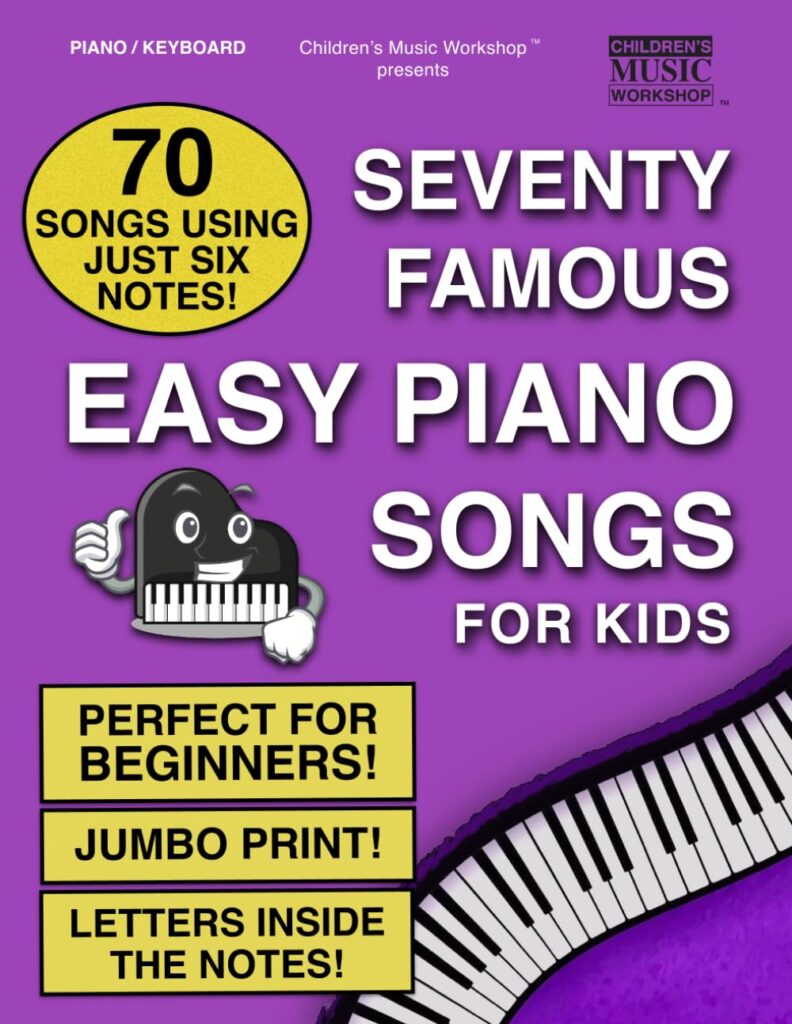
Seventy Famous Easy Piano Songs for Kids
A broad collection of familiar music that helps beginners develop reading, coordination, and confidence.
Learn moreBrowse all piano books
Explore beginner methods, easy songs, classical solos, hymns, holiday music, and piano activity books.
Visit Piano BooksCompare another instrument
Return to the complete collection of beginner instrument guides for children, parents, and teachers.
View All Instrument Guides