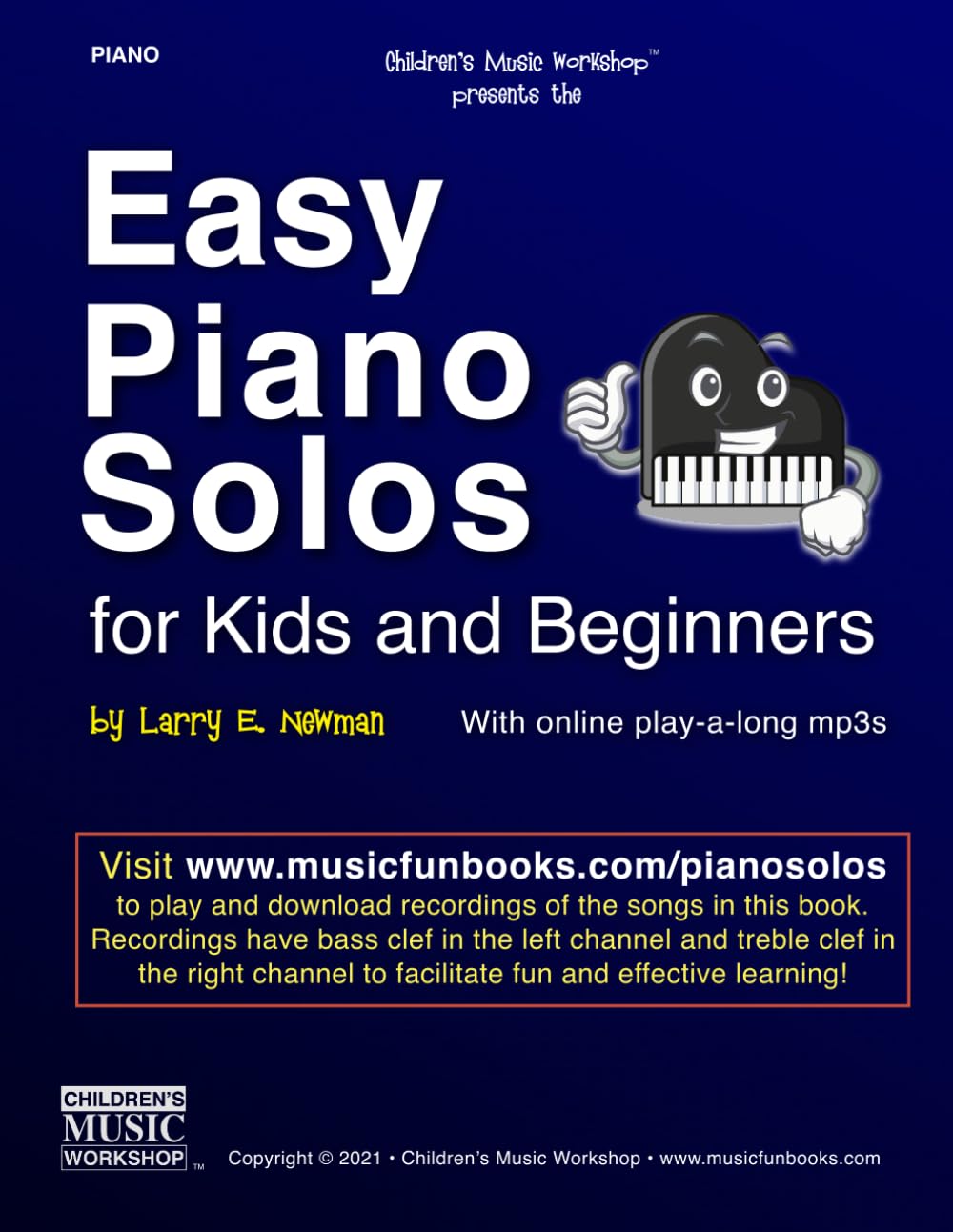
Easy Piano Solos for Kids and Beginners
Twenty-two familiar classical pieces arranged for beginning and developing pianists, with simplified two-hand writing, large notation and free MP3 recordings that help students hear and practice each part.
- Recognizable themes by major classical composers
- Large, spacious notation for easier reading
- Simplified treble- and bass-clef parts
- Matching recordings for every piece
Classical Music Without Overwhelming the Beginning Pianist
This is a repertoire supplement rather than a first piano method. It gives students who have learned the basic keyboard and notation skills a collection of recognizable music they can enjoy while continuing to strengthen reading, rhythm and coordination.
For First- and Second-Year Students
The arrangements are especially useful once a beginning student is comfortable reading simple treble- and bass-clef music.
Real Classical Repertoire
Beethoven, Mozart, Bach, Tchaikovsky, Strauss, Vivaldi and other major composers give students music worth recognizing and remembering.
Useful for Lessons or Home Practice
Teachers can assign pieces as supplemental repertoire, while the recordings provide extra support between lessons.
See the Style and Difficulty of the Arrangements
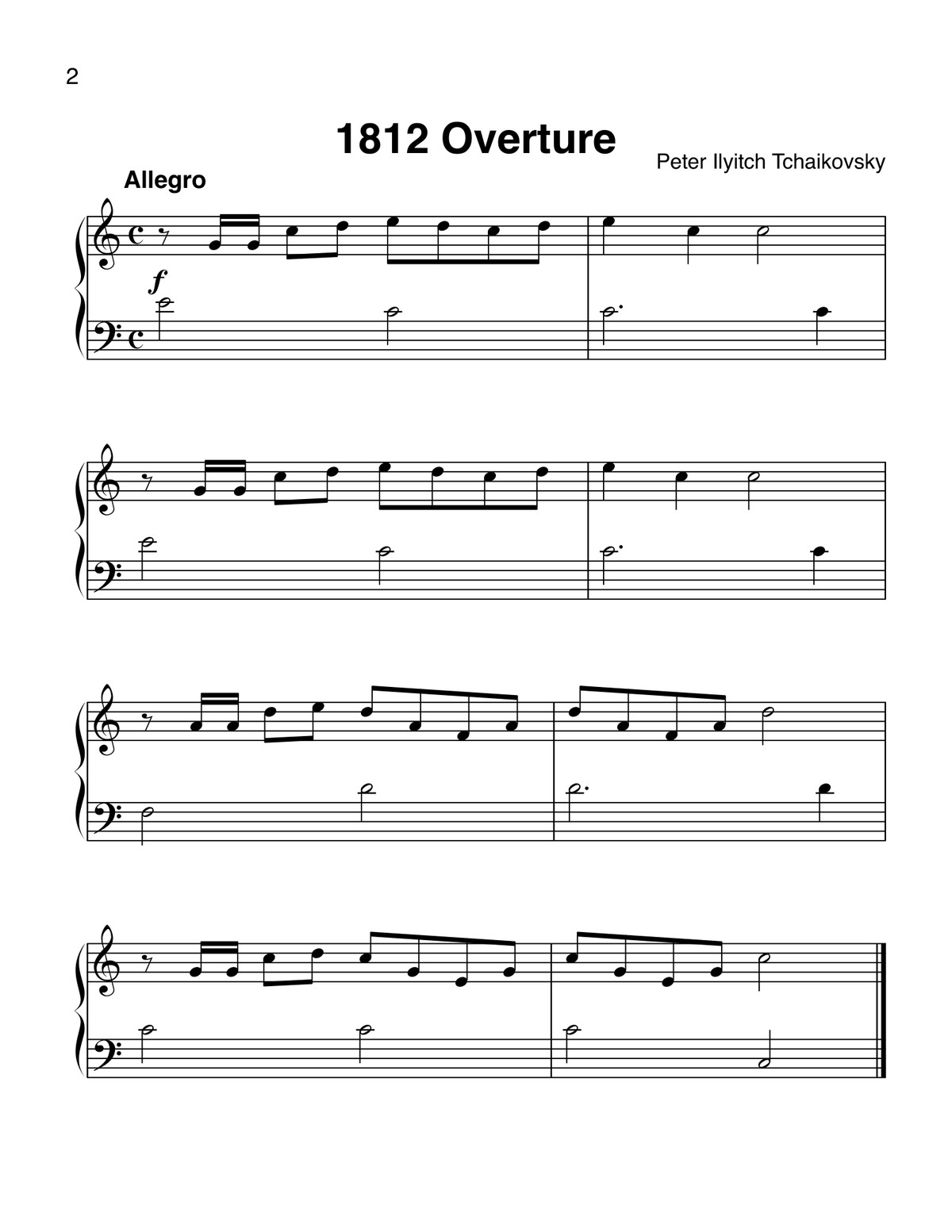
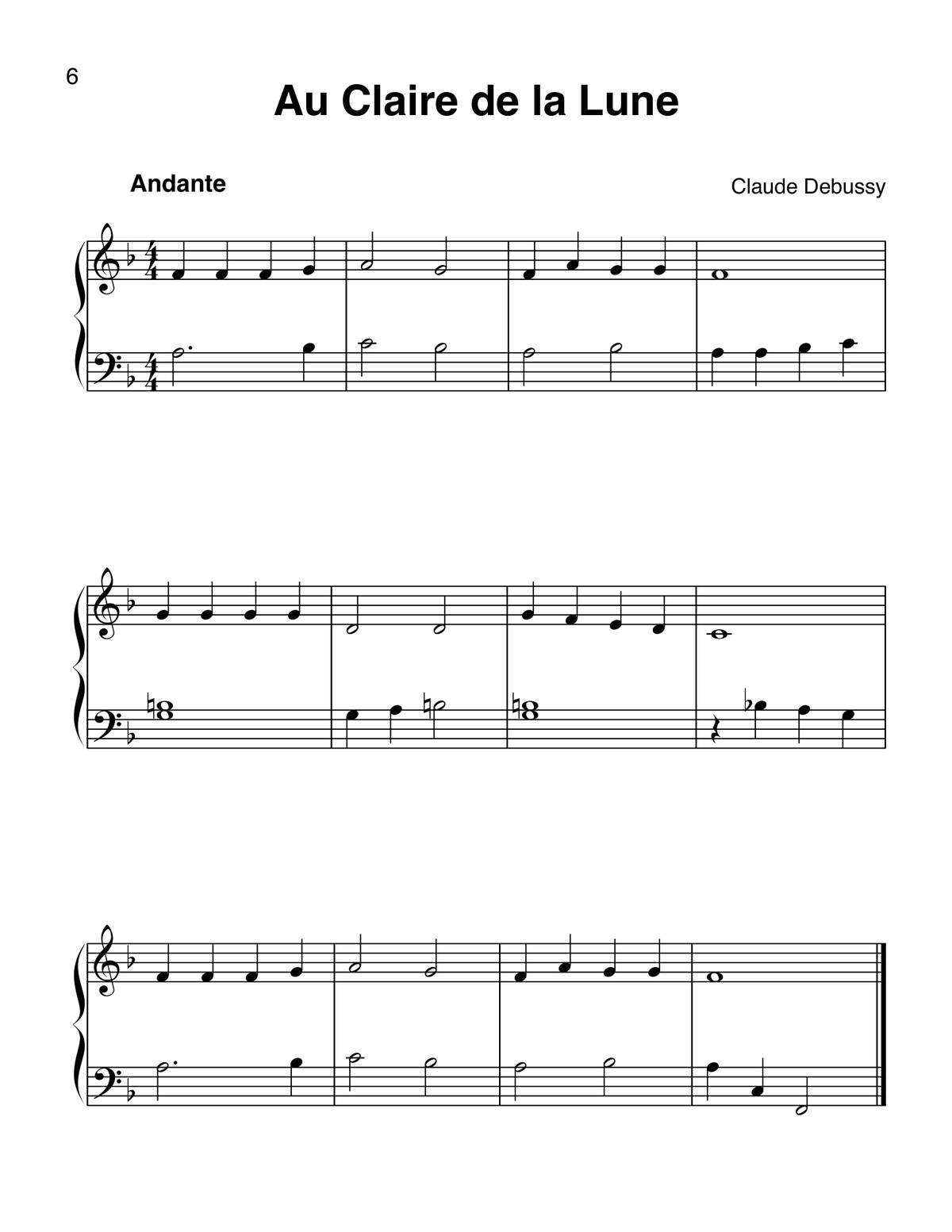
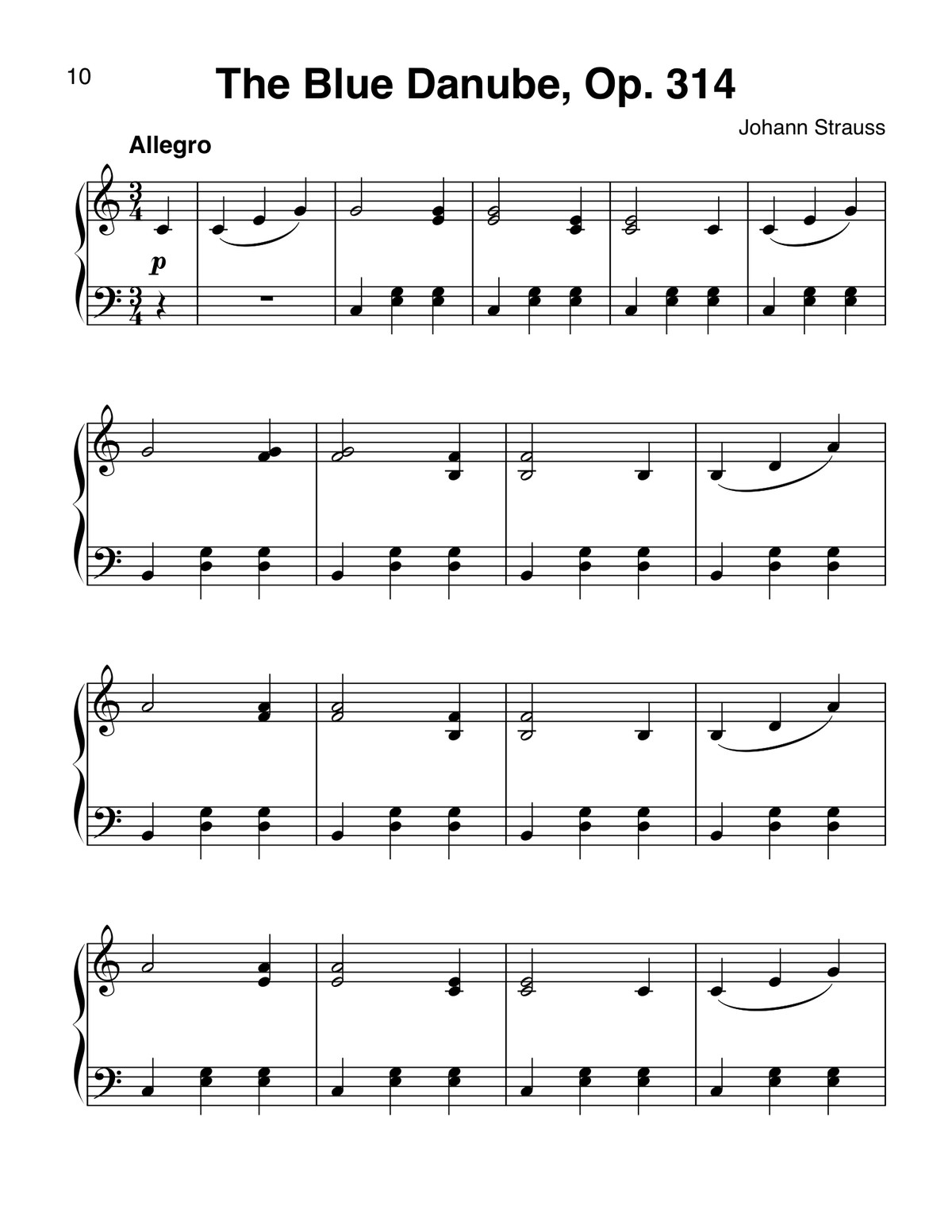
These six selections show the variety of the collection, from very approachable two-hand writing to more active pieces near the upper end of the book. Click any page to see the full-size image.
 Open full size
1812 Overture
Tchaikovsky’s famous theme begins the collection with clear,
approachable two-hand writing.
Open full size
1812 Overture
Tchaikovsky’s famous theme begins the collection with clear,
approachable two-hand writing.
 Open full size
Au Claire de la Lune
A particularly clean example of the simple left-hand and
right-hand writing used throughout the easier selections.
Open full size
Au Claire de la Lune
A particularly clean example of the simple left-hand and
right-hand writing used throughout the easier selections.
 Open full size
The Blue Danube
Strauss’s well-known waltz introduces another accompaniment
texture while keeping the melody immediately recognizable.
Open full size
The Blue Danube
Strauss’s well-known waltz introduces another accompaniment
texture while keeping the melody immediately recognizable.
 Open full size
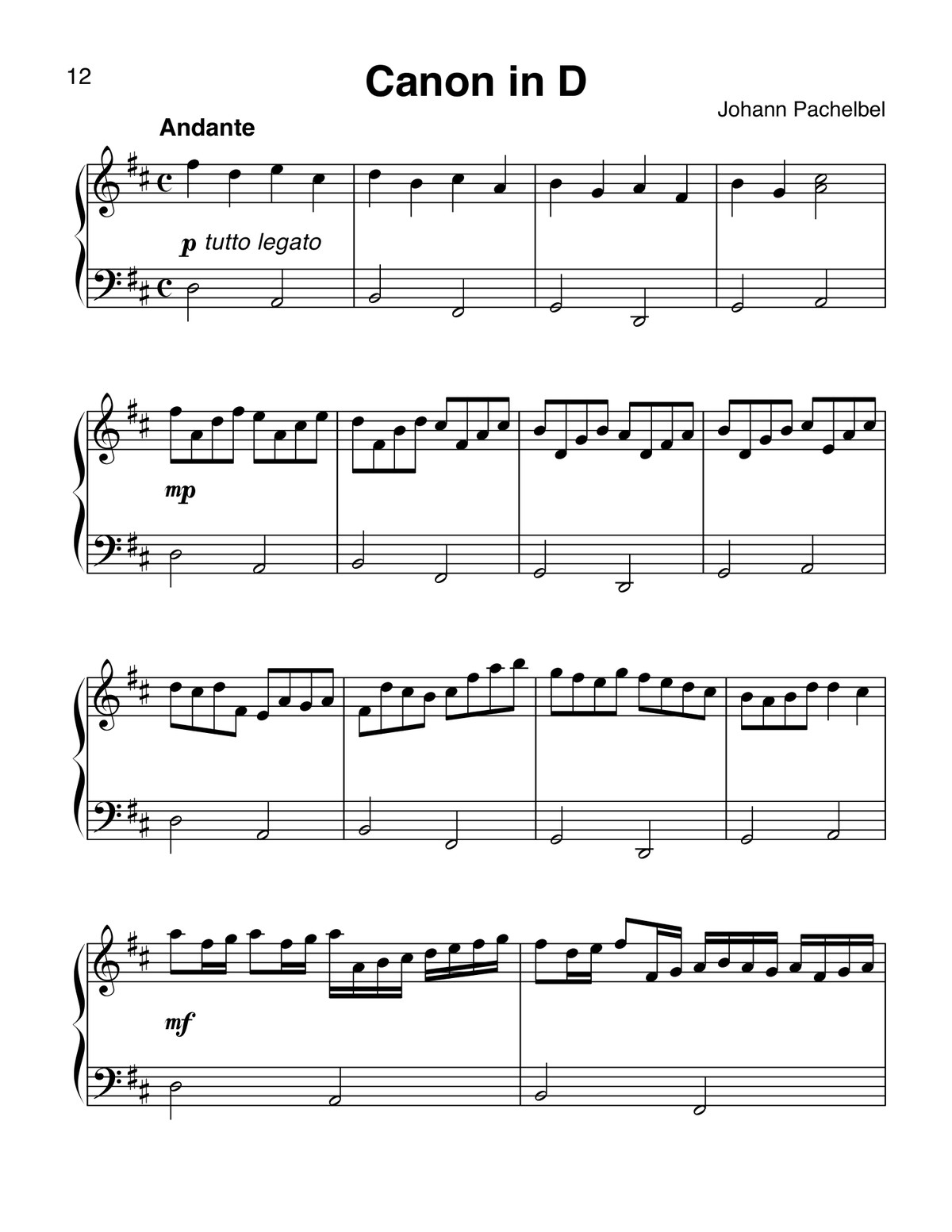
Canon in D
A more active melodic line helps developing players strengthen
reading and coordination without an overly difficult left hand.
Open full size
Canon in D
A more active melodic line helps developing players strengthen
reading and coordination without an overly difficult left hand.
 Open full size
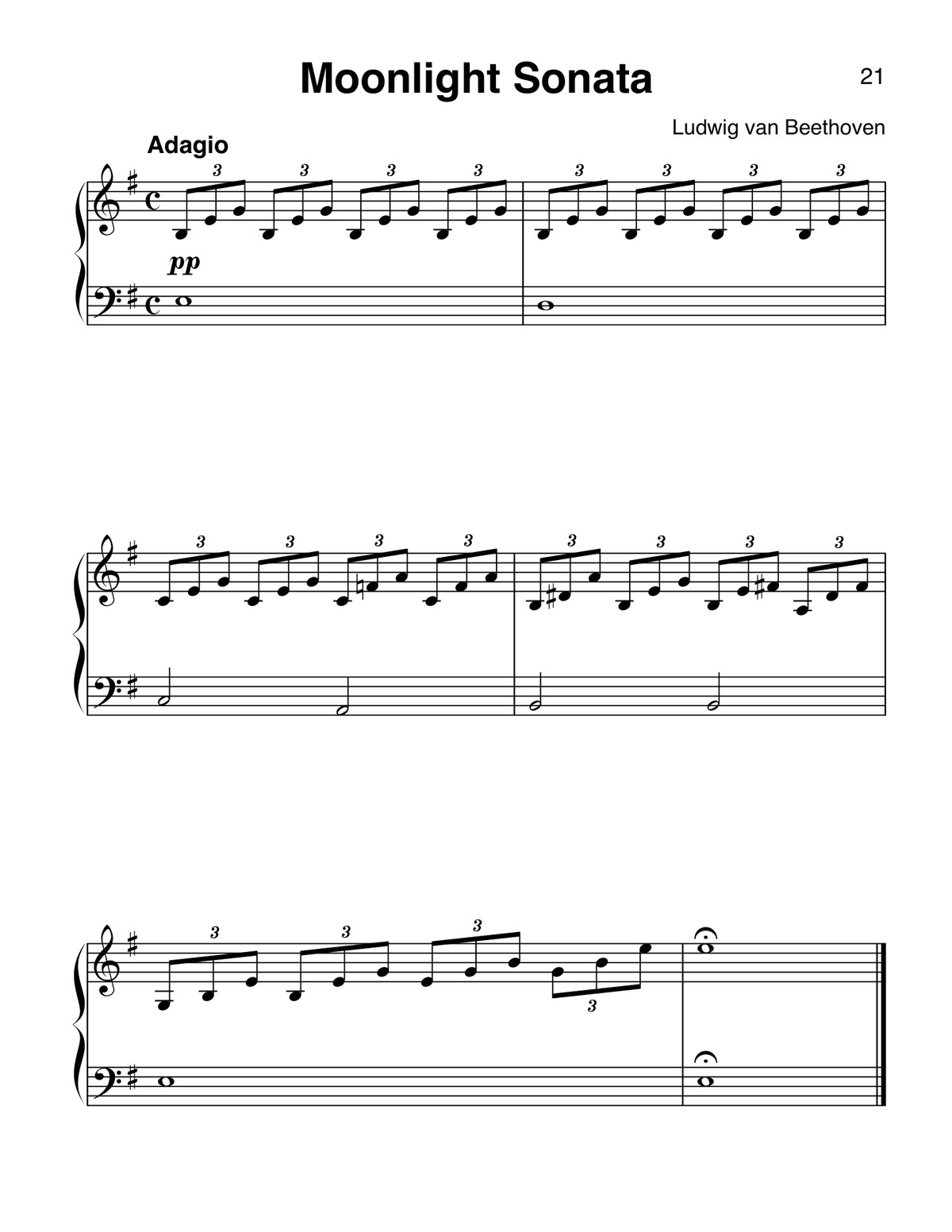
Moonlight Sonata
Beethoven’s unmistakable texture gives students the experience of
playing one of classical music’s most famous piano themes.
Open full size
Moonlight Sonata
Beethoven’s unmistakable texture gives students the experience of
playing one of classical music’s most famous piano themes.
 Open full size
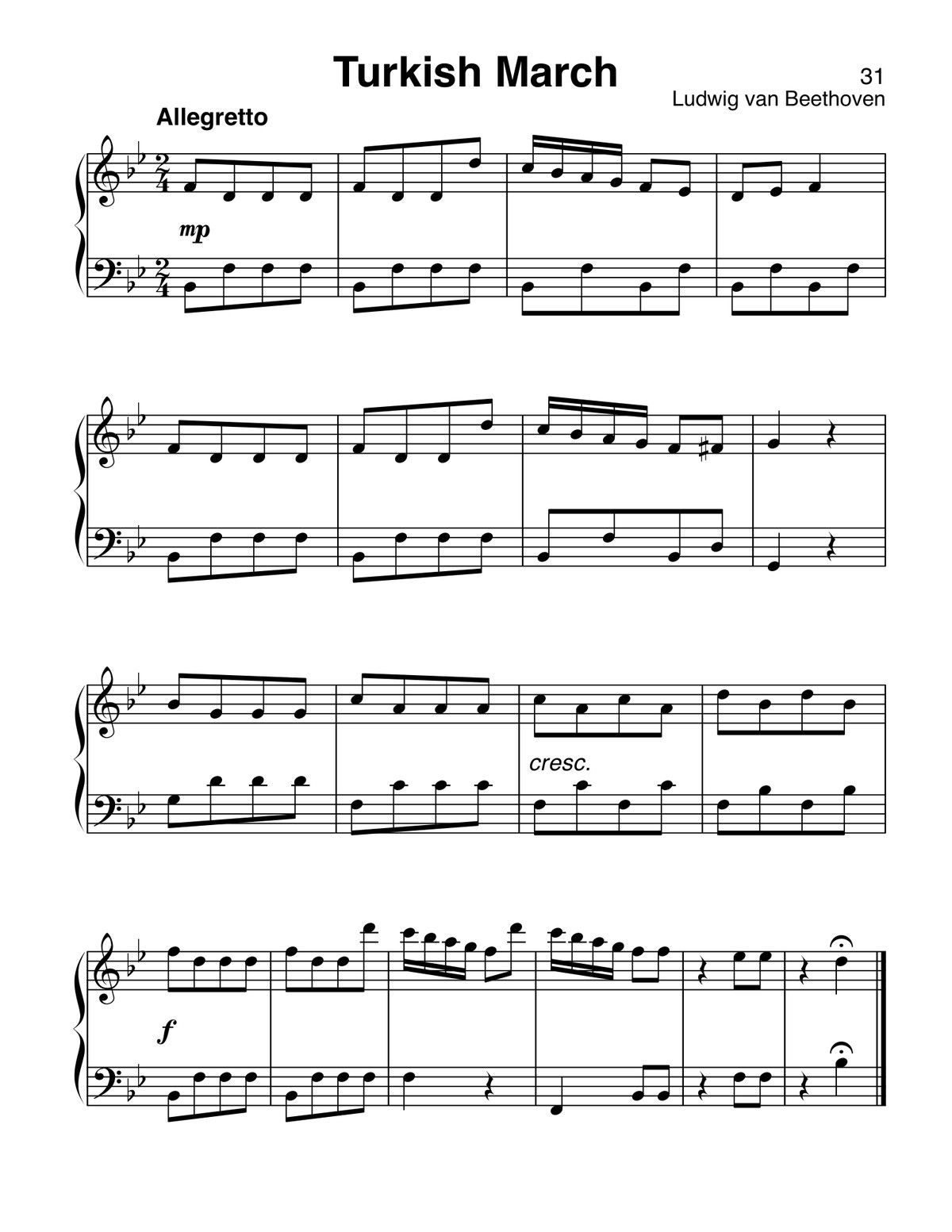
Turkish March
Mozart’s energetic theme provides a satisfying challenge toward
the more developed end of the collection.
Open full size
Turkish March
Mozart’s energetic theme provides a satisfying challenge toward
the more developed end of the collection.
Melody in One Hand — Support in the Other
The arrangements are designed to give developing pianists genuine two-hand experience without making both parts equally complicated.
In many selections, the right hand carries the familiar theme while the left hand provides a simpler supporting part. This lets the student concentrate on coordination, steady rhythm and musical balance.
- Separate treble- and bass-clef parts
- Comfortable patterns for developing players
- Recognizable melodies encourage musical phrasing
- Useful sight-reading and recital repertoire
- Matching audio makes independent practice easier
Classical Themes Students Can Recognize and Enjoy
The collection draws on well-known classical works and traditional melodies, giving students a varied repertoire for lessons, home practice and informal performance.
Play the Matching Piano Recordings
Choose any title below and the matching recording will play directly on this page. You can switch songs without leaving Music Fun Books.
The left-hand bass-clef part is recorded in the left stereo channel, and the right-hand treble-clef part is recorded in the right stereo channel.
Select another title at any time to change recordings. The player remains on this page while you practice.
Use the Recordings as a Practice Partner
The recordings can provide a musical model before practice and help students hear how the two parts fit together.
Listen First
Hear the complete recording before playing so the rhythm and musical shape are familiar.
Practice Right Hand
Learn the treble-clef melody slowly and aim for even rhythm and comfortable fingering.
Practice Left Hand
Work separately on the bass-clef support until it feels secure and automatic.
Bring the Hands Together
Combine both parts slowly, then use the recording to develop a steady tempo and musical flow.

Why Use Classical Themes With Beginning Pianists?
Students often respond differently when the piece they are learning is music they recognize. Instead of playing an exercise simply because it appears on the next page, they have an idea of how the music should sound and a musical goal to work toward.
These arrangements are intended to make that experience available earlier. The parts are simplified for developing players, but the character of the original themes remains recognizable.
The matching recordings provide another layer of support, helping students connect what they see on the page with rhythm, phrasing and the sound of both hands working together.
Questions About Easy Piano Solos for Kids and Beginners
Is this a beginning piano method book?
How many pieces are included?
Are the arrangements written for both hands?
Are free recordings included?
How are the stereo recordings arranged?
Can teachers use this with another piano method?
Is this suitable for recitals?
Does the book contain pop music?
Give a Developing Pianist Music Worth Playing
Twenty-two familiar classical selections with accessible two-hand arrangements, large notation and matching free MP3 practice tracks.