Independent method comparison for music educators
Tradition of Excellence vs. The Beginning Band Fun Book
Both methods can help students begin successfully, but they were created for different teaching situations. This comparison explains the major differences so directors can choose the approach that best fits their students.
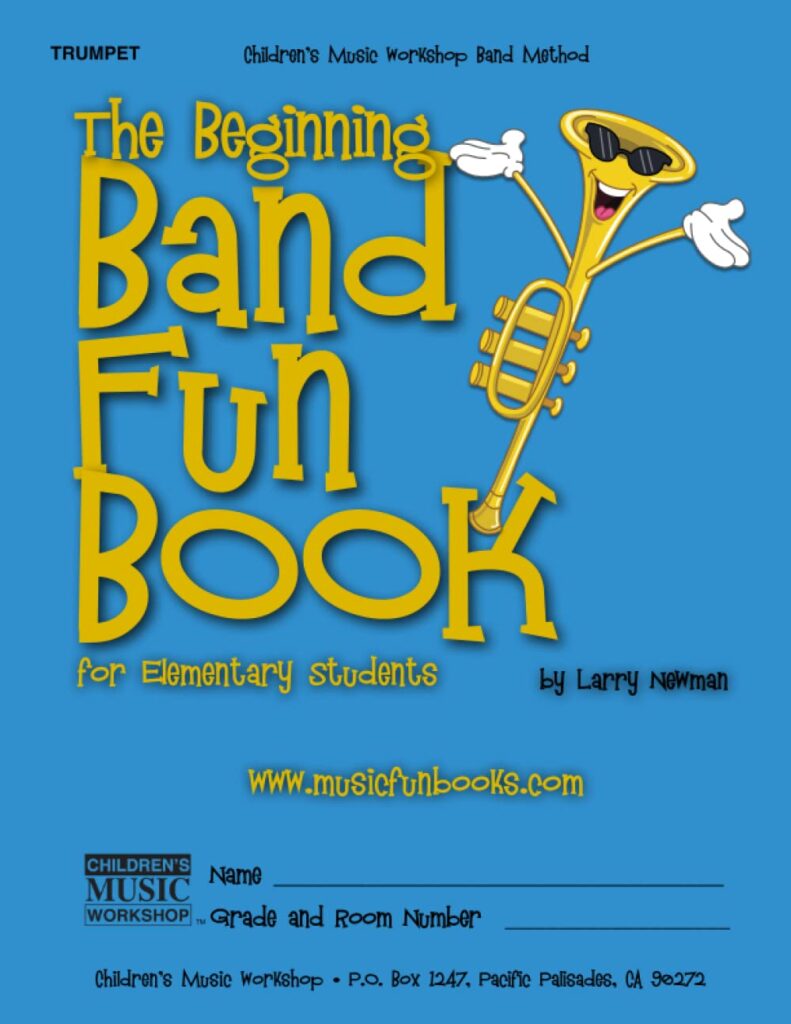
The Beginning Band Fun Book was designed specifically for young elementary beginners.
This comparison was prepared by Larry E. Newman, author of The Beginning Band Fun Book. It is intended to help music educators evaluate which approach best fits their students. Music Fun Books is not affiliated with or endorsed by Neil A. Kjos Music Company. Tradition of Excellence is referenced only to identify the method being discussed.
The short answer
Neither method is the best choice for every beginning band
The clearest difference is visible on the page. Tradition of Excellence moves through a broad curriculum and asks students to handle several kinds of learning at once. Its official trumpet sample page 10 contains seven numbered activities plus vocabulary, a repeat sign, phrase work, composer history, a duet, a round, and an instrument-specific private lesson. The Beginning Band Fun Book deliberately spreads learning out with oversized notation, early letter names, 3-6 measures per line, and one new idea at a time.
Consider Tradition of Excellence when…
Your students are ready to read standard notation, process several activities and concepts on a page, and follow a three-book grade 5-8 curriculum that integrates technique, ensemble playing, vocabulary, history, theory, and digital practice.
Consider The Beginning Band Fun Book when…
You teach younger elementary beginners who benefit from extra-large notation, fewer measures per page, familiar tunes, gradual pacing, and free practice support that follows the book.
At a glance
A practical side-by-side comparison
The comparison below focuses on differences that matter in an actual beginning band classroom. Tradition of Excellence information is based on Neil A. Kjos Music Company’s current descriptions of the method. Beginning Band Fun Book information is based on the current series and its companion resources.
| Teaching consideration | Tradition of Excellence | The Beginning Band Fun Book |
|---|---|---|
| Intended learners | A comprehensive curriculum that Kjos connects to grade 5-8 national music standards and continuing band development. | An elementary-only first method designed specifically for students in Grades 2-5. |
| Book sequence | Books 1, 2, and 3 continue the method, with correlated theory, technique, chamber music, concert, and performance collections. | One 56-page introductory trumpet or clarinet volume is intended to establish a first-year foundation; separate intermediate and ensemble books are optional next steps. |
| Actual page density | The official trumpet sample page 10 fits seven numbered items, including a warm-up, builder, song, duet, round, skill task, and private lesson, together with vocabulary and history. | Pages use oversized notation, minimal content, and generally 3-6 measures per line so a young player has less information to track at once. |
| Note-reading support | Uses standard noteheads in the examined sample and expects students to apply reading skills; one activity asks them to supply missing notes before playing. | Places letter names inside the earliest noteheads, then uses repetition and familiar melodies to help students become independent readers. |
| Concepts on one sample page | Page 10 combines slurs, articulation, a one-measure repeat, phrase marking, a round, duet playing, solo/soli and tutti roles, composer history, and instrument technique. | Deliberately introduces one primary new idea at a time and gives it more visual space before adding another demand. |
| Instrument-specific teaching | The trumpet sample includes a private-lesson exercise with alternate valve combinations and mouthpiece practice; the corresponding bassoon sample substitutes half-hole guidance. | Separate coordinated editions use the same songs and page numbers while adapting ranges and fingerings; trumpet remains around F/G and clarinet avoids demanding early break crossings. |
| Ensemble experiences | Duets, rounds, and solo/soli-to-tutti contrasts appear in the examined student page, with additional correlated chamber, flexible-ensemble, and concert collections available. | Coordinated editions let mixed instruments play the same numbered songs together; optional FUNsembles duet and trio books expand part independence. |
| Percussion scope | The Book 1 percussion edition is 96 pages, twice the length of the typical 48-page wind and brass books, reflecting a more extensive combined-percussion curriculum. | The percussion editions follow the series’ elementary-first philosophy, emphasizing readable assignments and achievable early ensemble participation. |
| Home-practice system | Kjos IPS offers eBooks, demonstrations, tempo-controlled play-alongs, videos, recording, sharing, and tools for writing in the digital book. | Free browser-based tracks require no student account, and clarinet and trumpet students can follow page-by-page demonstration videos. |
Evidence note: Tradition of Excellence page-level observations above come from the official Kjos Book 1 trumpet and bassoon sample page 10. Beginning Band Fun Book observations come from its published series specifications and coordinated editions. Digital access can vary, so verify the exact edition or package before purchasing.
The key difference
Why The Beginning Band Fun Book takes a narrower approach
The Beginning Band Fun Book is not trying to place an entire comprehensive band curriculum into one first-year volume. It was designed to solve a more specific problem: many young elementary students become overwhelmed before they have enough early success to think of themselves as musicians.
A comprehensive curriculum prioritizes…
- Several numbered exercises and learning modes per page
- Standard noteheads and written music-reading tasks
- Technique, vocabulary, history, and ensemble roles together
- Books 1-3 plus conductor and correlated performance materials
- Digital practice, recording, sharing, and notation through IPS
An elementary-only introduction prioritizes…
- Extra-large, easy-to-read notation
- Less visual information on each page
- Short exercises and recognizable tunes
- Gentle ranges and gradual skill development
- Confidence, retention, and successful home practice
Choosing for your program
Which beginning band method should you choose?
Tradition of Excellence may be the stronger choice if…
- Your students can move among multiple exercises and concepts on one page.
- You want standard notation used from the examined early sample rather than letter names inside noteheads.
- You want technique, history, vocabulary, written work, and ensemble roles integrated into lessons.
- Your program wants Books 1-3, extensive correlated materials, and IPS digital tools.
The Beginning Band Fun Book may be the stronger choice if…
- Your beginners are primarily in Grades 3-5.
- Your students meet only once or twice per week or have limited home support.
- Oversized notation, early note letters, and 3-6 measures per line would improve reading and focus.
- Your main first-year goals are participation, confidence, retention, and enjoyable music-making.
Not necessarily either-or
Can the two approaches work together?
Yes. Some teachers may find that the most practical answer is a sequence rather than a permanent choice. The Beginning Band Fun Book can provide a supportive first step for younger students. After students have developed basic tone production, music-reading skills, rehearsal habits, and confidence, a director can transition them into a more comprehensive district-adopted method.
This approach lets teachers match the amount of information on the page to the developmental readiness of the students while preserving a path into a broader long-term curriculum.

“The most important question is not which method contains the most material. It is which method gives these particular students the best chance to succeed and continue playing.”
Larry E. Newman
Music educator, author of The Beginning Band Fun Book, and founder of Music Fun Books
Common questions
Tradition of Excellence and Beginning Band Fun Book FAQ
Is The Beginning Band Fun Book a replacement for Tradition of Excellence?
Not in every program. It can serve as an alternative first method for younger elementary students or as a preparatory method before students transition into a more comprehensive curriculum.
Which method is better for elementary school beginners?
That depends on readiness as much as age. A student who can track several exercises, symbols, instructions, and ensemble roles on a page may benefit from Tradition of Excellence. A younger student who needs one clear task, oversized notes, early letter-name assistance, and shorter lines may be better served by The Beginning Band Fun Book.
Which method provides more comprehensive curriculum material?
Tradition of Excellence. Its scope includes three progressive books, conductor materials, a 96-page Book 1 percussion edition, theory and technique books, chamber and concert collections, standards-oriented musicianship, and the IPS digital environment.
Which method has the simpler page design?
The Beginning Band Fun Book. It uses oversized notation, early letter names, minimal content, and generally 3-6 measures per line. By comparison, the examined Tradition of Excellence trumpet sample page contains seven numbered activities plus vocabulary, written work, technique reminders, and music history.
Does The Beginning Band Fun Book include audio or video support?
Yes. Students can use free individual play-along tracks without creating an account. The series also provides beginner instrument tutorials and page-by-page clarinet and trumpet demonstration videos.
What online support comes with Tradition of Excellence?
The Kjos Interactive Practice Studio includes eBooks, demonstration recordings, tempo-controlled play-alongs, video lessons, a recording studio, student-teacher sharing, and tools for writing directly in digital books. Directors should confirm access requirements for the exact edition or package they purchase.
Does Tradition of Excellence include instrument-specific instruction?
Yes. On the official sample page, the trumpet private lesson uses alternate valve combinations and mouthpiece practice, while the corresponding bassoon page discusses half-hole technique and instrument care. This is more than a simple transposition of identical text.
Sources and comparison methodology
This page compares the stated design and published features of both methods. Readers can verify the source information here:
- Neil A. Kjos Music Company: Tradition of Excellence band method and resources
- Neil A. Kjos Music Company: Tradition of Excellence Book 1 editions and conductor materials
- Kjos: Book 1 trumpet product page and official sample page
- Kjos: Book 1 bassoon product page and official sample page
- Kjos: 96-page Book 1 percussion edition
- Neil A. Kjos Music Company: Tradition of Excellence Book 2
- Neil A. Kjos Music Company: Tradition of Excellence Book 3
- Kjos Interactive Practice Studio
- Music Fun Books: Beginning Band Fun Book series information
- Music Fun Books: Beginning Band Fun Book trumpet specifications and sample link
- Music Fun Books: free Beginning Band Fun Book audio and video support
Would a gentler first method help your elementary beginners?
Explore The Beginning Band Fun Book editions, listen to the free play-along tracks, and decide whether its elementary-only approach fits your students.
Comparison last reviewed August 2026. Product features may change; verify current editions with each publisher.