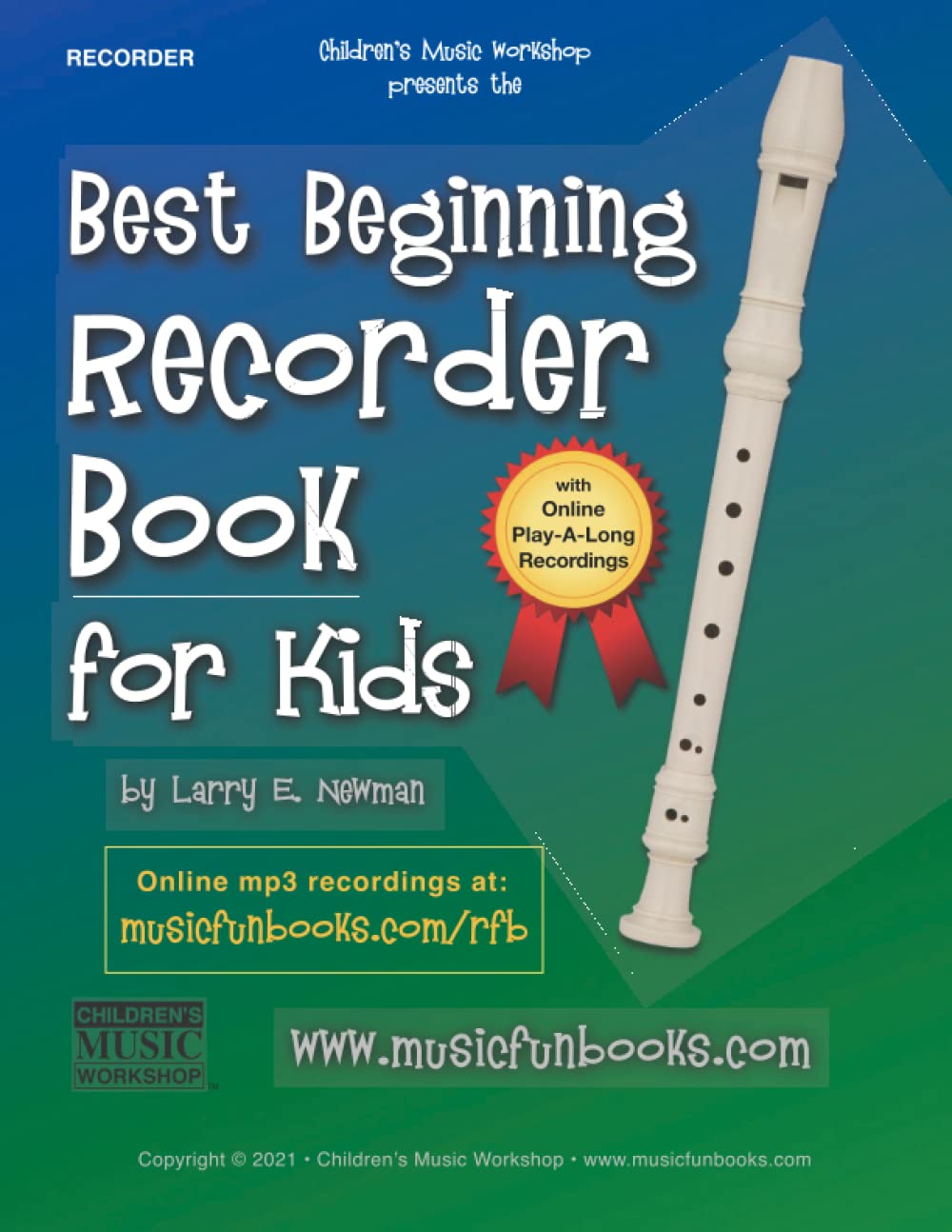
The Best Beginning Recorder Book for Kids
Start with how to hold the recorder and play the first notes, then continue into scales, more advanced rhythms, classical and traditional repertoire, duets and three-part ensemble music — all in one 102-page book.
- Designed for elementary and early middle-school beginners
- Clear recorder fingerings and step-by-step reading development
- Major and minor scales, technique and advanced rhythms
- Solos, duets, rounds, melody/harmony pieces and trios
Start With the First Recorder Note. Continue Into Intermediate Playing.
This is not a book that assumes the student already knows how to play. It begins at the beginning, establishes the fundamentals and then continues well beyond the typical first recorder unit.
Establish the Basics
Learn how to hold the recorder, cover the holes, produce a gentle sound, tongue notes and read the first simple rhythms.
Build a Strong First-Year Foundation
New notes, eighth notes, slurs, dynamics, key signatures, rounds and increasingly substantial songs expand musical independence.
Continue Into Intermediate Recorder
Scales, arpeggios, sixteenth notes, syncopation, 6/8, chromatic playing, advanced repertoire and ensemble music take over.
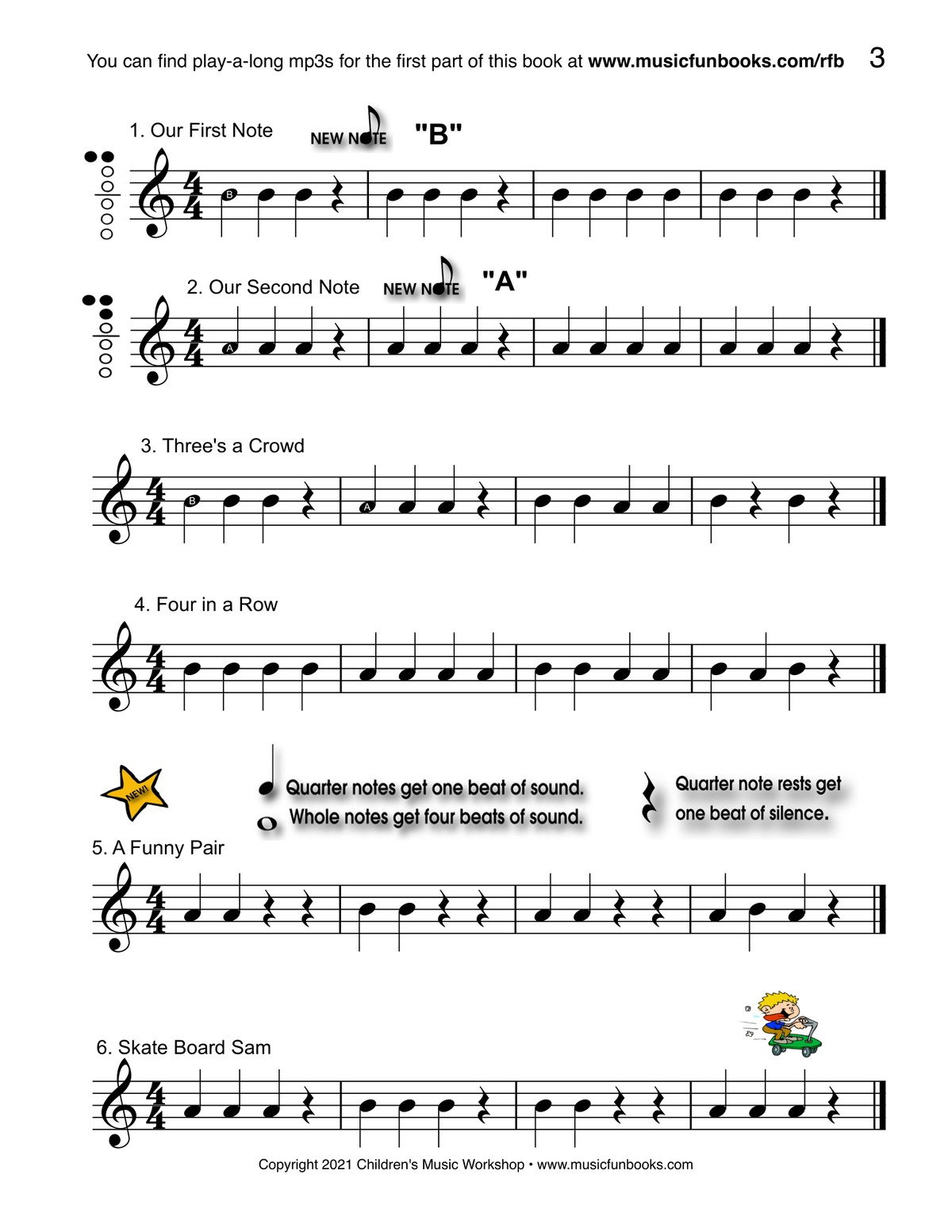
The Student Really Can Begin Here
After the introductory pages explain how to hold the recorder and create a sound, the music begins with the familiar B and A fingerings and very short exercises.
New notes and rhythms are added gradually so a brand-new recorder player does not need another method before beginning this book.
- Standard Baroque recorder fingering
- Clear fingering diagrams beside new notes
- Simple first rhythms and short exercises
- Familiar music mixed with technical development
- Play-along MP3 support for the beginning sequence
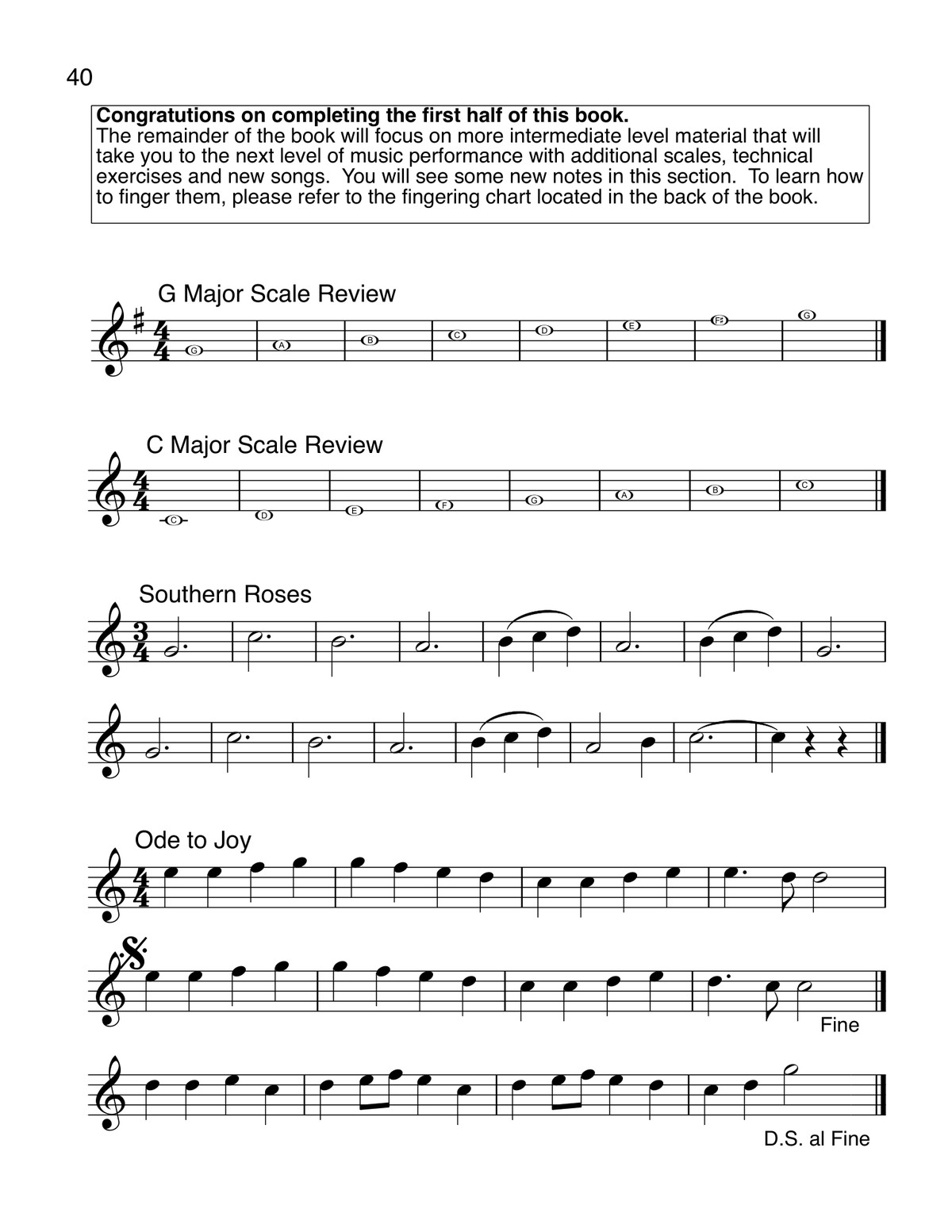
Page 40 Changes the Direction of the Book
At this point the student has completed the main beginning sequence. The book then specifically announces that the remaining material will focus on more intermediate-level playing.
Scale review, technical exercises and new repertoire begin the next stage immediately, so the student can continue in the same familiar book rather than reaching an abrupt stopping point.
See the Progression From First Notes to Ensemble Music
These pages show how much ground the book covers. Click any page to open the full-size Media Library image.
Open full size
Page 3 — The First B and A Notes
Simple rhythms, clear fingering diagrams and short exercises make
this a true beginning method.
 Open full size
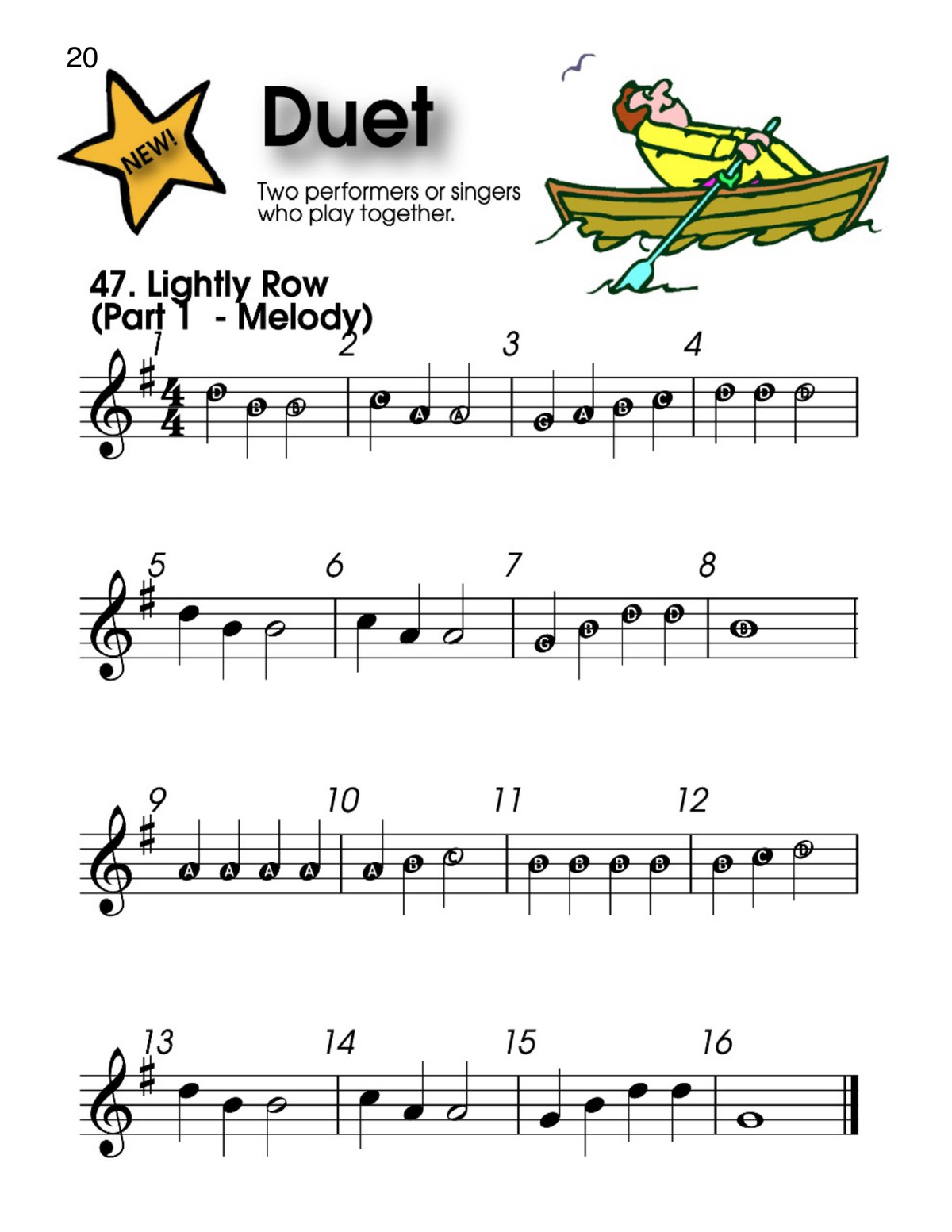
Page 20 — The First Duet
The melody part of Lightly Row begins introducing students to
ensemble playing early in the book.
Open full size
Page 40 — Moving Into Intermediate Material
Scale review and more advanced playing begin the second major stage
of the book.
Open full size
Page 20 — The First Duet
The melody part of Lightly Row begins introducing students to
ensemble playing early in the book.
Open full size
Page 40 — Moving Into Intermediate Material
Scale review and more advanced playing begin the second major stage
of the book.
 Open full size
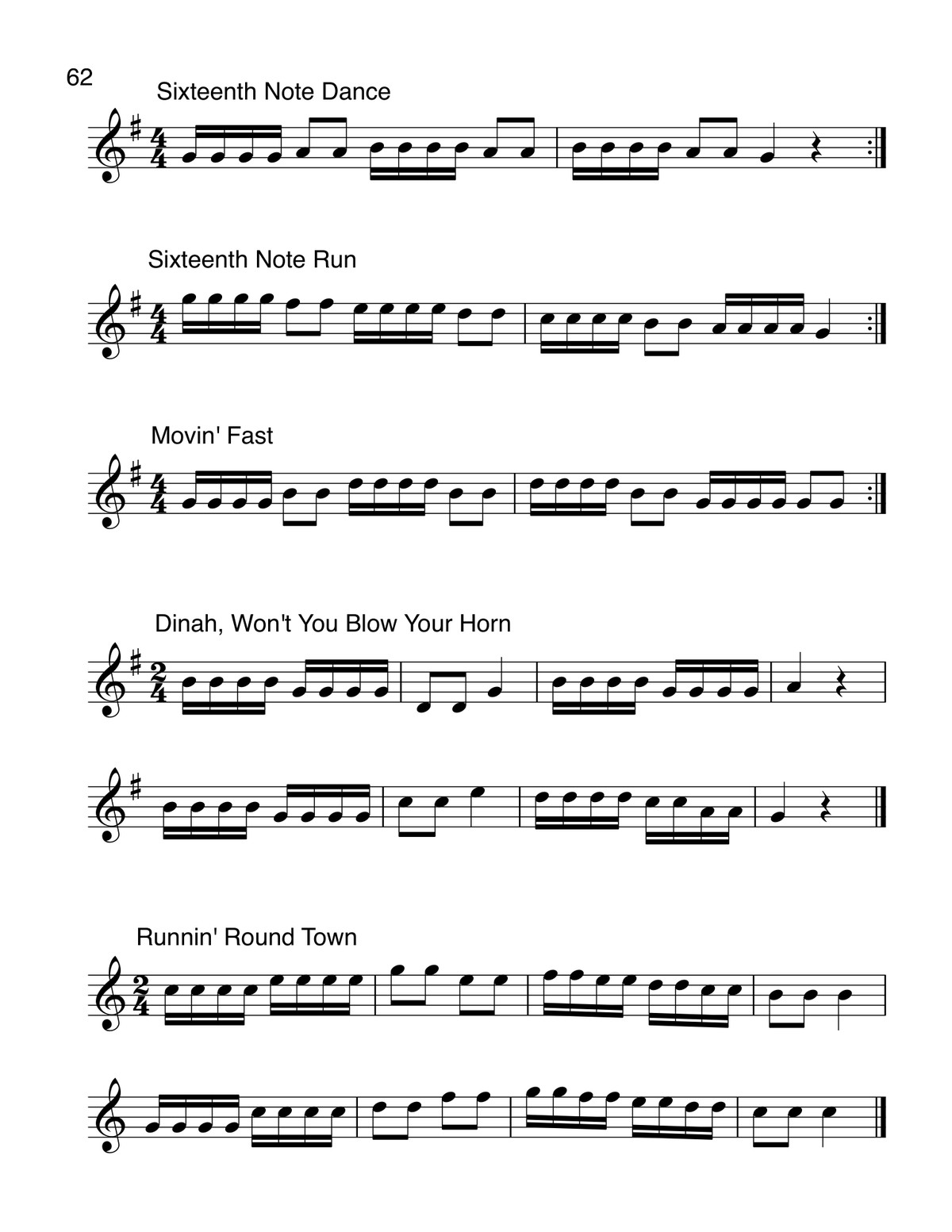
Page 62 — Sixteenth-Note Development
Technical exercises and familiar music now require much greater
finger coordination and reading speed.
Open full size
Page 62 — Sixteenth-Note Development
Technical exercises and familiar music now require much greater
finger coordination and reading speed.
 Open full size
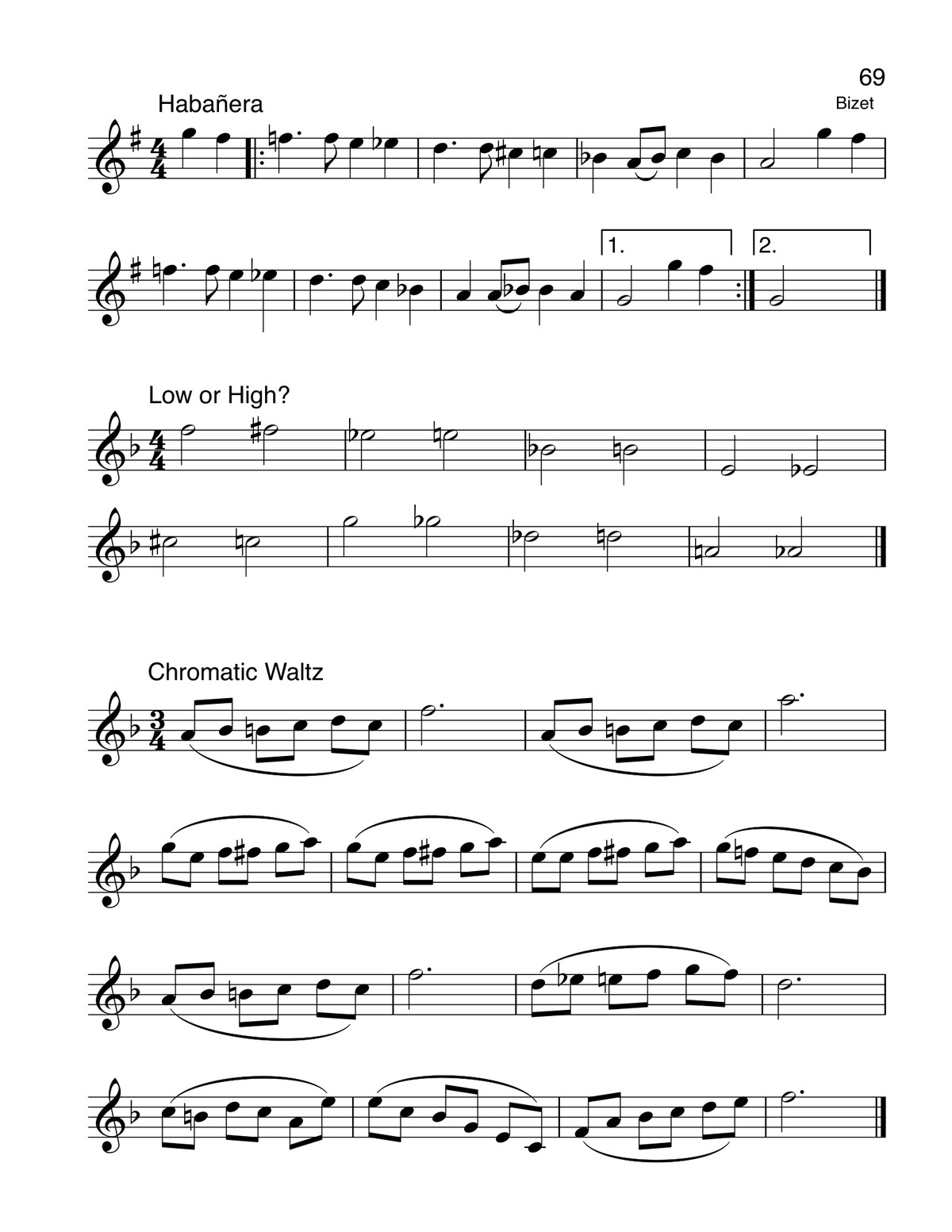
Page 69 — Habanera & Chromatic Waltz
Chromatic notes, accidentals and more sophisticated repertoire make
the intermediate progression very clear.
Open full size
Page 69 — Habanera & Chromatic Waltz
Chromatic notes, accidentals and more sophisticated repertoire make
the intermediate progression very clear.
 Open full size
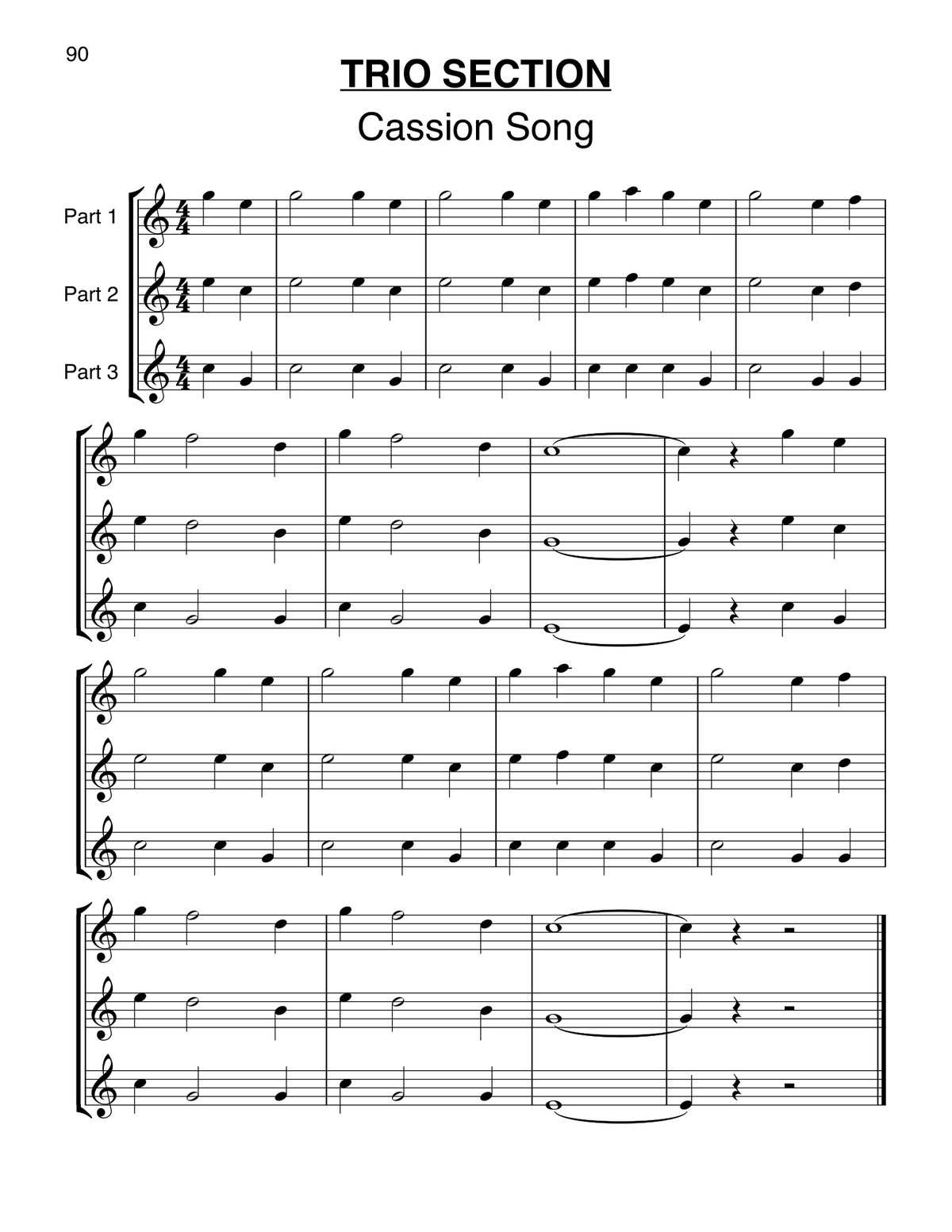
Page 90 — Full Three-Part Ensemble Playing
By the final portion of the book, students can perform true
three-part recorder arrangements.
Open full size
Page 90 — Full Three-Part Ensemble Playing
By the final portion of the book, students can perform true
three-part recorder arrangements.
Use the Recorder Fun Book MP3 Play-Alongs
The beginning material in this book matches the Recorder Fun Book play-along sequence. Students can stream the companion recordings online while practicing the early exercises and songs.
There Is a Lot More Waiting in the Second Half
Once the basic recorder foundation is established, the student begins working with material more typical of continuing instrumental study.
Scales & Arpeggios
Major and minor scale studies provide structured technical development rather than simply adding more songs.
Faster Rhythms
Sixteenth notes, dotted rhythms and faster technical patterns build coordination and reading fluency.
New Rhythmic Language
Syncopation, 6/8 time and triplets move students well beyond the basic quarter-note and eighth-note level.
Chromatic Playing
Accidentals, chromatic scales and more sophisticated melodies expand the student’s technical and musical vocabulary.
Ensemble Music Is Built Into the Method
The book does not treat recorder study only as solo practice. Students gradually encounter duet playing, rounds, separate melody and harmony parts, and finally complete three-part arrangements.
Duets Begin Early
Lightly Row introduces a separate melody and harmony part while students are still developing their basic recorder skills.
The Book Eventually Reaches Full Trios
The late-book trio section gives three students independent parts and creates a genuine ensemble experience.
Which Beginning Recorder Book Is the Better Fit?
Both methods are written for new players and both use the same free Recorder Fun Book play-alongs. The difference is primarily in the presentation and how far the book continues.
The Recorder Fun Book for Young Students
The gentler first method uses extra-large notation, letter names inside early noteheads, small amounts of material per page and a very gradual elementary presentation.
It is an especially comfortable choice for younger students and elementary classroom recorder programs.
Learn about The Recorder Fun BookThe Best Beginning Recorder Book for Kids
This 102-page book also starts with a complete beginner, but contains substantially more material and continues into scales, advanced rhythms, chromatic playing and ensemble repertoire.
It is particularly useful when the student is ready for a more comprehensive book with the next stage already included.
Start here from the beginning and keep going.Choose the Recorder Book That Matches the Student
The Recorder Fun Book for Young Students
Extra-large notation, early letter-name support, simple songs and small assignments for younger elementary beginners.
Learn moreThe Best Beginning Recorder Book for Kids
A comprehensive 102-page route from the first recorder notes through scales, advanced rhythms, chromatic work, duets and trios.
You are viewing this bookThe Recorder Fun Book’s Big Song Book
More than seventy songs using six basic recorder notes, with each selection presented first with letter support and then without it.
Learn more
Why Make a 102-Page Beginning Recorder Book?
Many students begin recorder with a short elementary unit, learn a handful of notes and songs, and then reach the end of the book just as they are becoming comfortable with the instrument.
I wanted this book to provide the same approachable first steps while giving students somewhere to go afterward. The early pages establish sound, fingering, rhythm and reading, while the later pages gradually introduce the kinds of scales, technical exercises and ensemble music associated with continuing instrumental study.
The result is a method that can begin with a brand-new recorder player but does not have to end after the first few notes have been learned.
Questions About The Best Beginning Recorder Book for Kids
Can a complete beginner start with this book?
What type of recorder fingering does the book use?
How is this different from The Recorder Fun Book for Young Students?
Does the book include intermediate material?
Are duets and trios included?
Are free play-along tracks available?
What age is the book intended for?
Can the book be used in a school recorder program?
Begin With the First Note — and Give the Student Room to Grow
A 102-page recorder method that begins with the fundamentals and continues into scales, advanced rhythms, chromatic playing, duets, harmony parts and trios.