A playful first instrument adventure
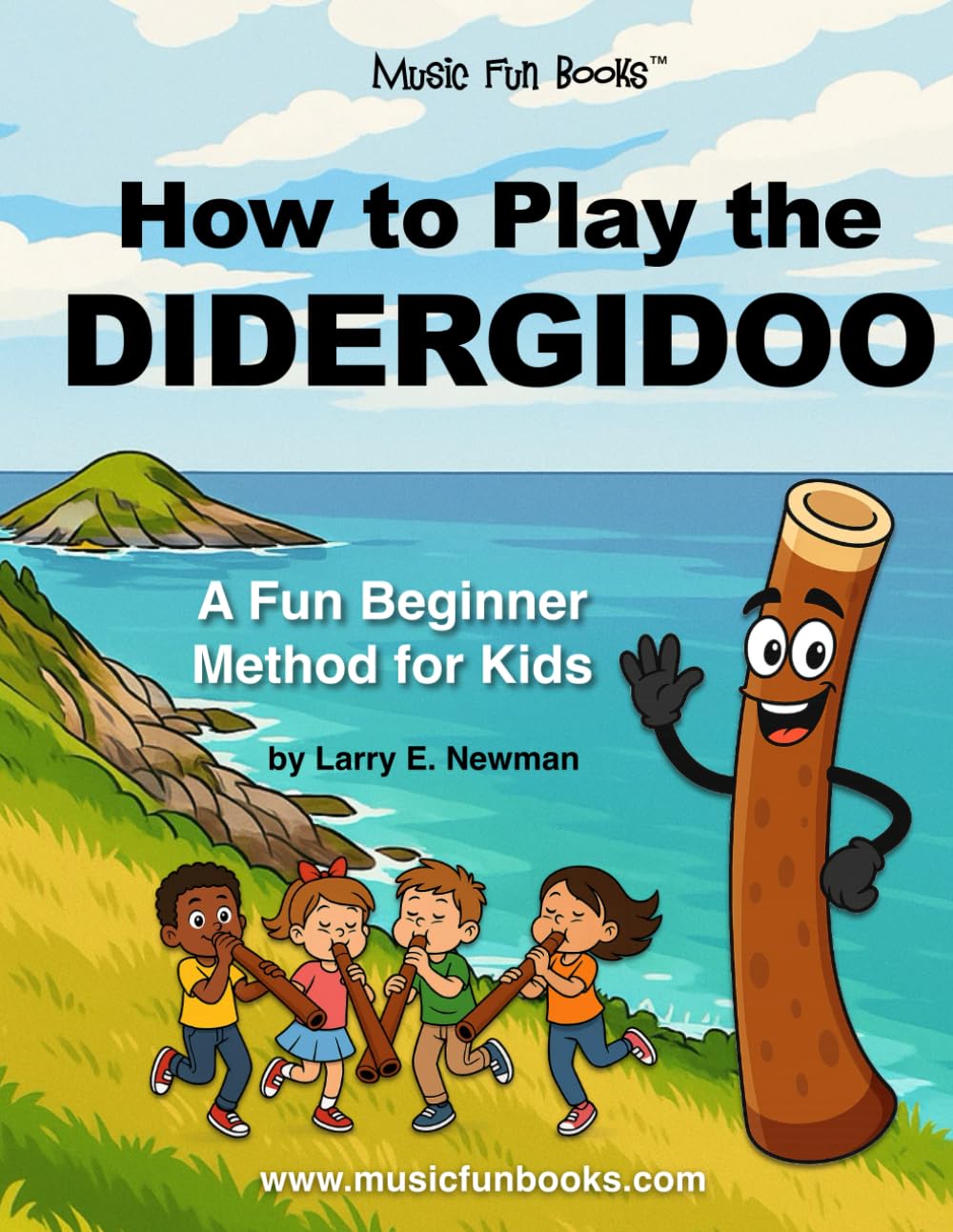
How to Play the Didgeridoo
Start with a buzz. Build a rhythm. Make music together.
By Larry E. Newman
Introduce young beginners to the didgeridoo through fifteen illustrated lessons filled with sound exploration, rhythm games, movement, and creative music-making. Children work from their first drone toward playing patterns, inventing musical ideas, and sharing a mini concert.
Visit Amazon for current pricing and purchase options.

An inviting introduction
Turn curiosity into a first musical experience
This beginner method introduces the didgeridoo through a low buzzing sound called a drone. Children explore how their lips, airflow, mouth shape, and tongue affect the sound, then use those discoveries to make rhythms and musical patterns.
The book is designed for individual students, small groups, and full classrooms. Its teacher and parent introduction recommends ages 6–10, with flexibility for older beginners, and suggests lessons of approximately 20–30 minutes that can be extended or adapted.
Cartoons, visual rhythm patterns, partner activities, and quick review questions make the lesson sequence approachable. The emphasis is on listening, steady effort, relaxed playing, and enjoyment.
Sound, rhythm, and imagination
Learning that children can hear and feel
Find the first drone
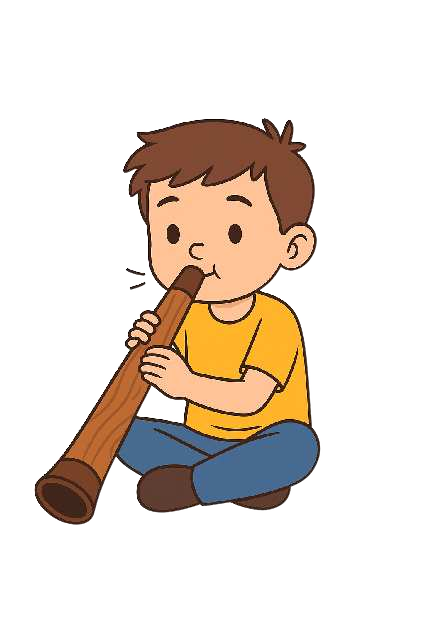
Start with careful handling, a comfortable playing position, and loose-lip buzzing. Early lessons invite children to start and stop deliberately, sustain a sound, and notice how it changes.
Say it, then play it
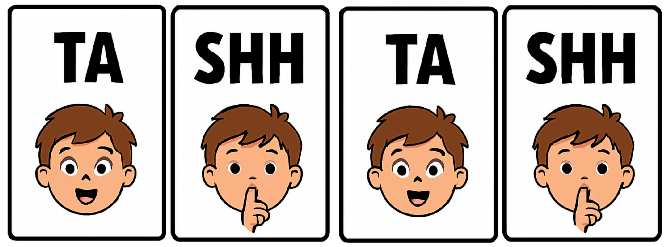
Spoken patterns such as “TA” and “SHH” introduce sound and silence. Children say a rhythm, listen to it, and transfer it to short buzzes and rests.
Listen and answer
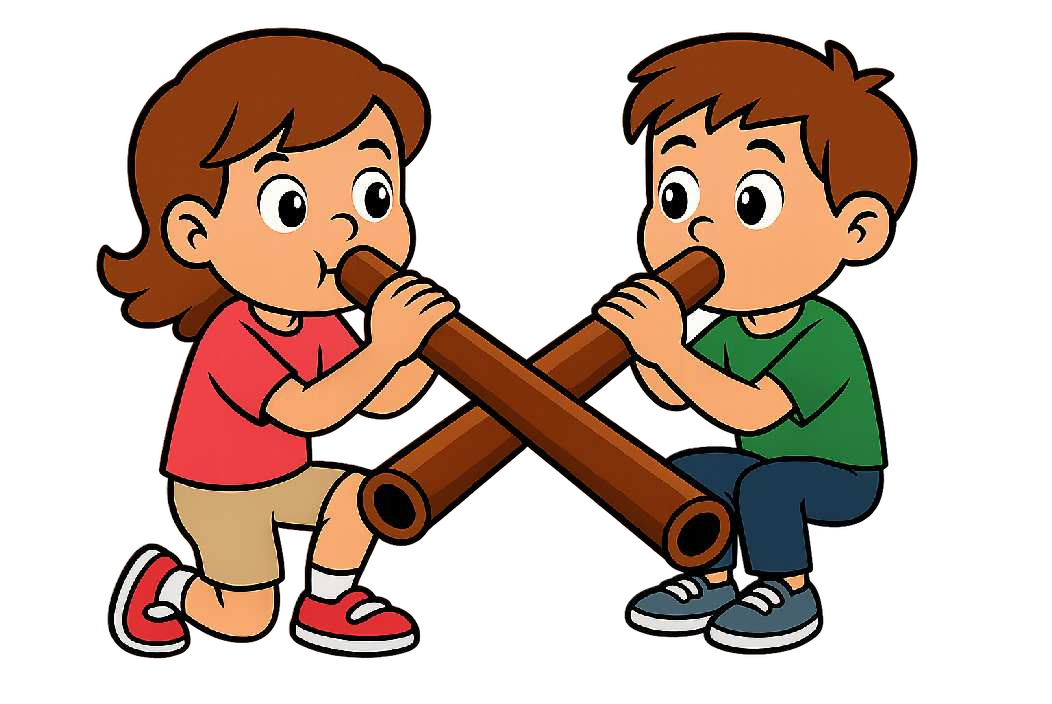
Echo games ask one player to lead and another to copy. Musical conversations later invite children to respond with their own ideas, combining listening with creativity.
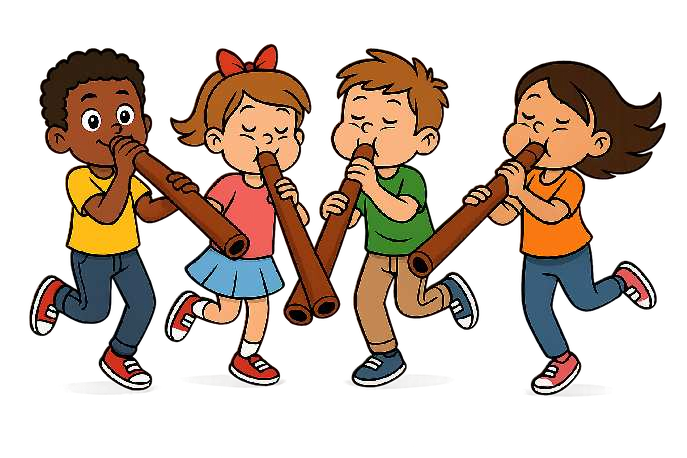
Connect music with movement
Marching, swaying, tapping, and following a leader help children feel a steady beat. Group activities provide opportunities to take turns and coordinate with others.
A clear path through the book
Explore all 15 lessons
Each lesson builds on earlier experiences while introducing a new focus. Open a title to see the skill or activity it develops.
Lesson 1: Meet Your Didgeridoo
Learn what the instrument is, how to care for it, and how to hold it. Try loose-lip buzzing and transfer that buzz to the instrument to begin making a drone.
Lesson 2: Buzz Better, Drone Longer
Practice a steadier drone and deliberate starts and stops. Shape the mouth as if saying A, E, I, O, and U to explore changes in the sound.
Lesson 3: Let’s Add Rhythm!
Use a steady beat to organize buzzes and rests. Spoken syllables and illustrated patterns help children connect what they say with what they play.
Lesson 4: Breath Power! (Long Drone Challenge)
Explore sustained sounds and contrast a longer drone with a shorter one. The lesson includes turn-taking and listening to the duration of a sound.
Lesson 5: Loud or Soft? High or Low?
Explore dynamics and tone shaping. Children vary volume and mouth shape to create contrasting sounds, then combine the contrasts into their own patterns.
Lesson 6: The Echo Game (Call and Response)
Listen to a short pattern and reproduce it. Partners take turns leading and echoing, then create rhythms for one another or the class to copy.
Lesson 7: Tongue Talk
Introduce tonguing to make rhythmic starts clearer. Use “TA” and “SHH” to explore articulation and create a short four-beat pattern.
Lesson 8: Drone Dance
Connect the beat with movement through marching, swaying, tapping, and following a Drone Leader. Students take turns choosing a rhythm and a movement.
Lesson 9: Hold That Buzz!
Return to sustained tones with closer attention to control. Students listen for whether a sound is smooth or uneven and whether its volume stays consistent.
Lesson 10: Buzz Music!
Use sound to suggest moods such as happy, sleepy, or sneaky. Short musical conversations invite children to exchange expressive phrases.
Lesson 11: Reading Rhythm Notation
Introduce written rhythm symbols. The book uses diamond-shaped whole notes for four-count buzzes, X-headed quarter notes for one-count buzzes, and quarter rests for silence.
Lesson 12: Build a Buzz Beat!
Move from reading patterns to inventing them. Students draw a short rhythm, say it, clap it, play it, and share it with a partner.
Lesson 13: Keep the Sound Going!
Introduce the idea of circular breathing through gentle cheek-air experiments. The lesson makes clear that this is exploration rather than a test or a requirement to master the technique.
Lesson 14: Playing Together
Practice starting and stopping together, listening while playing, and balancing the group sound. A Drone Wave activity adds and removes players so the sound grows and fades.
Lesson 15: Didgeridoo Graduation Day!
Review favorite skills and share them in a mini concert. Students reflect on what became easier and what they are proud of, then celebrate completion.

From copying rhythms to creating music
The lessons progress from repeating simple patterns to making independent choices. Students explore sound and silence, choose contrasts, answer a musical phrase, and eventually write their own rhythm.
This gives beginning notation a purpose: it becomes a way to remember and share a musical idea.
Skills explored throughout
A musical foundation built through activity
- Lip buzzing and a steady drone
- Intentional starts, stops, and rests
- Steady beat and rhythmic memory
- Loud and soft dynamics
- Mouth-shape changes and tone color
- Tonguing and rhythmic clarity
- Call and response
- Beginning rhythm notation and composition
- Listening, balance, and group coordination
- Creative expression and performance
Flexible teaching, clear expectations
For teachers, parents, and group leaders
The book offers a sequence that can be followed in order or adapted to student needs. Lessons can extend over more than one session, and familiar games can be repeated while a new skill develops.
What you’ll need
- A didgeridoo or practice tube
- The book’s lesson directions and rhythm examples
- Open floor space for movement activities
- Time for listening, turns, and brief rests
A metronome or steady background beat can support the rhythm activities, and some lessons suggest counting or timing a sustained sound.
Ways to adapt participation
For a simpler activity, emphasize listening, clapping, movement, or buzzing without the instrument. For an extension, add repetition, invite a student leader, or ask children to create their own response.
Early sound quality varies. The book encourages steady effort and enjoyment as children become more comfortable.
Introduce the instrument with respect
The opening pages introduce the didgeridoo’s Australian Aboriginal origins and emphasize careful handling. This provides a starting point for discussing respect for the instrument and the people and traditions connected with it.
Finish with pride and creativity
Graduation, a certificate, and coloring fun

Celebrate what students can do
The final lesson brings together a long drone, a short rhythm, and contrasting sounds in a mini concert. Reflection questions encourage children to notice their progress.
A certificate of completion is included in the book to mark the achievement.

Keep the fun going on paper
The final coloring pages revisit the book’s playful characters, including children playing and a didgeridoo riding a wave.
They offer a creative change of pace after playing, or a way to round out the final celebration.
About the author
Larry E. Newman
Larry E. Newman is the founder of Children’s Music Workshop and Music Fun Books, a music educator, author, and professional trumpet player. His teaching resources introduce young musicians to instrumental playing, singing, and musical exploration.
This book brings that focus to a playful sequence of beginning didgeridoo lessons for children, teachers, and families.
Questions about the book
Frequently asked questions
What ages is the book designed for?
The teacher and parent introduction recommends ages 6–10, with flexibility for older beginners who enjoy a clear, playful approach.
Is previous musical experience required?
No. The lessons begin with handling the instrument, buzzing the lips, and creating a first drone. Rhythm notation is introduced later.
How many lessons are included?
There are 15 lessons, followed by coloring activities. The book also includes guidance for teachers and parents and a completion certificate.
How long should a lesson take?
The book suggests approximately 20–30 minutes per lesson. Teachers and parents can spread a lesson over multiple sessions or adjust activities to suit the learner.
Can it be used with one child or a class?
Yes. It is designed for individual learners, small groups, and full classrooms. Echo games, movement activities, and ensemble exercises provide options for working together.
Does it teach familiar songs?
The focus is on drones, rhythms, tone color, and creative patterns rather than a collection of familiar melodies.
Do students have to master circular breathing?
No. The book introduces it as an experiment. Students can complete the other activities using normal breathing breaks.
Does the book include audio or video downloads?
No separate companion audio or video downloads are supplied with these lessons. The activities use the book, the instrument, listening, and live interaction.
Are the cartoons and coloring pages included?
Yes. Cartoons and visual examples appear throughout the lessons, and coloring pages are included at the end.
A first buzz can become a musical beginning
Explore the didgeridoo together
Discover fifteen lessons that turn sound, rhythm, movement, and imagination into an engaging introduction to music-making.
Current pricing and purchase options are available on Amazon.
As an Amazon Associate, Music Fun Books earns from qualifying purchases.