All-in-one beginning string methods for kids
Best Beginning Strings Book for Kids Series
Two popular beginning methods combined into one child-friendly book. Choose violin, viola, or cello and give a young musician extra-large notation, letter names inside the noteheads, familiar songs, clear diagrams, and a gentle path from the first lesson forward.
Designed especially for elementary beginners—not an adult method simply made smaller.
What is the Best Beginning Strings Book for Kids Series?
It is a three-book beginning string method series for young violin, viola, and cello students. Each all-in-one volume combines material from two successful beginner books and teaches note reading, posture, finger placement, bowing, rhythm, music theory, and familiar songs through large, uncluttered pages created for children.
Why parents and teachers choose it
A more complete first book without overwhelming a young musician
Each Best Beginning book brings together two popular early-learning resources in one convenient volume. Students receive more songs, exercises, diagrams, and reinforcement while the pacing remains clear and manageable.
More value in one volume
Combined and expanded material gives families and teachers a substantial beginning method without juggling two separate books.
Built for elementary beginners
Large notation, short explanations, limited material per page, and small-hand-friendly music support young eyes and attention spans.
Real songs from the start
Classic and time-tested melodies help children hear progress, enjoy practice, and build a repertoire while learning fundamentals.
What is inside
Everything a young string player needs for a confident start
The violin, viola, and cello editions are tailored to the setup and range of each instrument while sharing the same child-centered teaching approach.
Extra-large notation
Oversized notes and clear spacing make sheet music easier for children to see and follow.
Letter names in notes
Pitch names printed inside the noteheads help beginners connect the staff with strings and finger placement.
Posture and bow diagrams
Friendly illustrations show how to hold the instrument, position the hands, and begin using the bow.
One idea at a time
Simple layouts and limited content per page reduce visual overload and keep assignments achievable.
Familiar beginner songs
Carefully selected tunes reinforce new notes and rhythms while fitting comfortably under small fingers.
Step-by-step instruction
Clear explanations support private lessons, school programs, group classes, and parent-guided home practice.
The learning problem
Beginning string books can move too quickly for young children
When pages are dense, notation is small, or too many skills arrive together, students can feel unsuccessful before they have a chance to enjoy playing. This series was designed to keep the first lessons visible, focused, musical, and encouraging.
How these books help
- ✓Large notes reduce early reading stress.
- ✓Letter names provide immediate pitch support.
- ✓Short pages create clear, reachable practice goals.
- ✓Familiar songs reward students with recognizable music.
- ✓Instrument-specific diagrams make physical skills easier to understand.
A practical first-year path
How young musicians use the Best Beginning books
Set up correctly
Begin with posture, instrument position, bow hold, and simple diagrams that make healthy technique easier to copy.
Read and play
Use large notes, letter-name support, basic rhythms, and simplified songs to build successful first playing experiences.
Build independence
Review earlier songs, add new notes and bowing skills gradually, and develop confidence practicing between lessons.
Series editions
Choose violin, viola, or cello
Each card includes the official Music Fun Books information page, the individual Amazon ordering link, and the ISBN-13 for school, library, and studio purchasing.
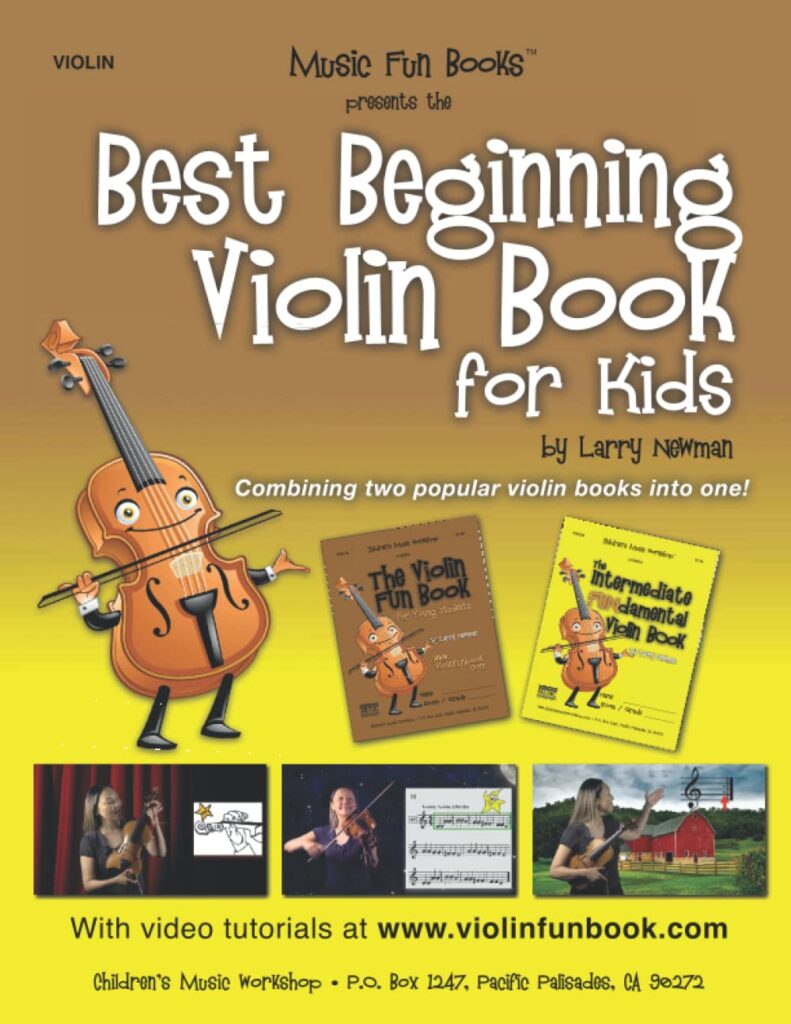
Best Beginning Violin Book for Kids
An all-in-one beginner violin method with extra-large notes, familiar songs, posture and bowing instruction, coloring pages, and creative activities.
ISBN-13: 979-8622181474
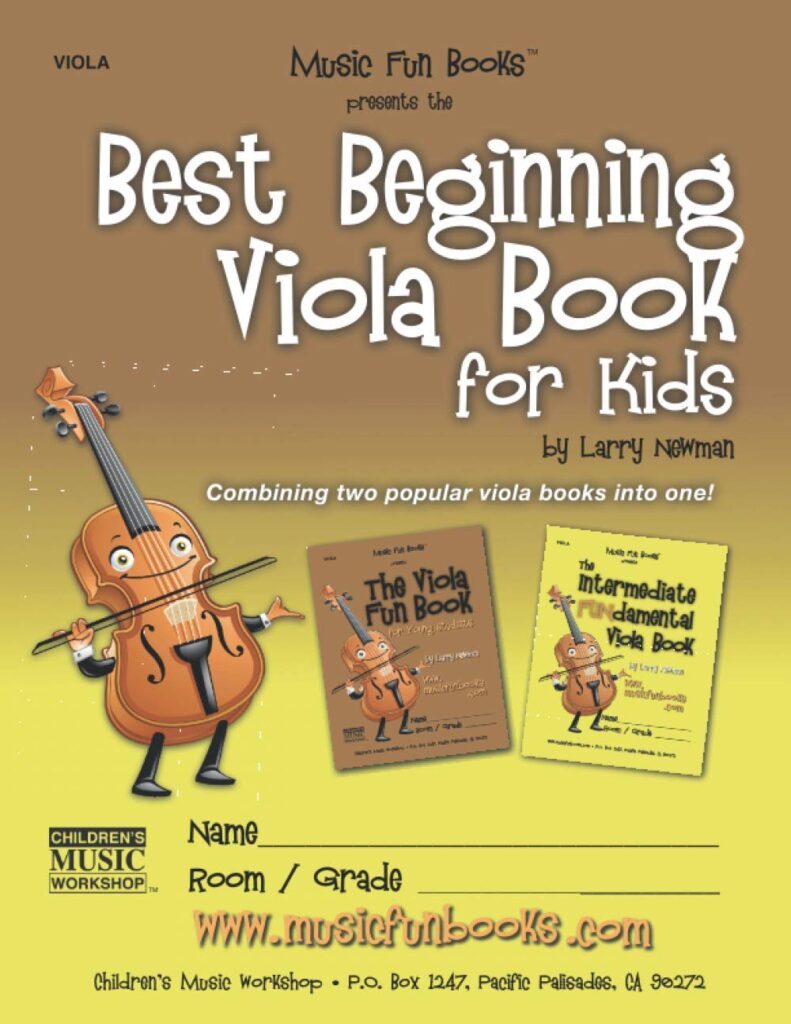
Best Beginning Viola Book for Kids
A combined beginner viola method with large notation, letter names, clear diagrams, simplified arrangements, and music selected for smaller hands.
ISBN-13: 979-8731732031
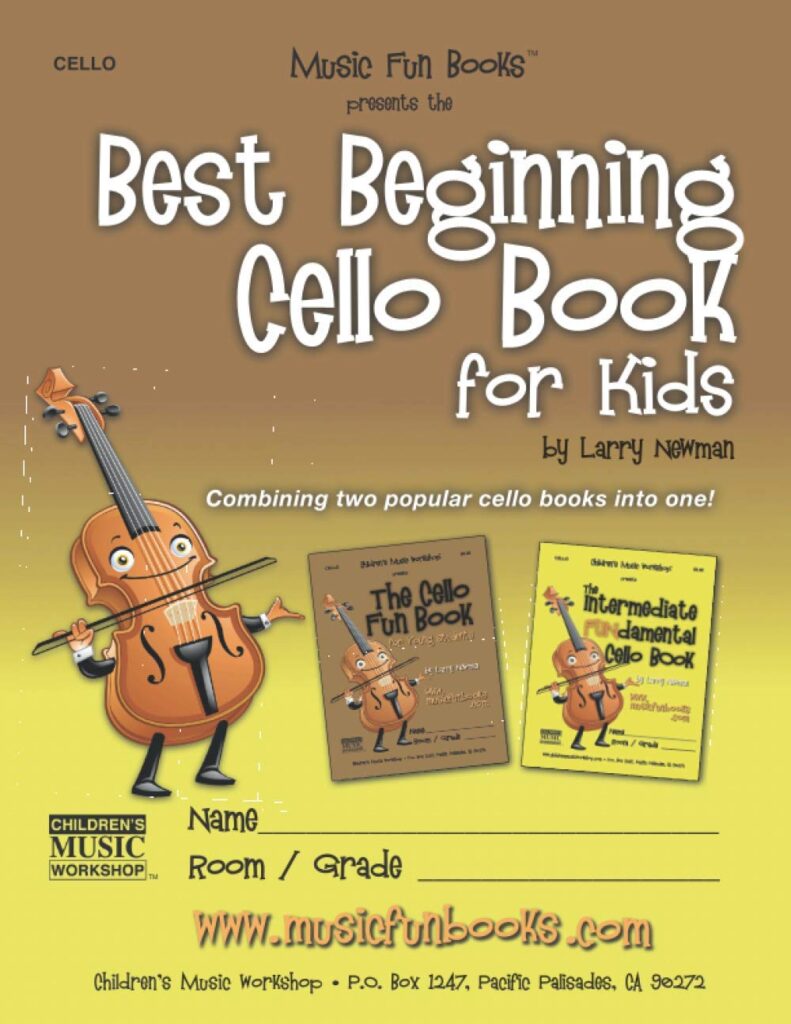
Best Beginning Cello Book for Kids
A combined and expanded beginner cello method with large notes, step-by-step lessons, clear setup diagrams, familiar songs, and original coloring pages.
ISBN-13: 979-8567837832
Quick comparison
Which Best Beginning String book should I buy?
Choose the student’s instrument. All three books share the same beginner-friendly philosophy, but every edition is written specifically for its instrument.
| Book | Best for | Core features | Creative extras |
|---|---|---|---|
| Best Beginning Violin | Young first-time violinists in grades K–5 | Posture, bow hold, fingering, note reading, rhythm, songs, and theory | Original coloring pages and creative prompts |
| Best Beginning Viola | Young first-time violists, generally ages 5–11 | Viola posture, bowing, finger placement, large notes, familiar songs, and theory | Focused method and song content |
| Best Beginning Cello | Young first-time cellists, generally ages 5–11 | Cello setup, posture, bowing, note reading, rhythm, songs, and theory | Original coloring pages and artwork |
Who it is for
Flexible for lessons, school programs, and home learning
Young beginners
- Elementary violin, viola, and cello students
- Children with no previous music experience
- Students who benefit from large notation
- Older beginners wanting a clear visual approach
Teachers and programs
- Private string studios
- Elementary school orchestra programs
- After-school and group string classes
- Homeschool music instruction
Parents supporting practice
Clear directions, note names, illustrations, and short assignments make it easier for adults to guide practice even without an extensive music background.
For teachers
Use it as the main beginner book or as a generous supplement
Each edition can serve as a primary first method for a young student or add extra reading, songs, diagrams, and reinforcement to Suzuki, Essential Elements for Strings, or another school or studio curriculum.
Move through a few lines or one page at a time, review earlier songs frequently, and keep posture, tone, and healthy physical technique central to every lesson.
Teacher-friendly uses
- ✓A structured first-year lesson sequence.
- ✓Extra note-reading and rhythm practice.
- ✓Short weekly home assignments.
- ✓Review songs for warm-ups and confidence.
- ✓Clear visual support for mixed-readiness beginners.
Related resources
More help for beginning string players
FAQ
Questions about the Best Beginning String Series for Kids
What books are included in the Best Beginning Strings Book for Kids Series?
The series contains three instrument-specific volumes: Best Beginning Violin Book for Kids, Best Beginning Viola Book for Kids, and Best Beginning Cello Book for Kids.
Is there a Best Beginning Double Bass Book for Kids?
No. This particular Best Beginning series currently includes violin, viola, and cello. Other beginning double bass books are available elsewhere in the Music Fun Books catalog.
Are these books suitable for complete beginners?
Yes. They begin with foundational setup, posture, note reading, rhythm, finger placement, and bowing concepts. No previous music-reading experience is required.
What makes these string books easier for children?
They use extra-large notation, letter names inside the noteheads, uncomplicated diagrams, simplified arrangements, familiar songs, and a limited amount of material on each page.
What ages are the Best Beginning books designed for?
They are written especially for elementary-age beginners, generally about ages 5–11 or grades K–5. Older beginners may also appreciate the large notes and clear pacing.
Do I need a teacher to use these books?
A qualified teacher is recommended, particularly for posture, bow hold, tone production, and healthy physical technique. The clear explanations and diagrams also make the books useful for parent-supported practice at home.
Can these books be used in school orchestra programs?
Yes. The clear pages, familiar songs, and step-by-step material work well in elementary string classes, group lessons, school orchestra programs, and after-school music instruction.
Can the books supplement the Suzuki Method?
Yes. Teachers can use them for additional note-reading, rhythm, diagrams, and familiar repertoire alongside Suzuki or another established method.
Do all three books include coloring pages?
The violin and cello editions specifically include original coloring pages or creative activities. The viola edition focuses on the method, diagrams, and song material.
Give a young string player one complete, child-friendly book for a successful start.
Choose violin, viola, or cello and begin with large notes, clear instruction, familiar music, and lessons designed around how children learn.