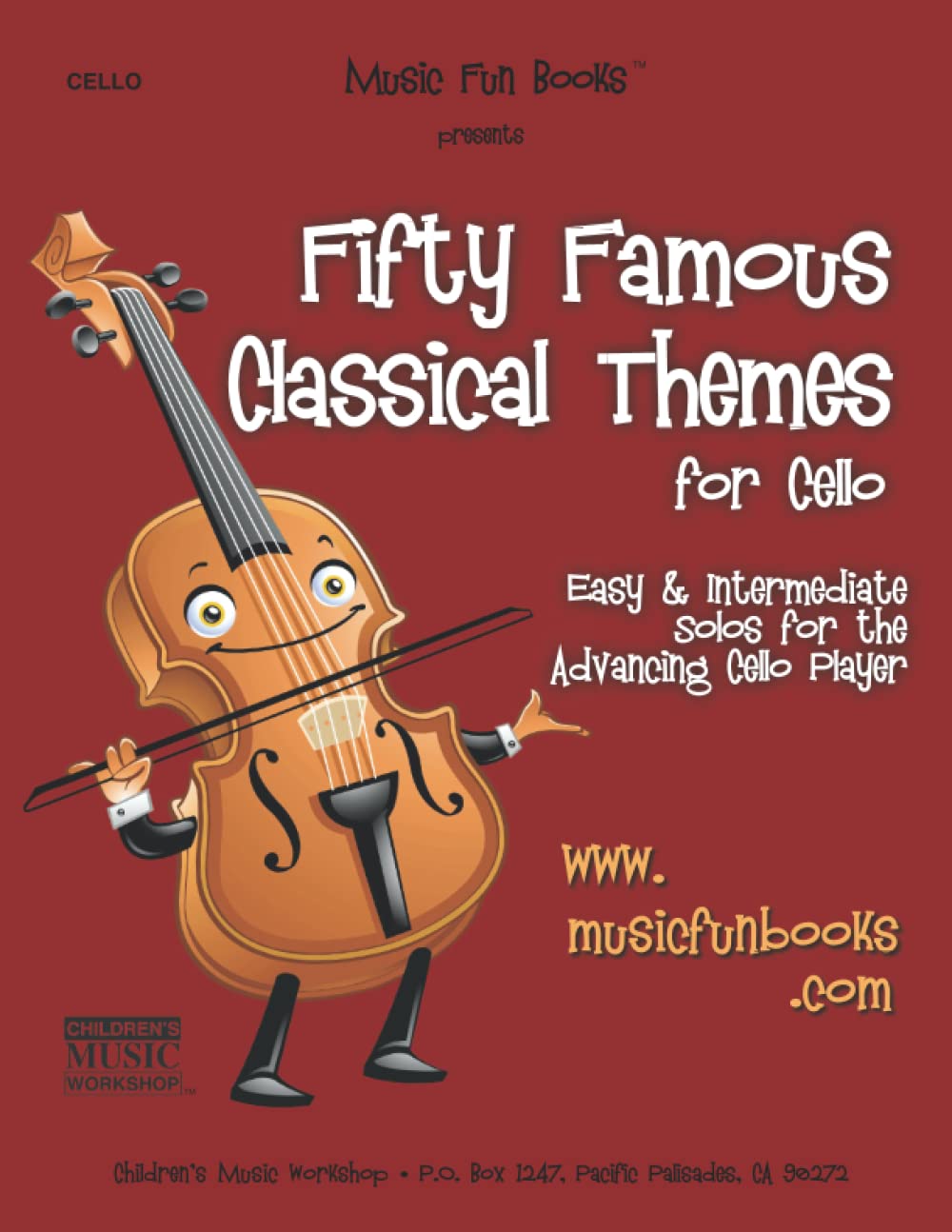
Fifty Famous Classical Themes for Cello
Give developing cellists fifty melodies every musician should know. Famous themes from symphonies, operas, ballets, marches, hymns and other masterworks are arranged in practical cello ranges for lessons, orchestra study, recitals and home practice.
- Recognizable music by the great classical composers
- Clear bass-clef cello notation
- Bowing and phrase guidance throughout the collection
- Chord symbols for optional teacher accompaniment
Classical Music Students Recognize — and Should Know
This is a repertoire supplement rather than a sequential cello method. It gives teachers a large library of familiar classical material that can be introduced whenever it fits the student’s development.
Build Repertoire
Fifty memorable themes expose students to a broad range of important classical music.
Develop Technique
Use recognizable music to reinforce bow control, tone, rhythm, intonation and reading.
Develop Musicianship
Different periods, meters, keys and musical styles encourage phrasing and expressive playing.
Prepare to Perform
Many selections work naturally for lessons, studio recitals, auditions and informal performances.
See the Variety of Music Inside
From lyrical melodies to rhythmically active orchestral themes, the collection gives developing cellists a wide range of musical experiences. Click any page to view the full-size image.
 Open full size
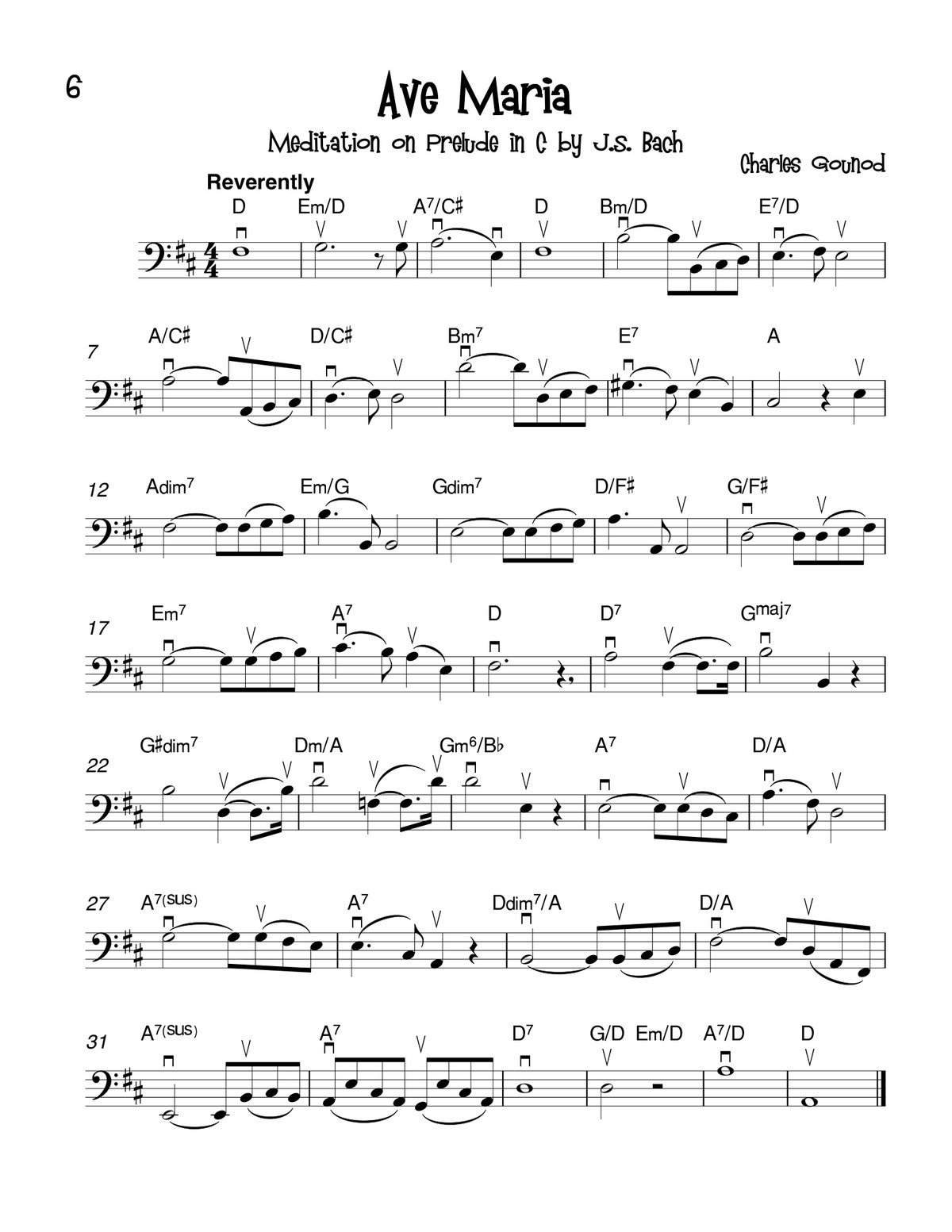
Ave Maria — Gounod
A lyrical example emphasizing sustained sound, bow control,
phrasing and expressive playing.
Open full size
Ave Maria — Gounod
A lyrical example emphasizing sustained sound, bow control,
phrasing and expressive playing.
 Open full size
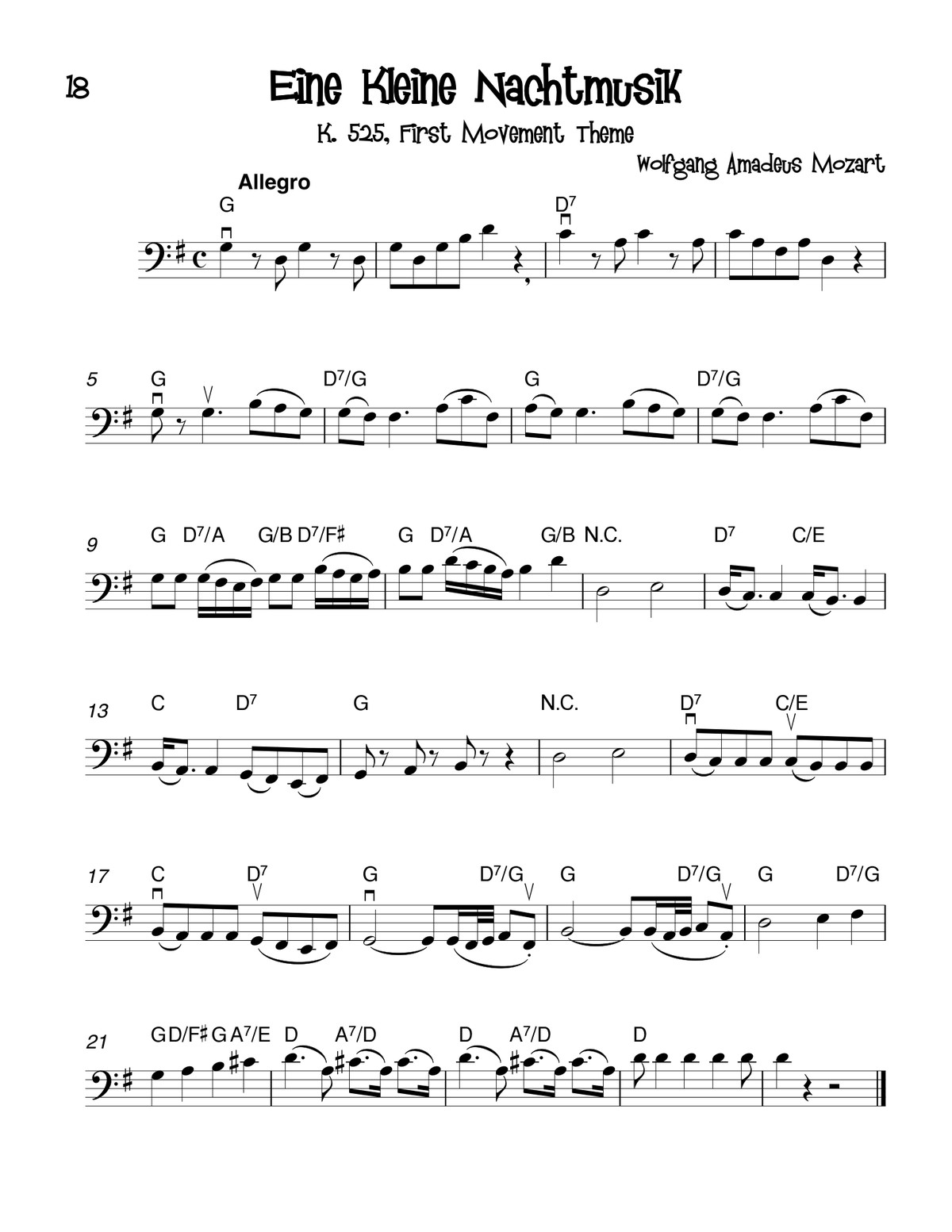
Eine Kleine Nachtmusik — Mozart
One of Mozart’s most recognizable themes, with active eighth-note
passages and clear bowing guidance.
Open full size
Eine Kleine Nachtmusik — Mozart
One of Mozart’s most recognizable themes, with active eighth-note
passages and clear bowing guidance.
 Open full size
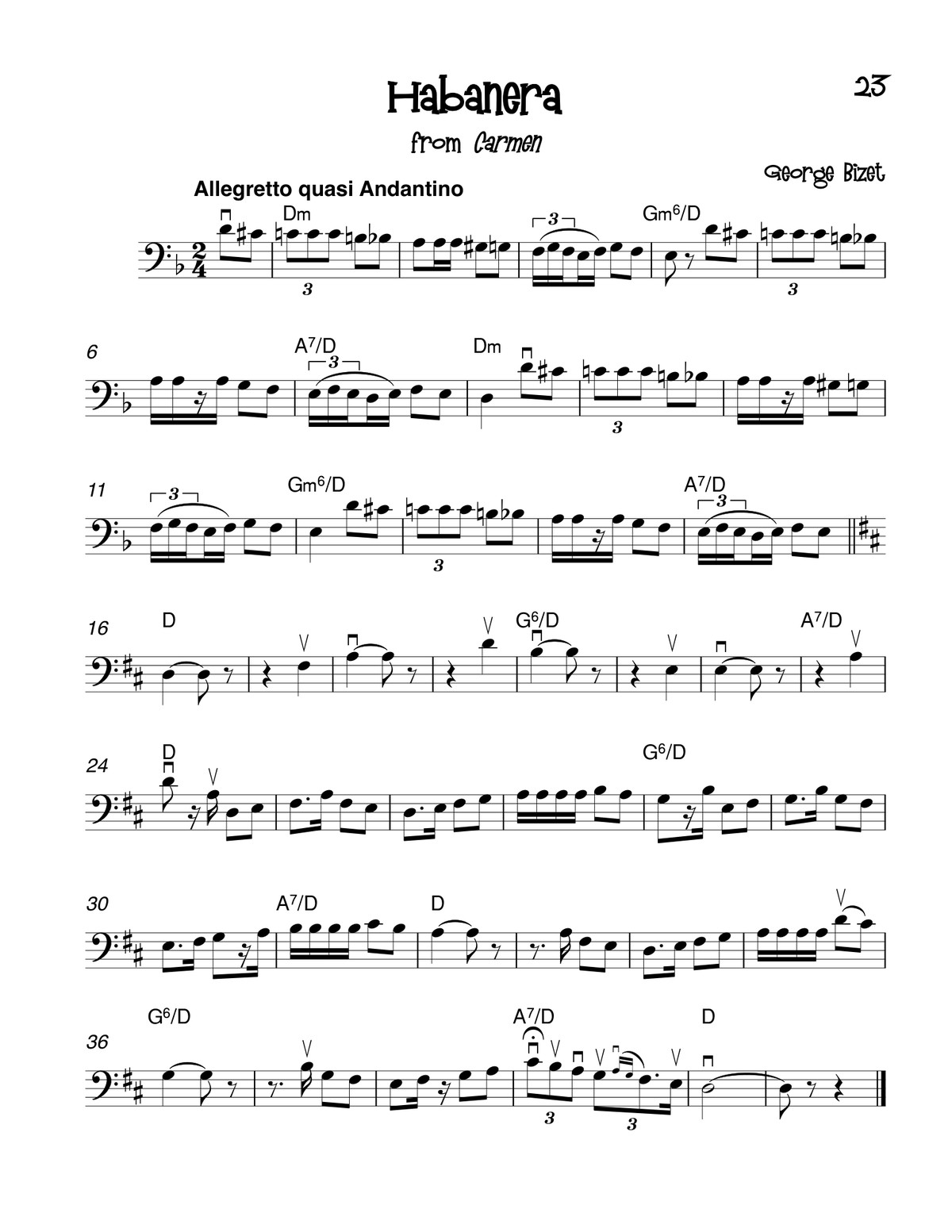
Habanera from Carmen — Bizet
A more challenging selection introducing chromatic writing,
triplets and greater rhythmic sophistication.
Open full size
Habanera from Carmen — Bizet
A more challenging selection introducing chromatic writing,
triplets and greater rhythmic sophistication.
 Open full size
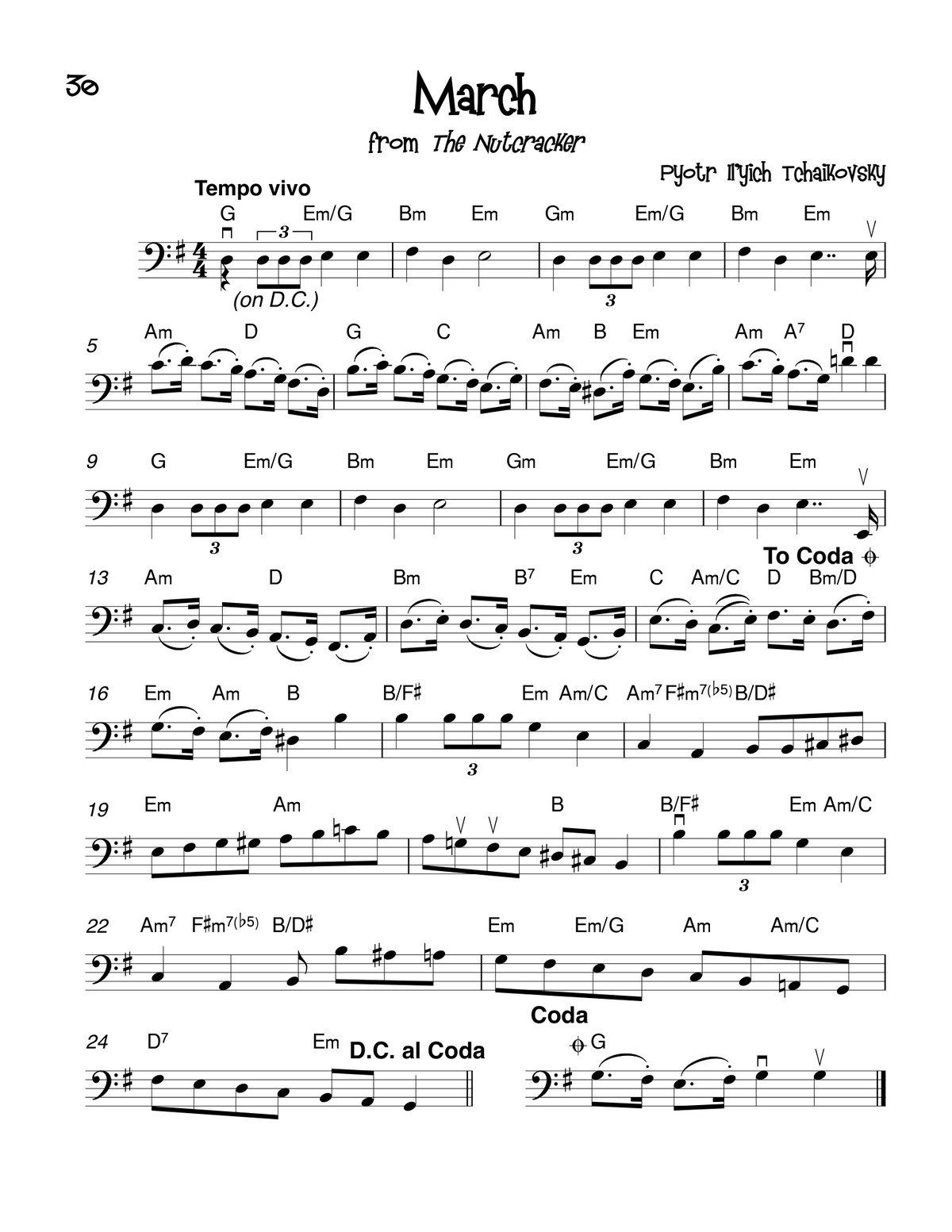
March from The Nutcracker — Tchaikovsky
Familiar ballet repertoire with rhythmic variety, articulation
and lively forward motion.
Open full size
March from The Nutcracker — Tchaikovsky
Familiar ballet repertoire with rhythmic variety, articulation
and lively forward motion.
 Open full size
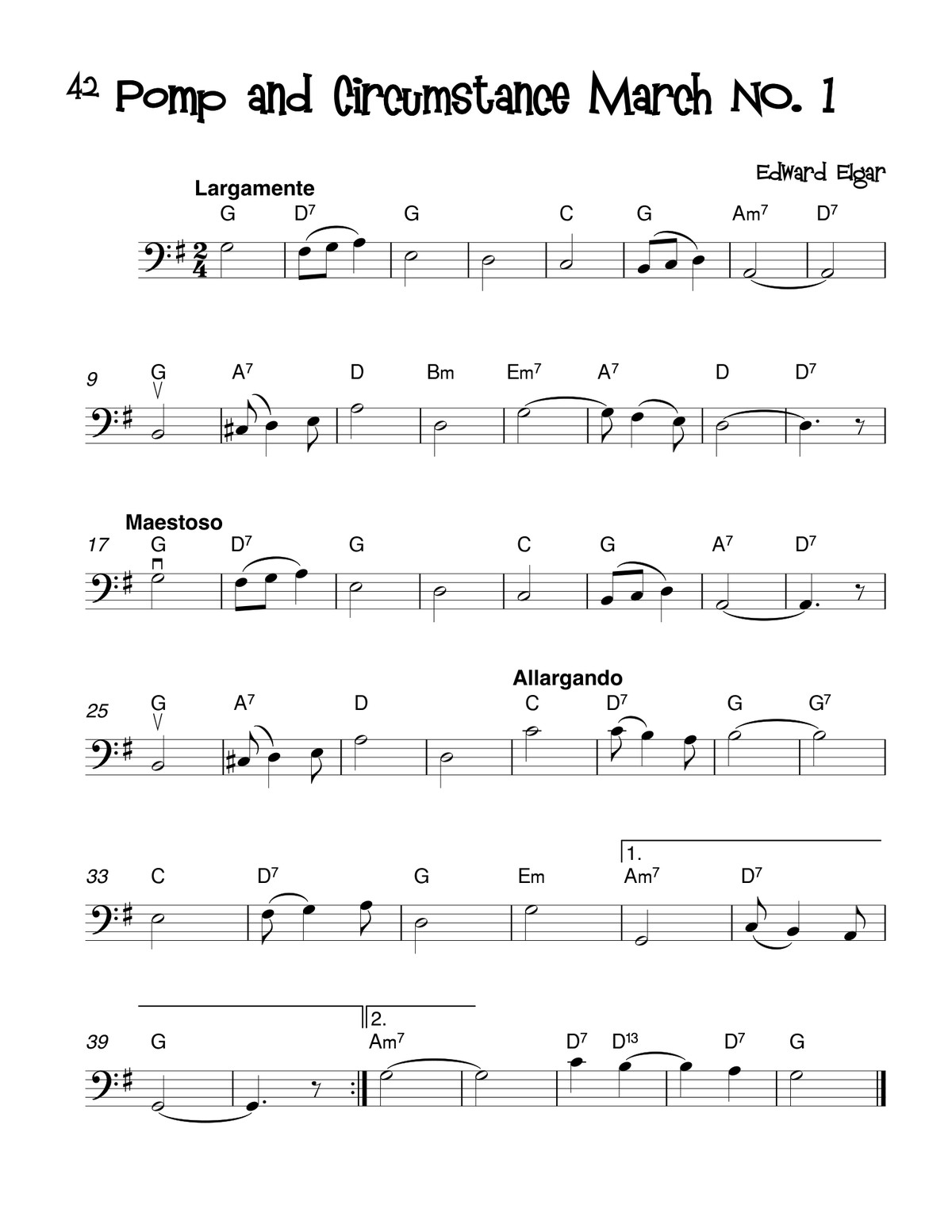
Pomp and Circumstance — Elgar
An immediately recognizable ceremonial melody with a broad,
confident musical style.
Open full size
Pomp and Circumstance — Elgar
An immediately recognizable ceremonial melody with a broad,
confident musical style.
 Open full size
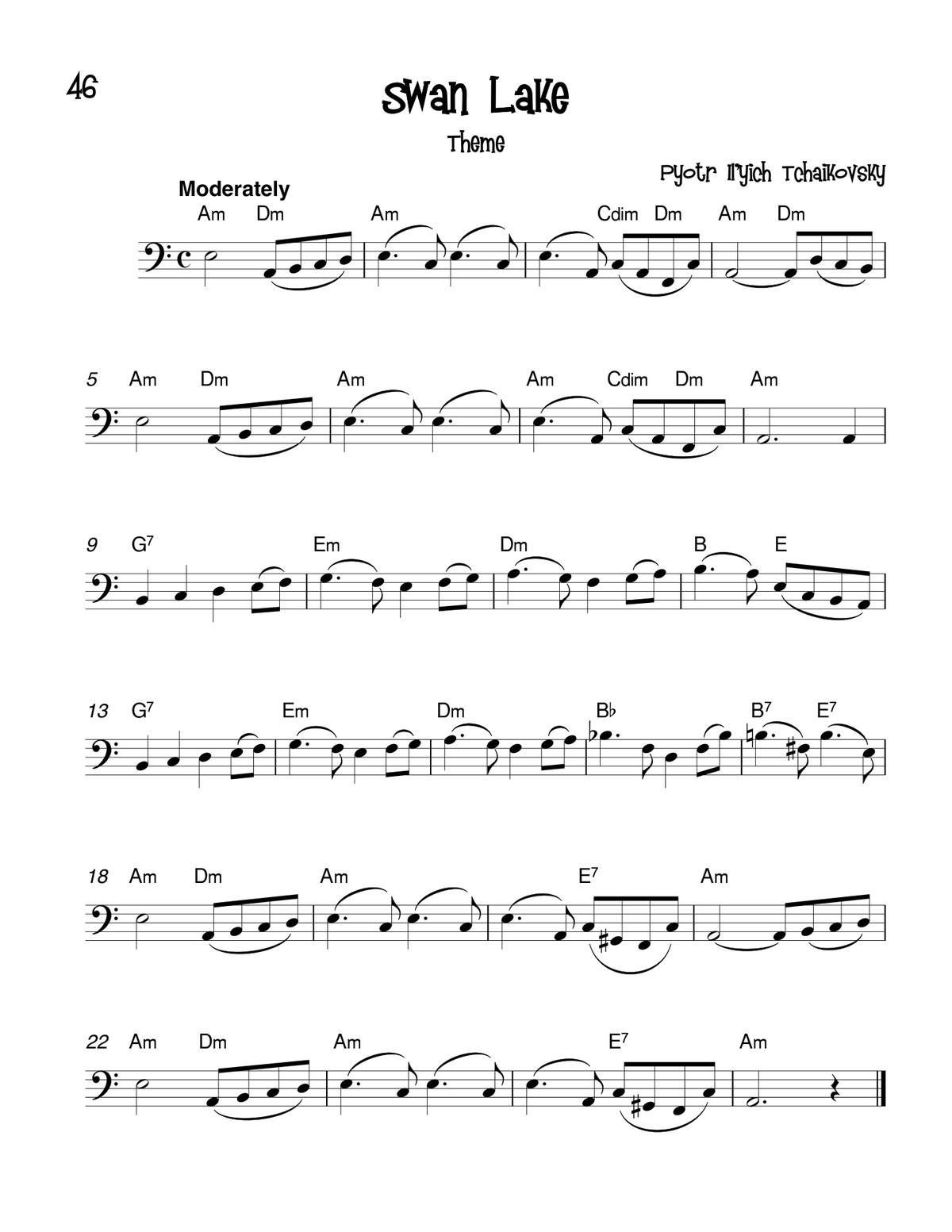
Swan Lake — Tchaikovsky
A beautiful lyrical theme particularly well suited to the expressive
sound of the cello.
Open full size
Swan Lake — Tchaikovsky
A beautiful lyrical theme particularly well suited to the expressive
sound of the cello.
Famous Classical Themes
Instead of learning classical music only through technical exercises, students can develop technique while playing music they recognize.
From Bach and Mozart to Tchaikovsky and Dvořák
The collection includes melodies from symphonies, operas, ballets, dances, marches, sacred works and other staples of the classical repertoire.
Students encounter music by many of the composers they will continue hearing in school orchestra, concert halls and music history study.
What Are Those Chord Symbols Above the Music?
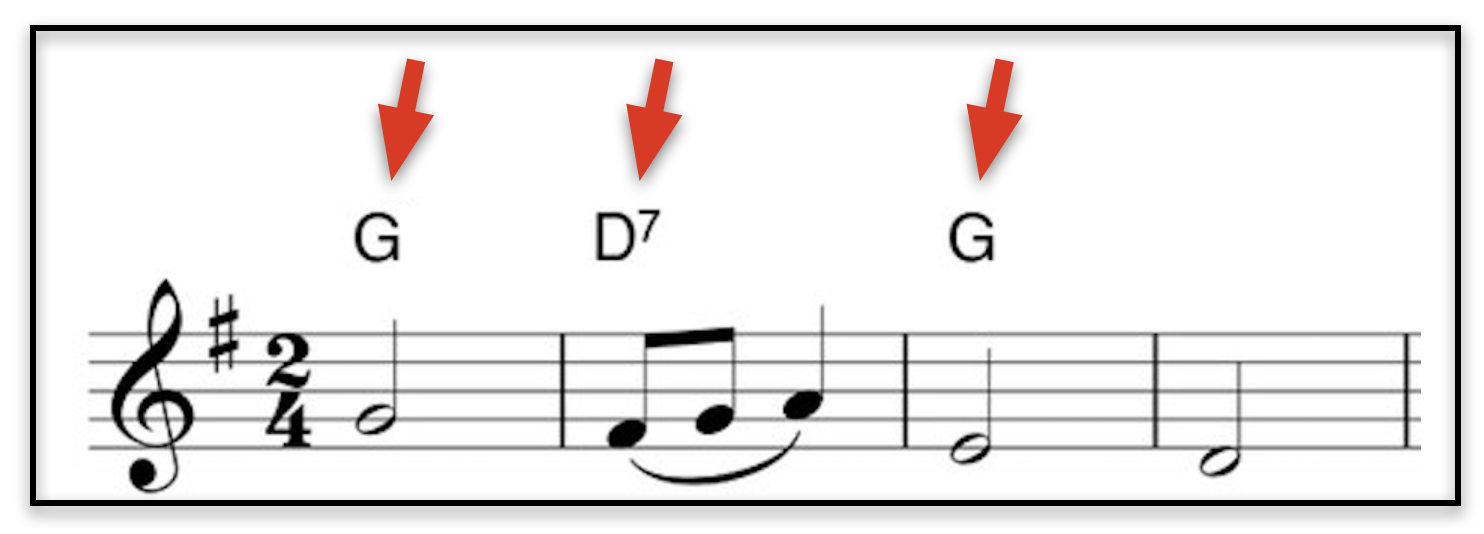
You may notice chord names such as C, G7, Dm or Am printed above the cello staff. They are not additional notes the cello student is expected to play.
The chord symbols are there so a teacher, pianist, guitarist or other accompanist can easily add harmony behind the cello melody if desired.
Use the Collection Many Different Ways
Private Lessons
Select individual themes to reinforce tone, bowing, reading, intonation, rhythm and phrasing.
School Orchestra
Use familiar classical themes for sectionals, enrichment, sight-reading or supplemental repertoire.
Recitals & Auditions
Many selections make effective short recital pieces or useful preparation repertoire.
Home Practice
Recognizable melodies give students music they can enjoy revisiting outside the assigned method-book lesson.
One Classical Collection Across Many Instruments
Coordinated editions make it possible for teachers to use the same familiar themes with different students and create flexible mixed-instrument combinations.
Fifty Famous Classical Themes Series
Matching editions are available for woodwind, brass and string instruments. Choose an instrument below to visit its Music Fun Books page.
Move your mouse over an instrument and click to explore that edition.

Why Fifty Famous Classical Themes?
Developing instrumentalists spend a great deal of time learning technique, but they should also become familiar with the music that forms the foundation of the classical tradition.
I wanted students to encounter important melodies by Mozart, Beethoven, Bach, Tchaikovsky, Brahms and many other major composers in arrangements they could actually play.
The goal is not simply to complete another exercise. It is to help students develop technique while gradually building a vocabulary of music they will recognize throughout their musical lives.
Questions About Fifty Famous Classical Themes for Cello
Is this a beginning cello method?
What level of cellist is the book for?
Are these complete classical compositions?
What do the chord symbols above the cello part mean?
Does the cello student have to play the chord symbols?
Can different instruments play these themes together?
Can these pieces be used for recitals?
Give a Developing Cellist Fifty Classical Melodies Worth Knowing
Recognizable repertoire by the great composers — arranged for developing cello players and useful for lessons, orchestra, recitals and home practice.