Progressive brass duets for students
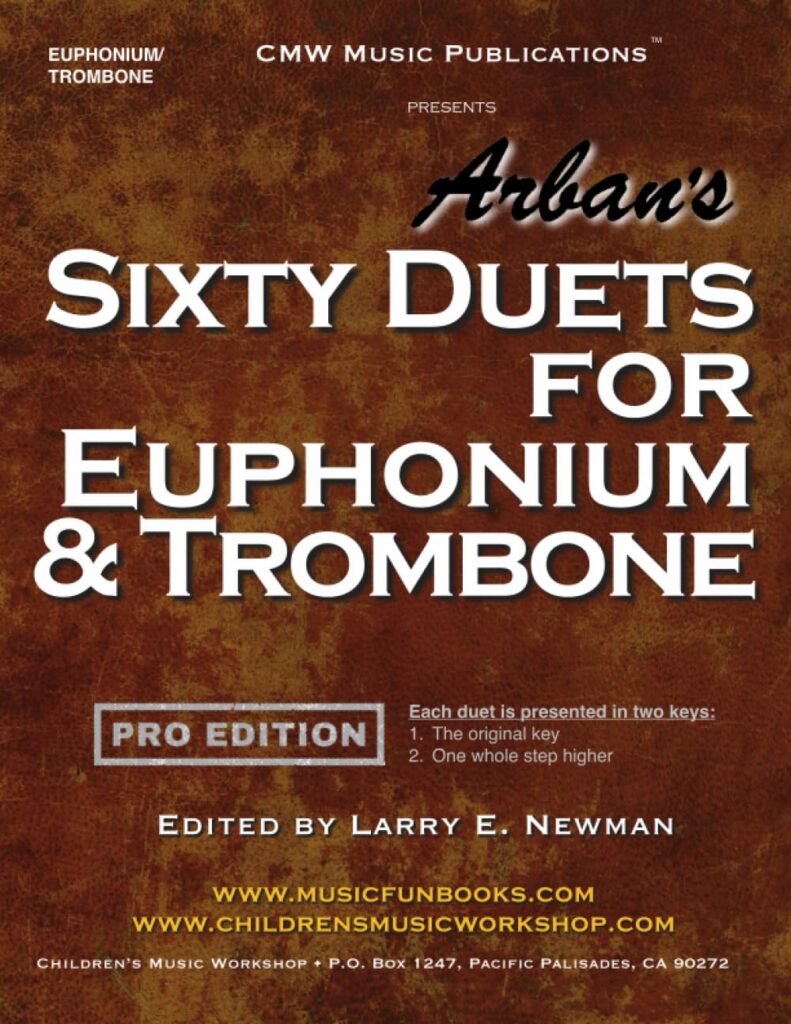
Arban’s Sixty Duets for Euphonium & Trombone
What Is This Book?
Arban’s Sixty Duets for Euphonium & Trombone is a graded collection of brass duets drawn from the legendary Arban tradition, carefully edited for modern players. It offers sixty pieces that move from easier to advanced levels, helping students and teachers build ensemble skills, musicality, and technique together. With thoughtful editorial input from Larry Newman, it presents both well-known and rarely heard duets in a clear, accessible format.
Who Is This Book For?
This book is ideal for middle school, high school, and adult euphonium and trombone players, from late beginner through advanced levels. It works well in school band programs, private lessons, studio teaching, chamber music classes, and home practice with a teacher, parent, or duet partner. It is especially useful for brass students preparing for auditions, juries, festivals, and ensemble performance.
What Makes This Book Easy for Kids to Learn?
The duets are arranged in a progressive order, so younger players can start with simpler pieces and gradually move into more challenging music. Clear notation and logical phrasing help developing readers stay focused on rhythm, articulation, and ensemble precision. The musical lines are written to sit comfortably on euphonium and trombone, encouraging a strong sound without overtaxing young embouchures, while still stretching range and flexibility at higher levels.
What Music Does the Book Include?
This collection contains sixty duets in a variety of styles that reflect Arban’s classic melodic and technical writing for brass. It includes lyrical pieces for tone and phrasing, as well as more brilliant, virtuosic duets that challenge articulation, finger technique, and range. Alongside familiar Arban favorites, the book features less-known “hidden gem” duets that expand the standard euphonium and trombone duet repertoire.
Are There Fun Extras Included?
This book focuses on the music itself and does not include additional extras.
What’s Inside the Book?
Sixty graded duets for euphonium and trombone
Progression from late beginner through advanced levels
Classic Arban-style melodic and technical writing
Lyrical, expressive duets for tone and phrasing
Brilliant, virtuosic duets for advanced technique
Lesser-known Arban duets to expand repertoire
Editorial guidance and insights by Larry Newman
Clear, performance-ready notation for studio and stage use
Skills Your Child Will Learn
Ensemble listening and balance
Blending tone with another brass player
Rhythmic accuracy in duet settings
Articulation, slurring, and stylistic clarity
Range development on euphonium and trombone
Technical fluency and flexibility
Musical phrasing and expressive shaping
Confidence performing with a partner
How to Use This Book
Teachers can assign duets by level, playing one part while the student plays the other, or pairing students with classmates for in-lesson and in-class performance. Band directors can use the pieces for chamber music units, brass choir sectionals, and festival preparation, choosing duets that match the ensemble’s current abilities. At home, students can practice one line at a time, then combine parts with a teacher, parent who plays, or another student to develop timing, counting, and listening skills. The book also works well for recital features, juries, and audition prep, selecting individual duets that showcase tone, technique, and musicality.
Frequently Asked Questions
What instruments can use this book?
This book is specifically designed for euphonium and trombone players reading standard bass or concert pitch parts.
Is this suitable for beginners?
Yes. Late beginners can start with the easier duets and gradually progress, while more advanced students will find challenging material in the later pieces.
Can I use these duets for auditions or recitals?
Yes. Many of the duets make excellent audition excerpts, jury pieces, and recital selections for both euphonium and trombone.
Do I need a teacher to use this book?
You can use it for self-study, but playing the duets with a teacher or more experienced partner will greatly improve ensemble skills and musical understanding.
Are the parts equal in difficulty?
Most duets are written with two meaningful, interactive parts, so either player can take the lead or supporting role depending on the piece.
Learn More
For additional music tutorials and demonstrations, visit the official Music Fun Books YouTube Channel.
Where to get it
Available now on Amazon.