
The Beginning Band Fun Book: Flute
A flute method created specifically for young elementary band students—with large notation, short assignments, early letter-name support, clear flute fingerings, familiar music and free MP3 play-along tracks. A special alternate-start section also gives teachers another way to help beginning flutists establish an easier, more comfortable first sound.
- Designed specifically for elementary beginners
- Extra-large notation with gradual reading support
- Special alternate beginning sequence for flute
- Free MP3 play-alongs for the Beginning Band songs
Beginning Flute Has Its Own Challenges
A new flutist is learning to form a sound across the embouchure hole while also balancing the instrument, coordinating the fingers and learning to read music. Keeping the printed page simple leaves more attention for the physical challenge of producing a comfortable sound.
Extra-Large Notation
Large notes and uncluttered staves make early reading easier.
Short Assignments
Students work with manageable amounts of material as tone develops.
Letter Names at First
Early support connects written pitches with flute fingerings.
Clear Fingering Guidance
New notes are introduced with straightforward fingering diagrams.
Flute-Specific Pages
Octave exercises, long tones and alternate fingerings address the instrument itself.
Familiar Music
Recognizable songs provide an early musical reward.
See Inside the Book
These six pages show the regular opening, independent note reading, musical concepts, flute-specific development, later repertoire and the special alternate beginning. Click any page to enlarge it.
A Smarter Alternate Start for the Flute
The book gives teachers two legitimate ways to begin—so a young flutist does not have to struggle with the standard band starting notes before developing a comfortable first sound.
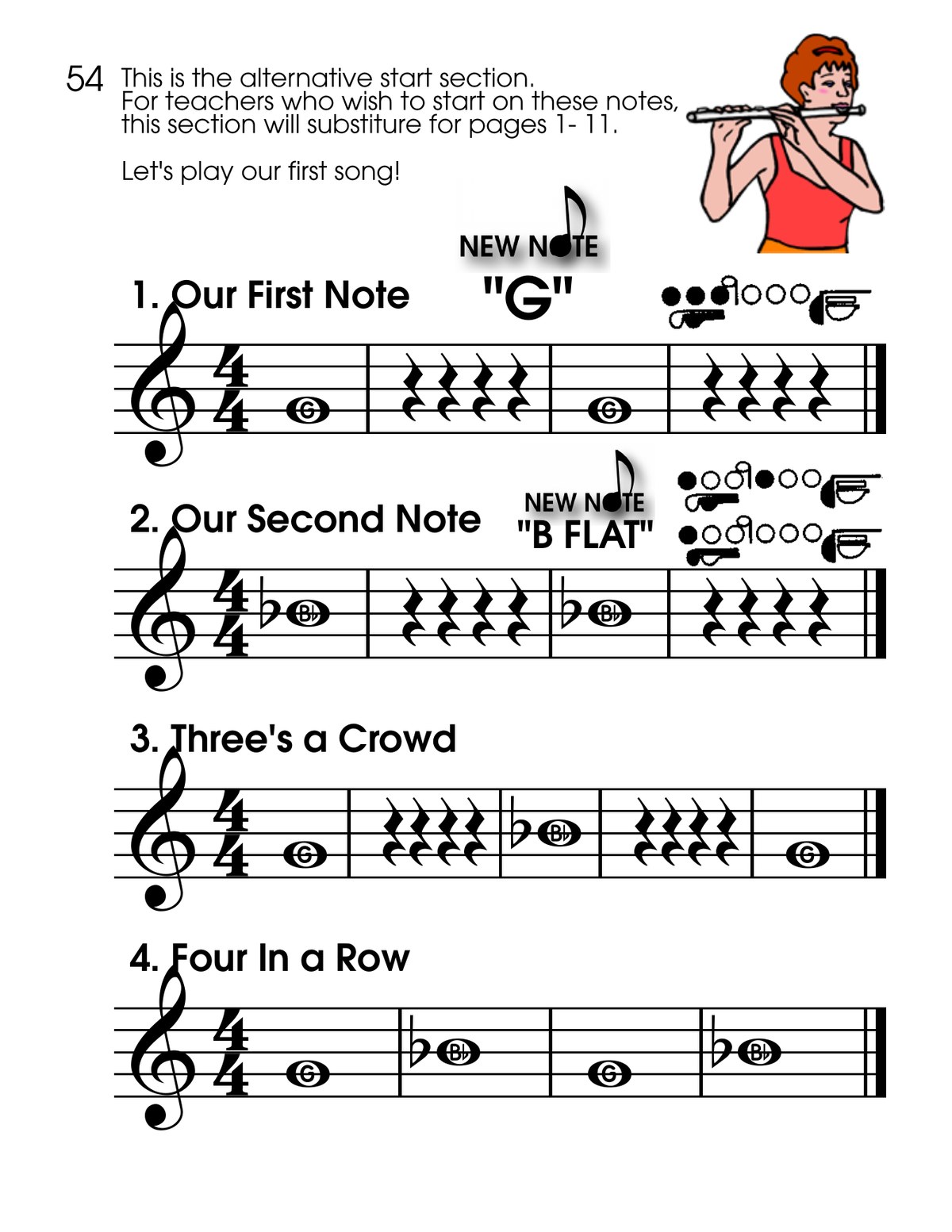
Page 54 begins the optional alternate section. The book notes that this material can substitute for pages 1–11.
Why Give the Flute a Different Beginning?
In a heterogeneous beginning band, clarinets, trumpets, saxophones and flutes need to make music together. The notes that are easiest for those other instruments, however, are not always the easiest notes on which a young flutist can establish a first sound.
The alternate section lets the flute begin with a different set of notes while the rest of the class continues its normal Beginning Band exercises.
Practice With the Beginning Band MP3 Play-Alongs
Flute students can use the Beginning Band Fun Book MP3 library for the regular exercises and songs. The tracks give young players a steady musical model and an easy way to repeat the same selection at home.
- Individual Beginning Band tracks are free to stream.
- Each selection begins with a count-off.
- The music repeats several times for practice.
- Works on computer, tablet or phone.
- No page-by-page flute companion video.
Choose the exercise or song the student is currently practicing.
Open the Free MP3 LibraryWhich Beginning Flute Book Fits the Student?
These books serve related but different needs. The best choice depends on the student’s age, learning setting and how gentle or extensive the beginning course should be.
The Beginning Band Fun Book: Flute
The book on this page. Large notation, short assignments, early letter-name support and the familiar Beginning Band sequence.
Its unique flute advantage is the choice between the normal heterogeneous-band beginning and the alternate starting sequence.
The Beginning Flute Fun Book
The separate pink flute method begins with B, A and G rather than being organized around the needs of a heterogeneous band class.
It is especially useful when the priority is establishing sound, posture, rhythm and early reading in a very gentle flute-only sequence.
Best Beginning Flute Book for Kids
A more mature beginning flute option for students who are comfortable with a more compact presentation.
It can begin with a completely new student while providing a longer developmental path than a very young beginner method.
From the First Sound to Confident Flute Playing
Establish the First Sound
Begin with manageable notes, short exercises and repetition.
Build the First Range
New fingerings are introduced gradually rather than all at once.
Read Without Letters
Early visual support disappears as reading becomes familiar.
Expand Flute Technique
Slurs, dynamics, octave work and breath control develop.
Play More Complete Music
Familiar songs and later selections strengthen independence.
The Book Includes Special Material Just for Flutists
Dedicated pages address fingering, register development and the physical demands of moving between octaves.
Develop the Instrument, Not Just Music Reading
The flute-specific pages introduce alternate B-flat fingering, octave exercises, upper notes and long tones while keeping the student within the familiar Beginning Band framework.
- Alternate B-flat fingering
- B-flat fingering exercises
- Octave workouts
- High C and high D
- Long-tone development
- Complete fingering chart
One Elementary Approach Across the Band
The same large-note, confidence-building method is available across the instruments commonly used in elementary band programs.
Built for Real Elementary Band Programs
Large notation, fewer measures per page, gradual pacing and familiar music make the series especially useful with younger students and mixed-readiness beginning classes.
Explore the Complete Series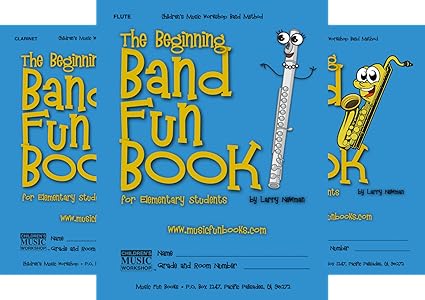

Why I Included an Alternate Flute Start
Heterogeneous beginning band creates a practical compromise. Every instrument has notes that feel natural at the beginning, but the entire class also needs music that works together.
For the flute, immediately beginning with the notes used in the common band exercises can sometimes make the first lessons harder than they need to be. A student who is still discovering how to form the first sound is already working very hard.
I therefore included an alternate section that lets the teacher start the flute in a friendlier range while the clarinets, trumpets and other instruments continue their normal beginning sequence.
Once the student has established the sound, D and E-flat are introduced and the flutist moves into the regular book. The alternate section is simply another teaching tool available when a student or class benefits from it.
Questions About The Beginning Band Fun Book for Flute
Is this suitable for a student who has never played flute?
What grade levels is the book designed for?
Why does the regular flute section begin on D and E-flat?
What is the alternate flute starting section?
Can the alternate flute material be played while the rest of the band is playing?
Does every flute student need to use the alternate start?
Are there free MP3 tracks?
Is there a page-by-page companion video for flute?
How is The Beginning Flute Fun Book different?
What is Best Beginning Flute Book for Kids?
Give a Young Flutist a Flexible, Successful Beginning
Large notation, gradual pacing, flute-specific instruction, free MP3 play-alongs and a special alternate start give teachers more than one way to help a beginning student succeed.