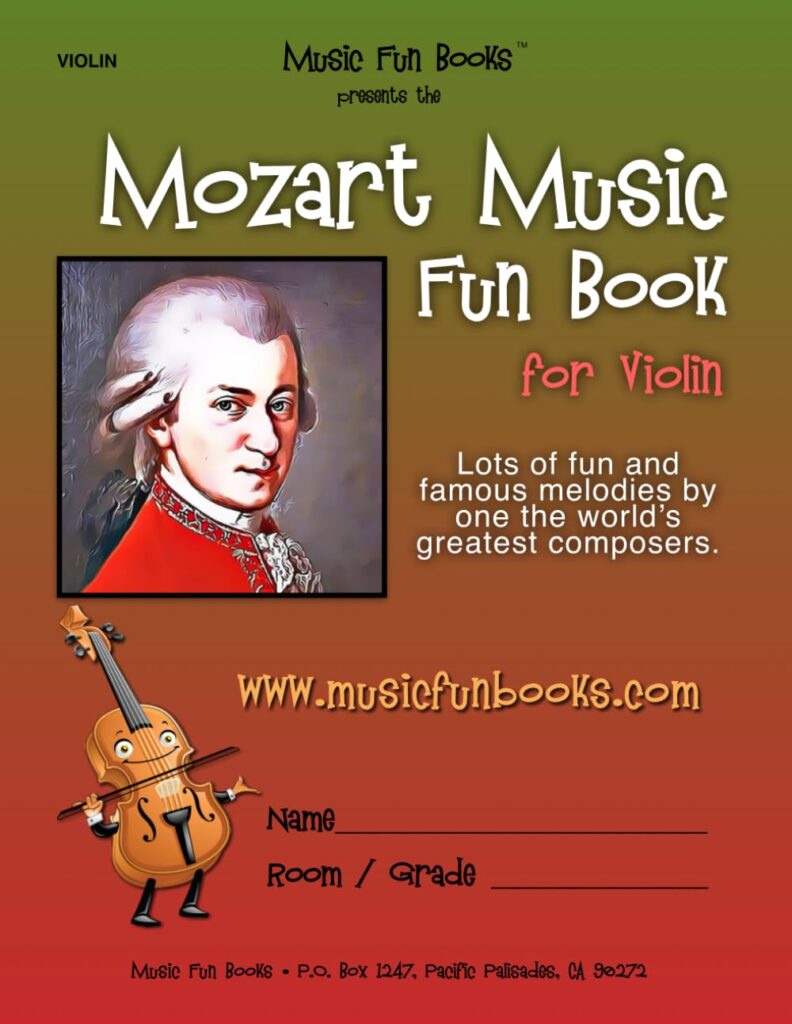
Beginner Mozart pieces for young violinists
Mozart Music Fun Book for Violin
What Is This Book?
Mozart Music Fun Book for Violin is a student-friendly collection of Mozart’s greatest themes carefully arranged for developing violinists. It includes more than two dozen iconic melodies in comfortable keys and ranges so students can enjoy real classical repertoire early in their studies. The music is simplified but still musical, making it ideal for building confidence, tone, and expression.
Who Is This Book For?
This book is designed for elementary through early-intermediate violin students, roughly ages 7–14, who are ready to explore classical music. It works well for private lessons, school orchestra programs, Suzuki-style teaching, homeschool music, and self-guided learners with teacher support. It is also a great option for parents who want to give their child a meaningful, age-appropriate introduction to Mozart.
What Makes This Book Easy for Kids to Learn?
The pieces are arranged in comfortable keys and ranges that suit young violinists, avoiding extreme high notes or complex accidentals. Clear, uncluttered layouts keep each piece easy to read so students can focus on sound and musicality. Dynamics, articulations, and phrasing are left flexible so teachers can tailor each piece to the student’s level and teaching style. The gradual progression of difficulty helps students experience success with Mozart right away.
What Music Does the Book Include?
This collection focuses on simplified themes from Mozart’s most beloved works, including operas, symphonies, concertos, and serenades. Students will recognize famous melodies from The Marriage of Figaro, The Magic Flute, Don Giovanni, and Eine Kleine Nachtmusik. The book also includes symphonic themes, concerto excerpts, and other concert hall favorites, giving young players a broad and inspiring introduction to Mozart’s music.
Are There Fun Extras Included?
This book focuses on the music itself and does not include additional extras.
What’s Inside the Book?
More than two dozen simplified Mozart themes arranged for violin
Comfortable keys and ranges suitable for beginner and intermediate students
Iconic themes from The Marriage of Figaro, The Magic Flute, and Don Giovanni
Themes from Eine Kleine Nachtmusik (all four movements)
Melodies from Symphony No. 39 in Eb Major and Symphony No. 40 in G Minor
Excerpts from Piano Concerto in C Major, K. 467 (first and second movement themes)
Horn Concerto in Eb Major, K. 447 (3rd movement theme adapted for violin)
Violin Concerto in G Major, K. 216 themes arranged for student players
Overtures to Don Giovanni, The Magic Flute, and The Marriage of Figaro
Teacher-friendly notation with room to add custom bowings, dynamics, and phrasing
Repertoire suitable for recitals, auditions, and school performances
Skills Your Child Will Learn
Basic and intermediate violin technique
Rhythmic accuracy and steady pulse
Music reading and note recognition on the staff
Bow control and tone production
Phrasing and musical expression
Playing in common keys and time signatures
Confidence performing classical repertoire
Listening skills and familiarity with Mozart’s style
How to Use This Book
Use this book alongside a primary violin method to introduce real classical repertoire as students advance through early technique. Teachers can select single themes as short study pieces, recital solos, or sight-reading material. In school programs, directors can assign different themes to students as individual solos or adapt them for small ensembles. At home, parents can encourage regular practice by letting students choose favorite melodies and revisit them as their skills improve. The flexible layout allows teachers to add their own bowings, fingerings, and dynamics to match any curriculum.
Frequently Asked Questions
What skill level is this book for?
The arrangements are best for late-beginner to early-intermediate violin students who can read basic notes and rhythms on all strings.
Can a student use this book without a teacher?
Yes, motivated students can enjoy the melodies on their own, but guidance from a teacher or experienced player is recommended for bowings, fingerings, and style.
Is this book only for solo violin?
The pieces are written for solo violin, but teachers can easily create simple duet or accompaniment parts or combine students playing in unison.
Does the book follow a specific method like Suzuki?
No, it is method-neutral and can be used alongside any violin method book or teaching approach.
Are full movements included or just themes?
The focus is on recognizable themes and main melodies from larger works, arranged at a level accessible to young violinists.
Learn More
For additional music tutorials and demonstrations, visit the official Music Fun Books YouTube Channel.
Where to get it
Available now on Amazon.