Beginner flute note reading guide
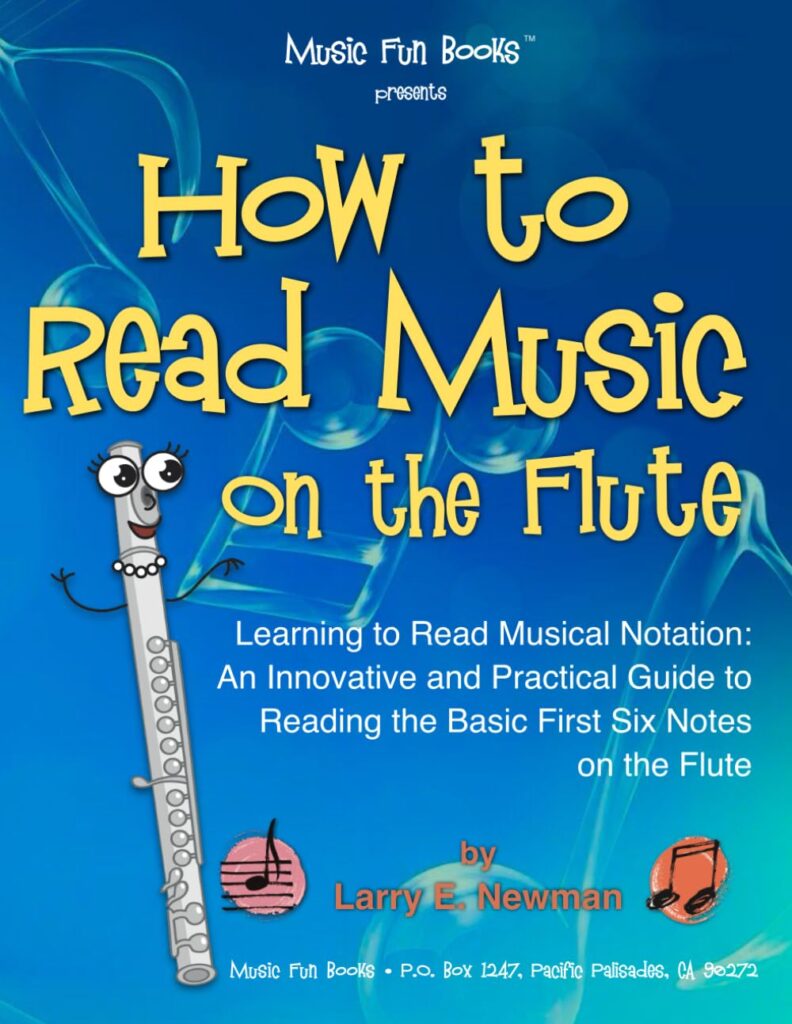
How to Read Music on the Flute
What Is This Book?
How to Read Music on the Flute is a step-by-step note-reading book designed especially for young flute students. It uses an easy, six-notes-or-less approach and prints the letter names inside the note heads to build confidence. Each song then appears again without letters so students can transition smoothly into real music reading.
Who Is This Book For?
This book is ideal for elementary-age beginners learning flute for the first time.
It works well for school band programs, private flute lessons, homeschool music study, and independent home learners.
Directors and teachers can also use it as a supplemental reading resource for beginning flute sections and small ensembles.
What Makes This Book Easy for Kids to Learn?
Large, clear music notation makes the notes easy to see and follow.
Letter names are printed inside the note heads in the first version of each song, reducing confusion and hesitation.
Only six or fewer notes are used at a time, so young players are never overwhelmed.
Songs are carefully sequenced from very easy to slightly more challenging, encouraging gradual progress.
The side-by-side layout (with and without letters) lets students check their reading and build confidence step by step.
The focus on short, tuneful pieces keeps practice fun and manageable for kids.
What Music Does the Book Include?
The book contains dozens of short songs written specifically for beginning flute students.
All pieces are limited to six notes or fewer, with simple rhythms that support early note-reading.
Each tune is designed to be memorable and melodic so children enjoy playing them over and over while their reading improves.
Are There Fun Extras Included?
This book focuses on the music itself and does not include additional extras.
What’s Inside the Book?
Dozens of beginner-friendly flute songs using no more than six different notes
Each song printed twice: once with note names inside the note heads and once without
Clear, easy-to-read music staves sized for young learners
A progressive layout that gradually introduces reading challenges
Reinforcement of the same melodies so students can compare “with letters” and “without letters” versions
A frustration-free method that lets students return to lettered notes whenever they need support
An encouraging approach that emphasizes enjoyment and success while learning to read music
Skills Your Child Will Learn
Basic flute note reading on the staff
Connecting written notes to fingerings and sound
Confidence moving from lettered notes to standard notation
Improved rhythmic accuracy with simple patterns
Stronger music memory through repeated songs
Better focus and independence in home practice
A positive, enjoyable attitude toward learning to read music
How to Use This Book
Have students first learn and play each song using the version with letter names inside the note heads.
Once they can play the song comfortably, guide them to the matching version without letters on the facing page.
If they struggle on the non-lettered page, send them back to the lettered version to rebuild security, then try again.
Teachers can assign a few songs each week in private lessons or band, using the book as a targeted note-reading tool.
Parents can listen at home and encourage their child to “graduate” each song by playing it successfully without letters.
Directors may use selected tunes as warm-ups or quick-reading exercises for beginning flute sections.
Frequently Asked Questions
Is this book suitable for complete beginners on the flute?
Yes. It is designed for children who are just starting flute and are new to reading notes on the staff.
Do students need to know the note names before using this book?
No. The letter-in-the-note-head approach helps them learn note names and positions at the same time.
Can this be used alongside a traditional band method book?
Yes. It works very well as a supplemental resource to strengthen note reading while you use a standard band method.
How many notes are introduced at one time?
Each group of songs uses six or fewer notes, so beginners can focus on a small, manageable set.
Is this book only for individual lessons, or can it be used in class?
It can be used in private lessons, group classes, school band, and at home for extra practice.
Are there versions of this book for other instruments?
Yes. There are versions for violin, flute, clarinet and trumpet.
Learn More
For additional music tutorials and demonstrations, visit the official Music Fun Books YouTube Channel.
Where to get it
Available now on Amazon.