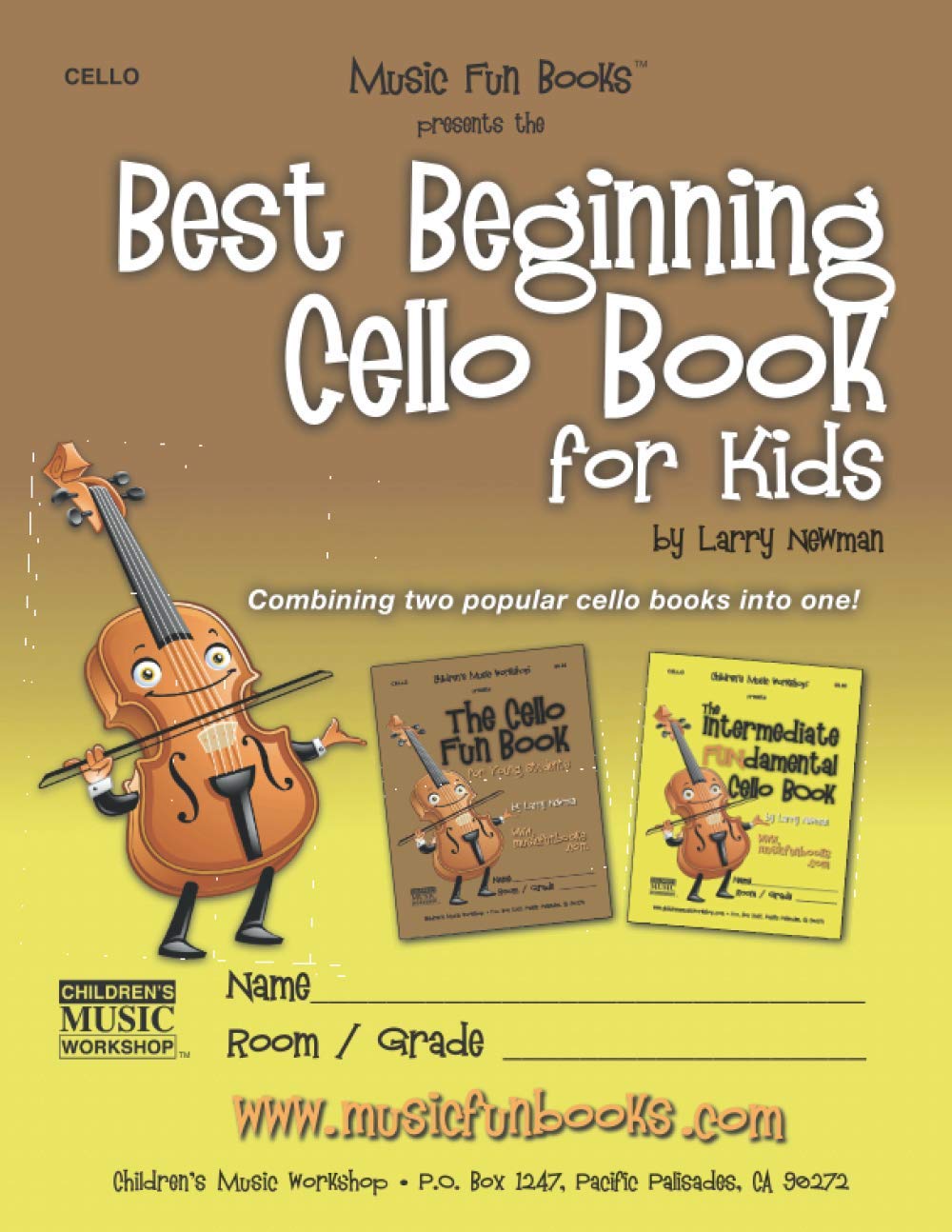
Best Beginning Cello Book for Kids
Start with the very first cello lesson and continue into the next stage of playing. This 74-page method gives young cellists a clear path from first notes, plucking and bowing into stronger reading, higher notes, the G string, new finger patterns, scales, slurs and more developed repertoire.
- Designed for young first-time cello students
- Large notation and letter names support early reading
- Begins with open strings, simple rhythms, plucking and gradual bowing skills
- Continues into intermediate cello technique and repertoire
One Book That Grows With the Student
The early pages are designed for a child who is just meeting the cello. Later sections deliberately move into more advanced reading, fingering and technique so the student can keep progressing in the same volume.
No Previous Cello Experience Required
Students meet the instrument, learn the C-G-D-A strings, begin with plucking, use large notation with letter-name support, and gradually add the bow and left-hand fingers through short, manageable exercises and familiar songs.
Continue Into Intermediate Cello
Page 49 begins a more advanced review section with C sharp, high D and the D major scale. From there, students continue with scales, faster note patterns, slurs, the lower G-string area, low second-finger patterns, C natural, C major and progressively more developed repertoire.
See the Complete Learning Path
See Inside the Book
These six pages show how the book moves from true beginning cello through first-year development and into intermediate technique and repertoire. Click any page to enlarge it.
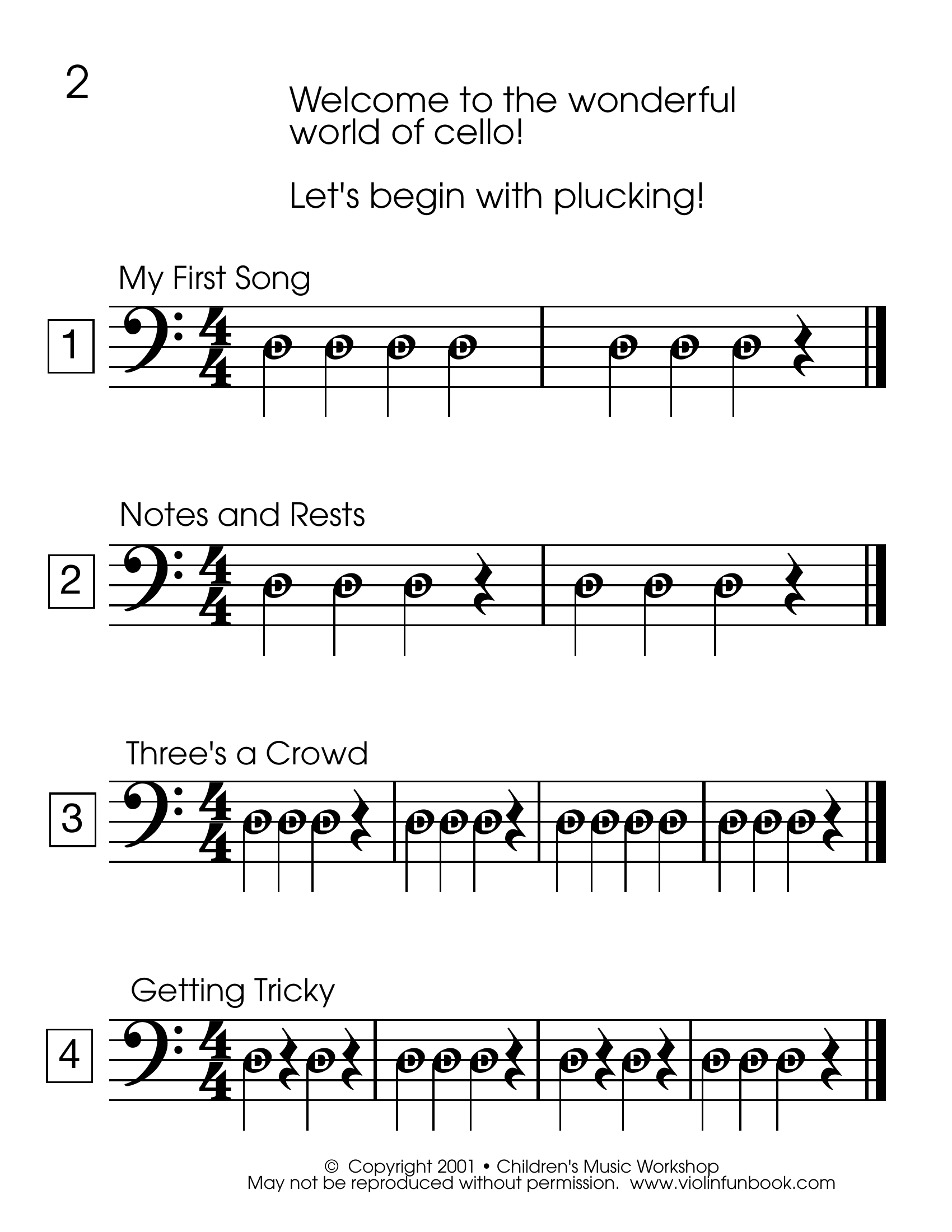
Start With The First Cello Lessons
Large notation, letter names and simple open-string music make the opening lessons appropriate for a student who has never played before.
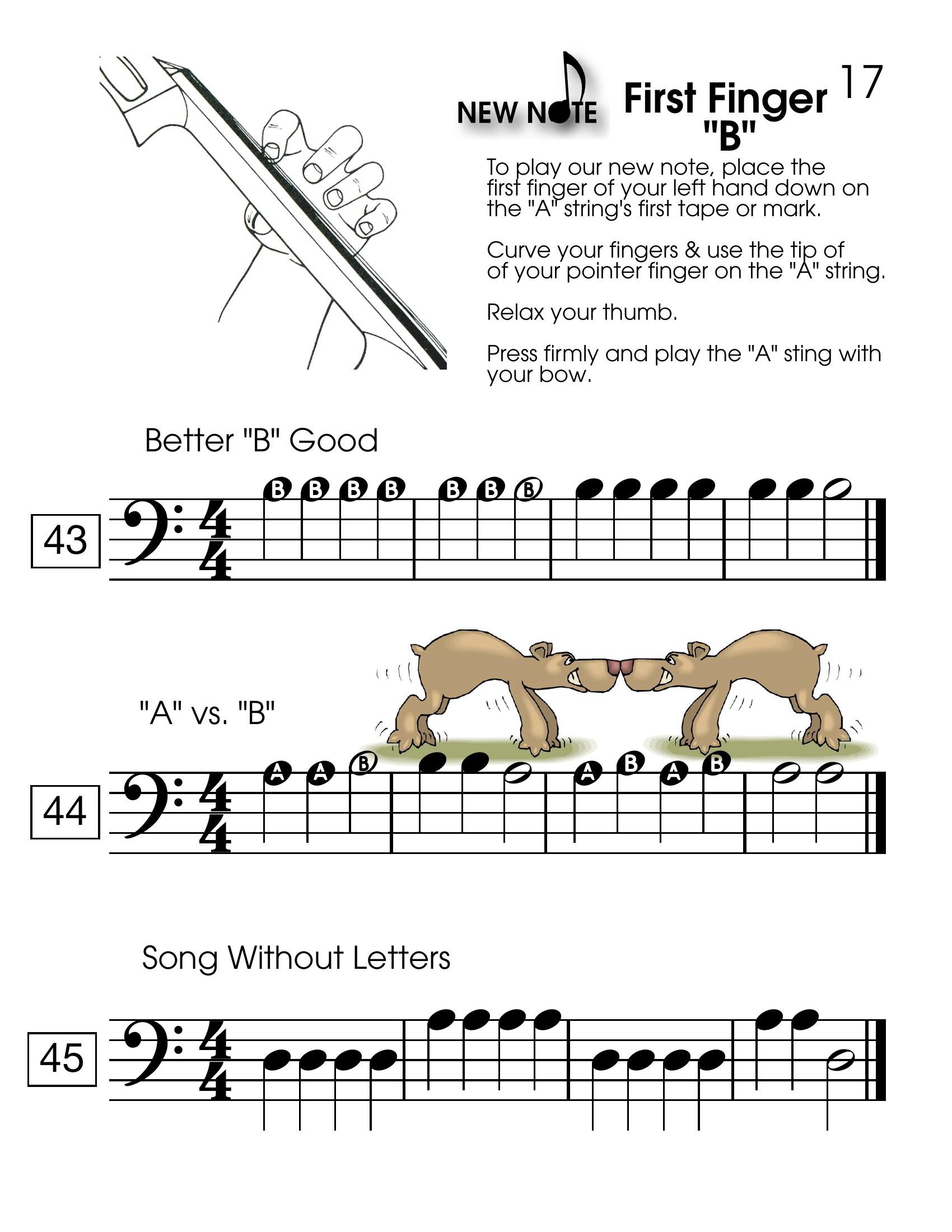
Build Independent Note Reading
Letter-name support gradually disappears as students become more comfortable recognizing notes directly on the music staff.
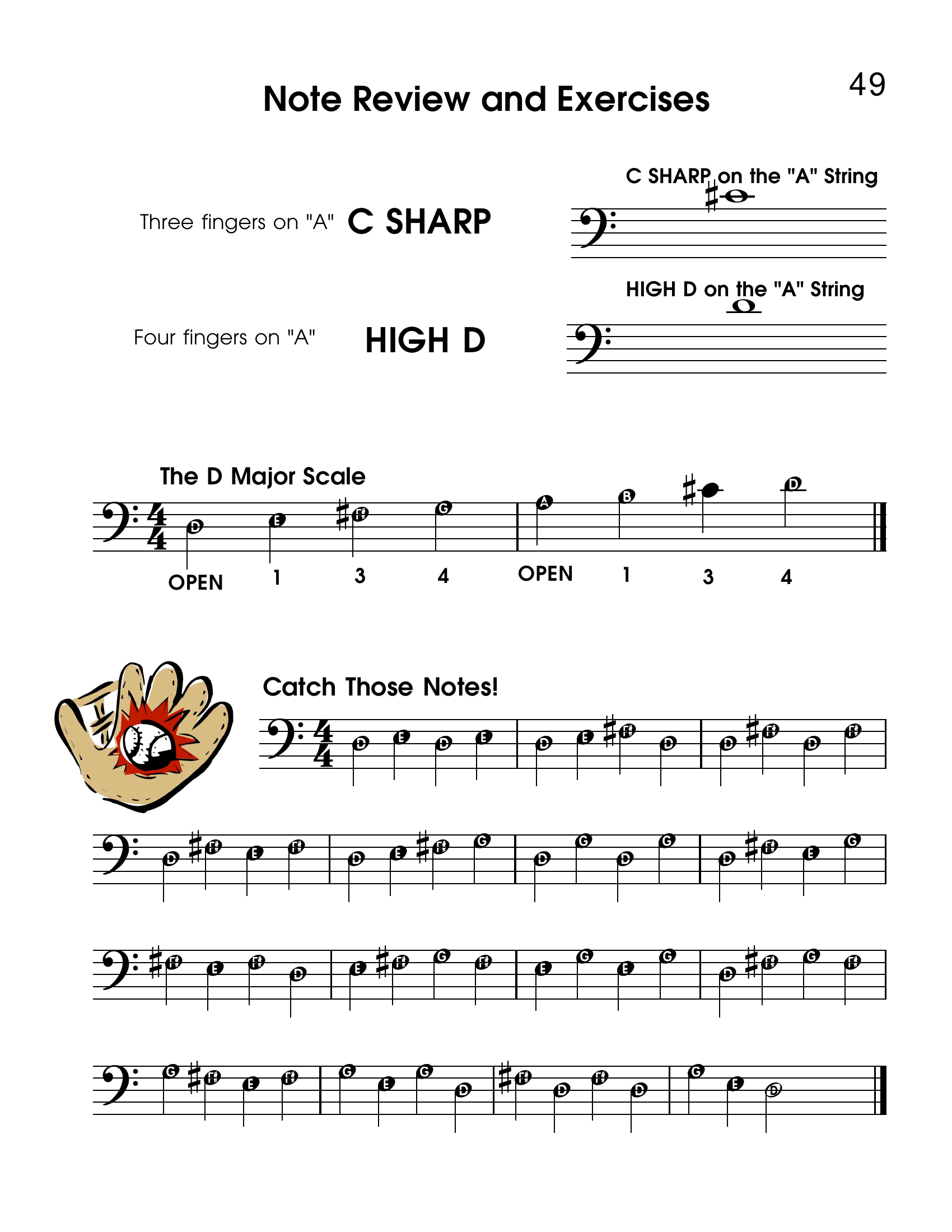
Move Into Intermediate Cello
Page 49 marks the deliberate transition from first-year foundations into the book’s more advanced second half.
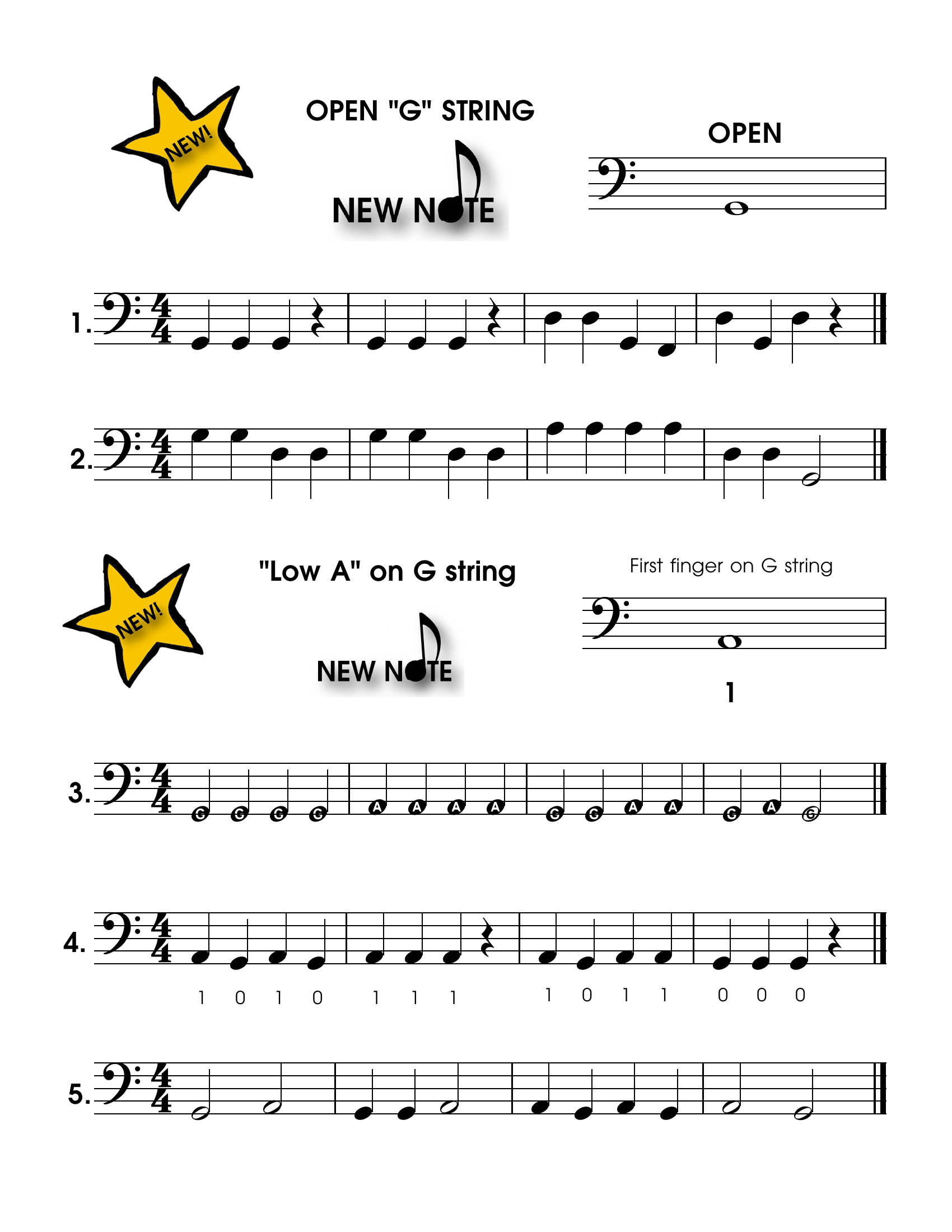
Expand Into The Lower Register
Students begin work on the G string and low A, extending range and building left-hand control in the cello’s lower register.
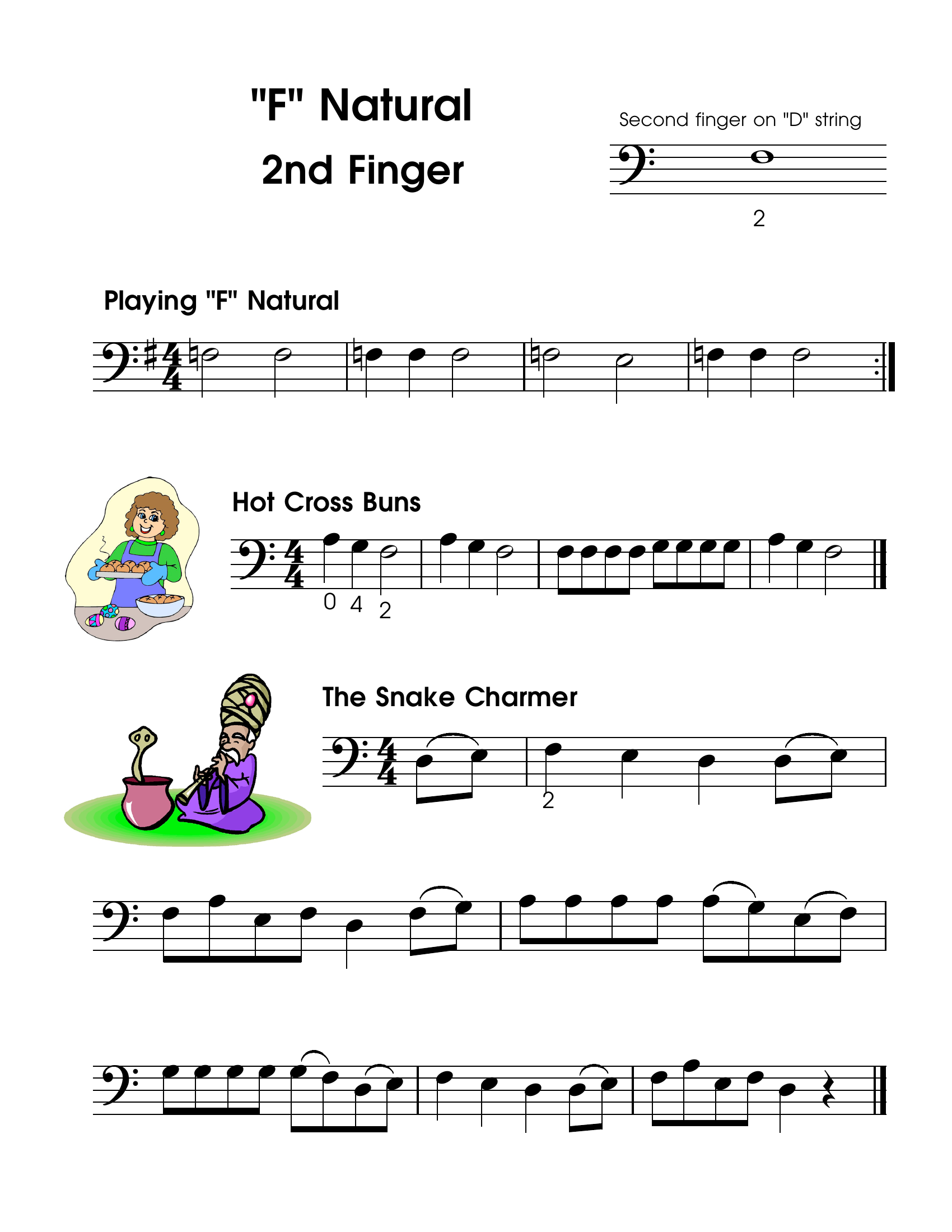
Add New Finger Patterns
Low second finger and F natural expand intonation skills beyond the earliest D-major finger pattern.
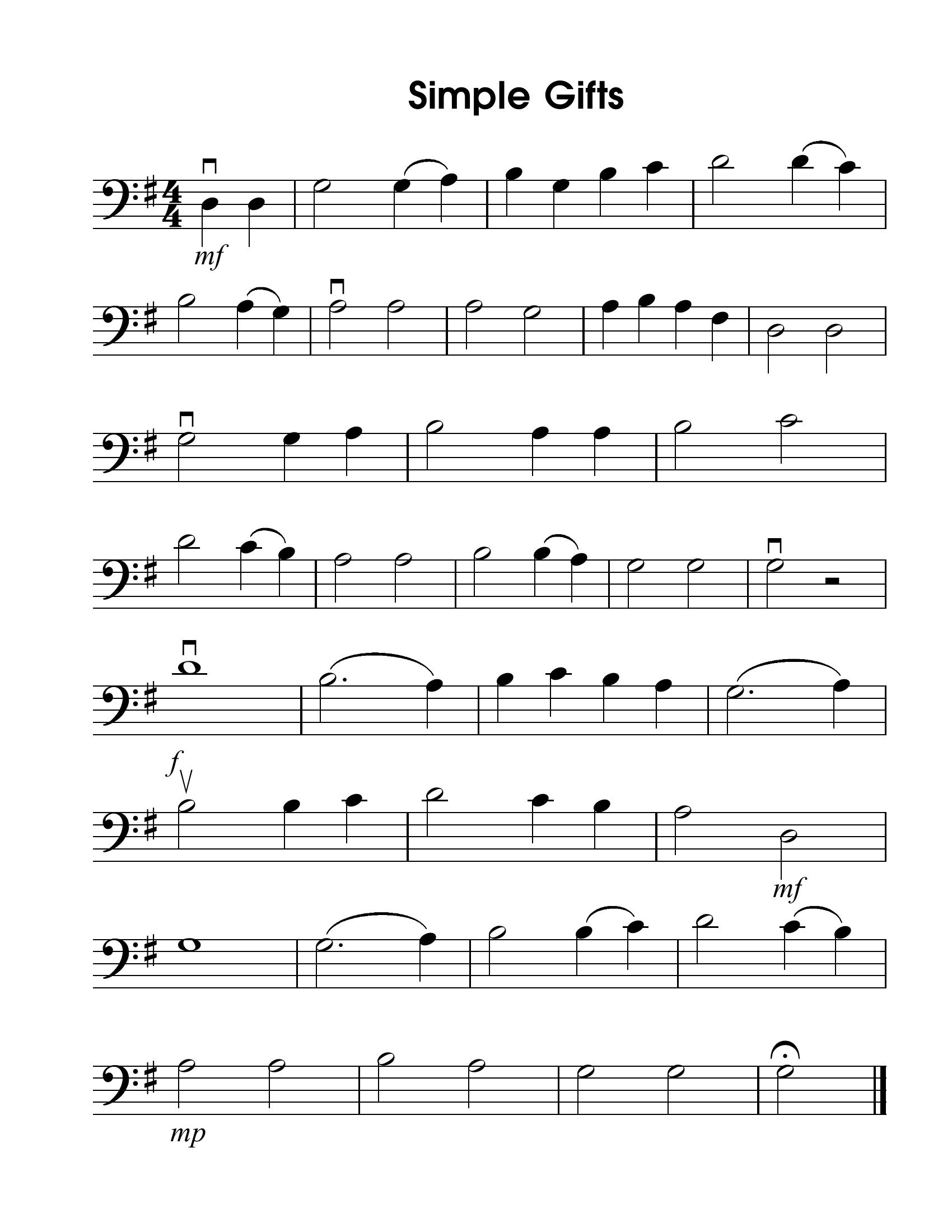
Progress To More Mature Repertoire
Longer music, dynamics, bowings and expanded technique show how far the student can progress within the same book.
From the First Note to Intermediate Cello
Each stage adds only what the student is ready to use, keeping the progression clear while steadily increasing reading and technical demands.
Meet the Instrument
Learn the cello, strings, bow and first simple rhythms through plucking.
Add the Bow and Fingers
Develop bow grip, D- and A-string notes, left-hand fingers and familiar songs.
Read More Independently
Reduce reliance on letter names while building rhythm, notation and musical confidence.
Move Into Intermediate Work
Use scales, faster passages, slurs and expanded note patterns beginning around page 49.
Develop the Lower Range
Strengthen G-string reading, low-finger patterns, C natural, C major and longer repertoire.
A Beginning Book and an Intermediate Book Together
Best Beginning Cello Book for Kids brings the beginning foundation and next-level cello work together so a student can start at lesson one and continue without changing methods just as progress begins to accelerate.
The Cello Fun Book
A dedicated first-year cello method with large notation, simple songs, clear diagrams, letter-name support and carefully paced beginning instruction.
Learn about The Cello Fun BookBest Beginning Cello Book for Kids
Begins with the first lesson, develops the essential first-year foundation and then continues into intermediate cello material in the same 74-page volume.
The Intermediate FUNdamental Cello Book
A separate next-level method for students who already know the basics and are ready for stronger reading, bowing, fingering, intonation and repertoire.
Learn about the Intermediate Cello BookOne Book Can Carry a Student Through Both Stages
A new cellist can begin at page one and continue naturally through first-year fundamentals into intermediate study. The next level is already waiting when the student is ready for it.
Built for the Way Young Cellists Actually Learn
The large notation, limited material per page and gradual progression work well in private lessons, school string programs, group classes, homeschool music and guided home practice. The book also supports mixed-string teaching when cello students need clear, instrument-specific reading material.
Questions About Best Beginning Cello Book for Kids
Is this book suitable for a student who has never played cello?
Yes. The book begins at the true beginner level with instrument orientation, open strings, simple rhythms, plucking and early bowing. No previous cello or music-reading experience is required.
What age range is the book designed for?
It is designed especially for elementary-age beginners, generally about ages 5–11. Older beginners who prefer large notation and clear pacing can also use it successfully.
Does a student need to use The Cello Fun Book first?
No. Best Beginning Cello Book for Kids is designed to stand on its own. A brand-new student can begin directly with this book and progress from the opening lessons into the more advanced second half.
How far does the book take a beginning cellist?
Students progress from simple D- and A-string material into stronger note reading, bowing, scales, slurs, G-string work, low second-finger patterns, C natural, C major and more developed repertoire.
What happens at page 49?
Page 49 is a more advanced note-review page introducing C sharp, high D, the D major scale and extended reading exercises. It helps begin the book’s transition from first-year foundation work into more advanced cello study.
Can this book be used in school orchestra or private lessons?
Yes. The gradual progression and uncluttered pages work well for school orchestra programs, private lessons, group classes, homeschool music and guided home practice.
Does this cello edition include coloring pages or dedicated online practice tracks?
Yes. This cello edition includes original coloring pages along with the method, diagrams and song material. It does not rely on a dedicated page-by-page online practice-track program.
What size cello can be used with this method?
The method is written for young players and works with appropriately fitted student cellos. The instrument itself should be sized by a teacher or string specialist so the student can hold and play it comfortably.
Choose Violin, Viola, or Cello
Best Beginning Cello Book for Kids is part of a three-book string series. Explore each instrument-specific edition, visit its Music Fun Books page, or use the individual Amazon ordering link.
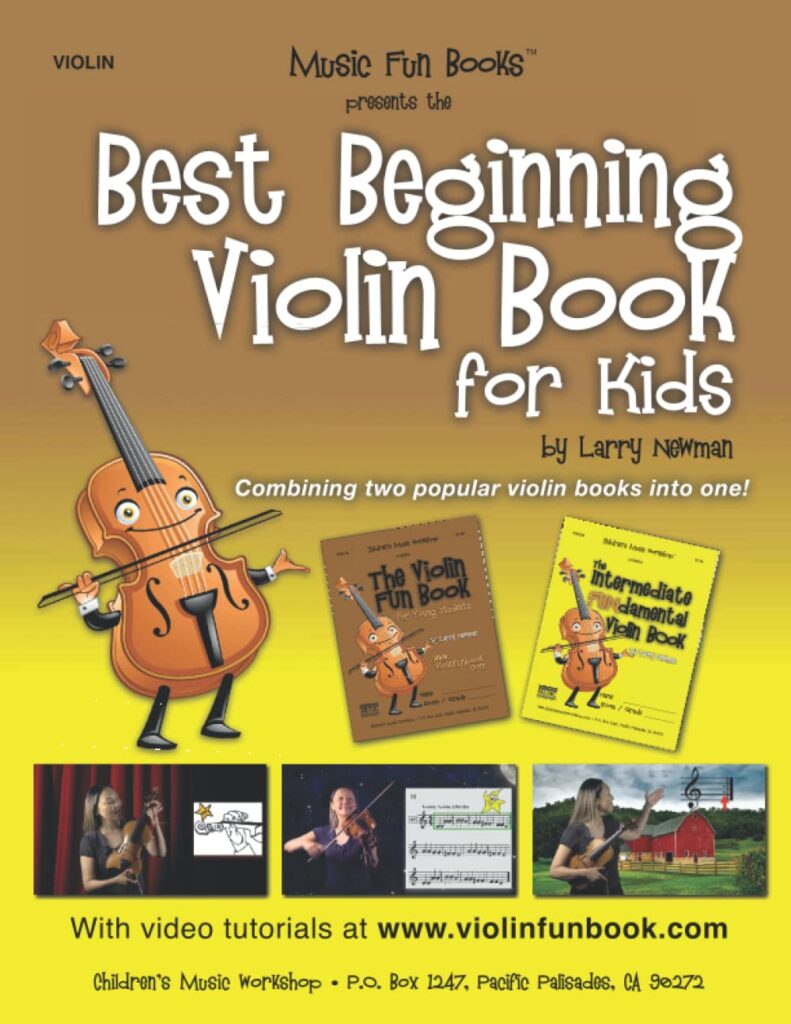
Best Beginning Violin Book for Kids
An all-in-one beginner violin method with extra-large notes, familiar songs, posture and bowing instruction, coloring pages, and creative activities.
ISBN-13: 979-8622181474
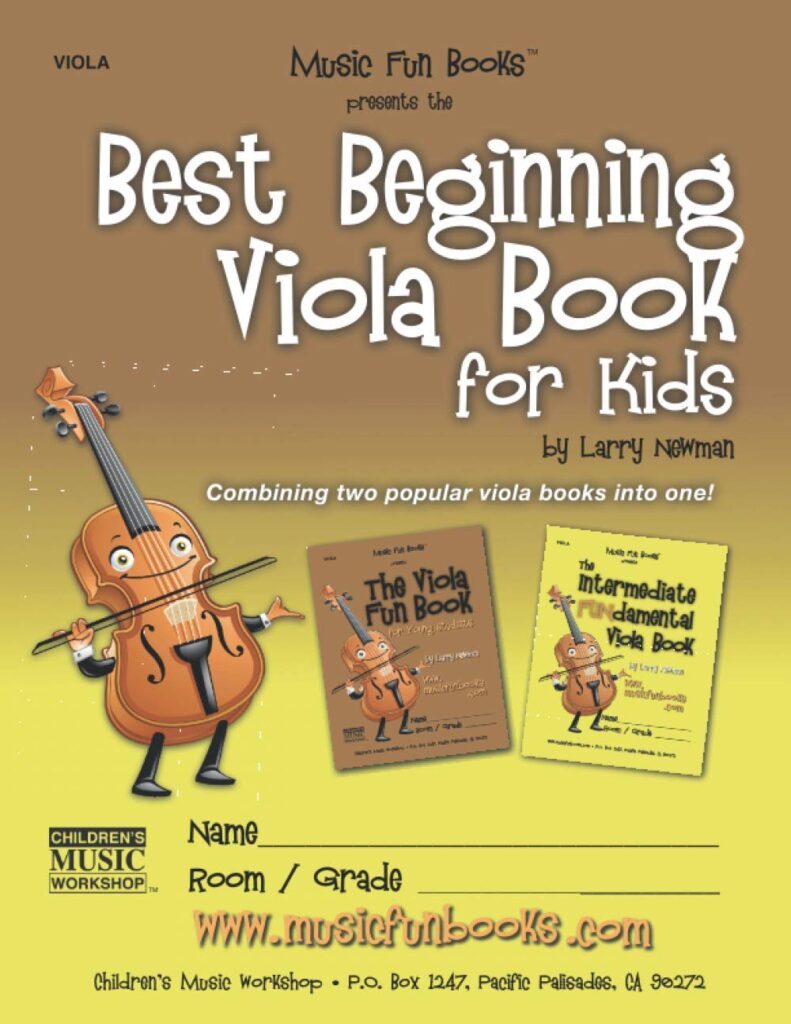
Best Beginning Viola Book for Kids
A combined beginner viola method with large notation, letter names, clear diagrams, simplified arrangements, and music selected for smaller hands.
ISBN-13: 979-8731732031
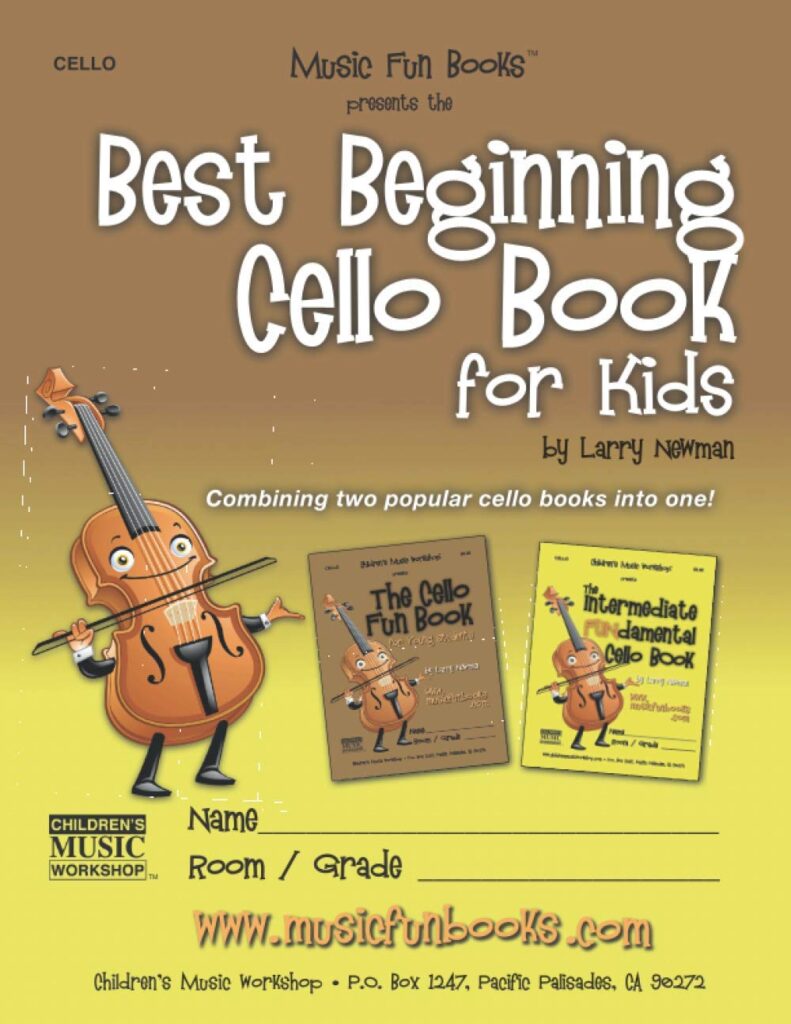
Best Beginning Cello Book for Kids
A combined and expanded beginner cello method with large notes, step-by-step lessons, clear setup diagrams, familiar songs, and original coloring pages.
ISBN-13: 979-8567837832
Start at the Beginning. Keep Going Into the Next Level.
A 74-page cello method that carries a young beginner from the first lesson through essential first-year skills and into intermediate technique, reading and repertoire.