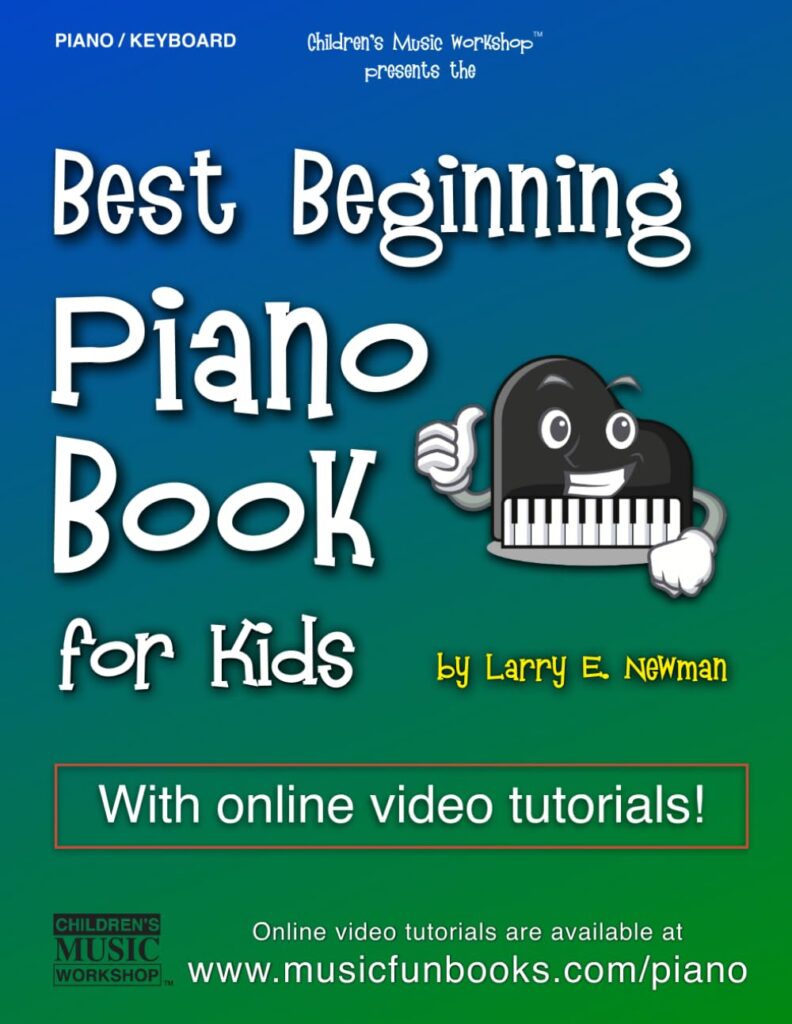
Best Beginning Piano Book for Kids
A child-friendly piano method that begins with the very first notes, gradually introduces the left hand and bass clef, develops two-hand playing and then continues into technique exercises and recognizable classical repertoire.
- Extra-large, uncluttered music notation for young beginners
- Right hand, left hand and gradual hands-together development
- Keyboard diagrams, finger numbers and child-friendly illustrations
- Continues into technique studies and famous classical music
From the First Notes to Real Two-Hand Piano Playing
New skills arrive in manageable stages, giving a young beginner time to understand the keyboard, notation, rhythm and fingering before more complicated coordination is required.
First Notes & Rhythms
Middle C, D and other nearby notes begin the course with large notation, finger numbers, rests and short pieces.
Bass Clef & Left Hand
Students begin reading lower notes with the left hand while reinforcing their established right-hand skills.
Hands Together
Chords, harmony notes and coordinated two-hand arrangements gradually turn separate skills into real piano playing.
Technique & Repertoire
Finger exercises, sixteenth notes, dynamics and longer classical pieces provide material for continued development.
Watch Miss Suzanna Demonstrate the Beginning Piano Lessons
The main beginning portion of the book is supported by professionally produced 4K video tutorials. Students can watch the corresponding lesson, see and hear how the music is played, and then return to the book to practice.
The dedicated piano video page keeps the full lesson player and lesson-by-lesson navigation in one convenient place.
Videos cover the core beginning sequence, including note reading, rhythm, sharps, flats and developing two-hand playing.
Watch the 4K Lessons See Book PagesSee How the Piano Skills Develop
These six pages show the progression from a student’s first simple piano piece to two-hand playing, technical work and recognizable classical repertoire. Click any page to see the full-size image.
 Open full size
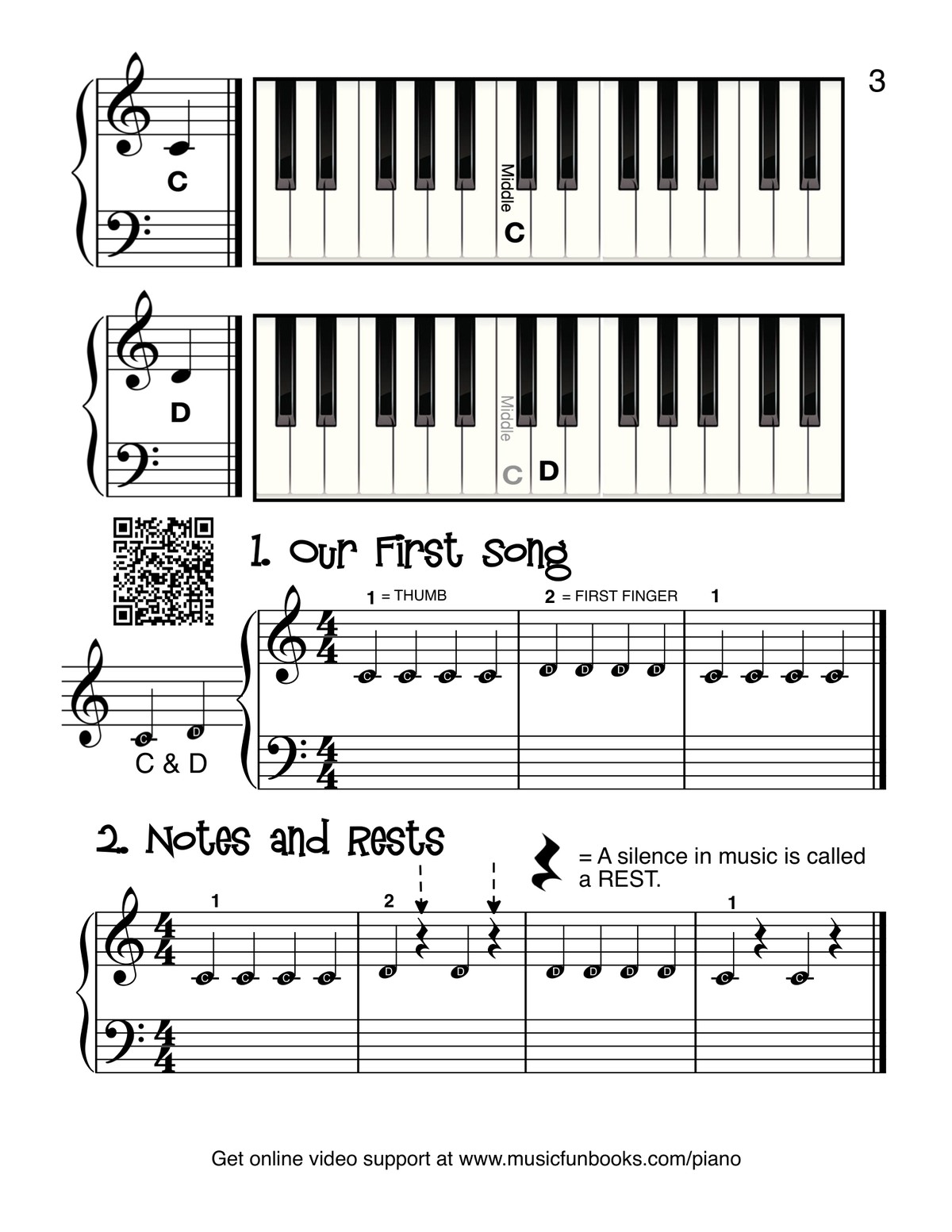
Page 3 — The First Piano Song
Middle C and D, keyboard diagrams, finger numbers and simple
rhythms give a brand-new student an understandable first step.
Open full size
Page 3 — The First Piano Song
Middle C and D, keyboard diagrams, finger numbers and simple
rhythms give a brand-new student an understandable first step.
 Open full size
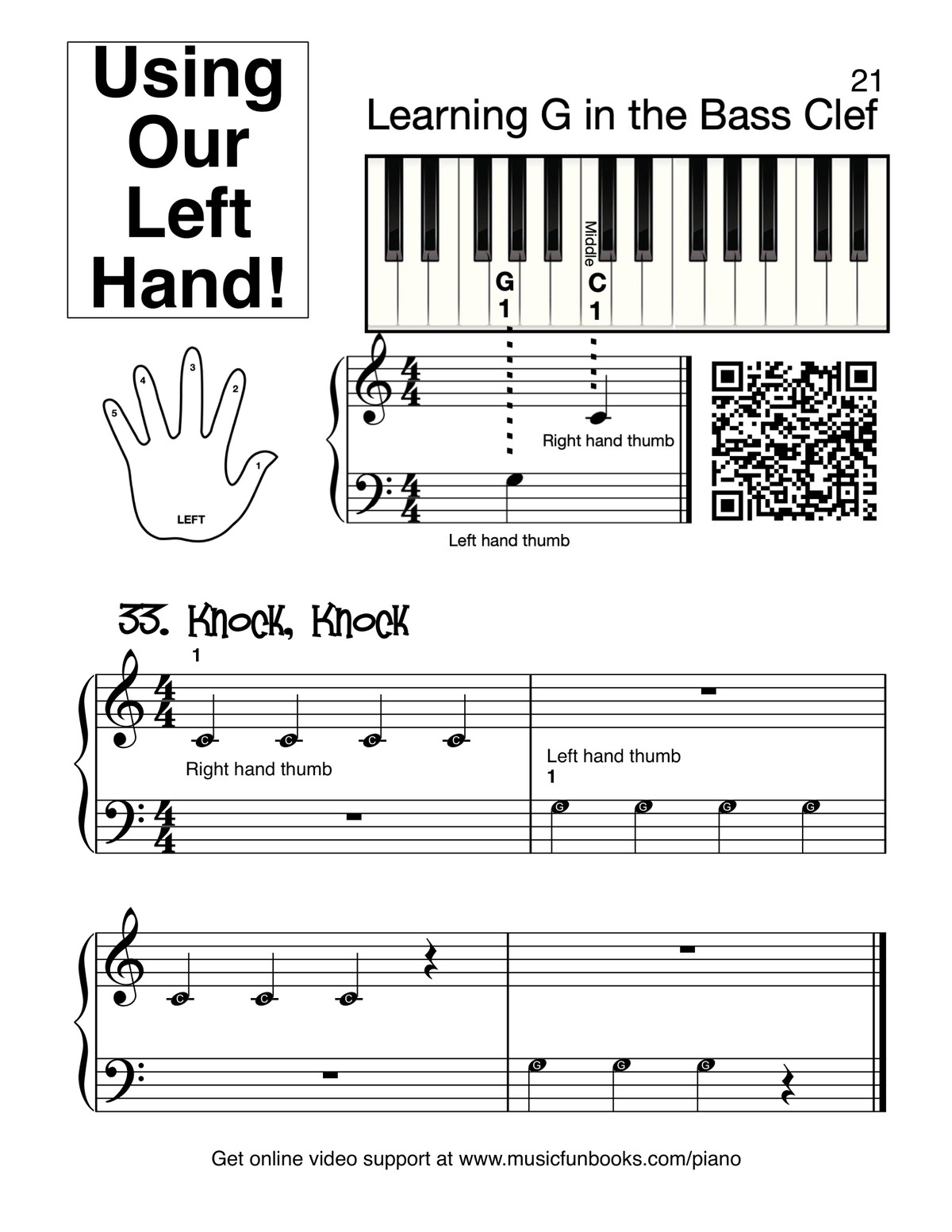
Page 21 — Introducing the Left Hand
Bass-clef G and left-hand playing are introduced visually before
the student is asked to combine more complex material.
Open full size
Page 21 — Introducing the Left Hand
Bass-clef G and left-hand playing are introduced visually before
the student is asked to combine more complex material.
 Open full size
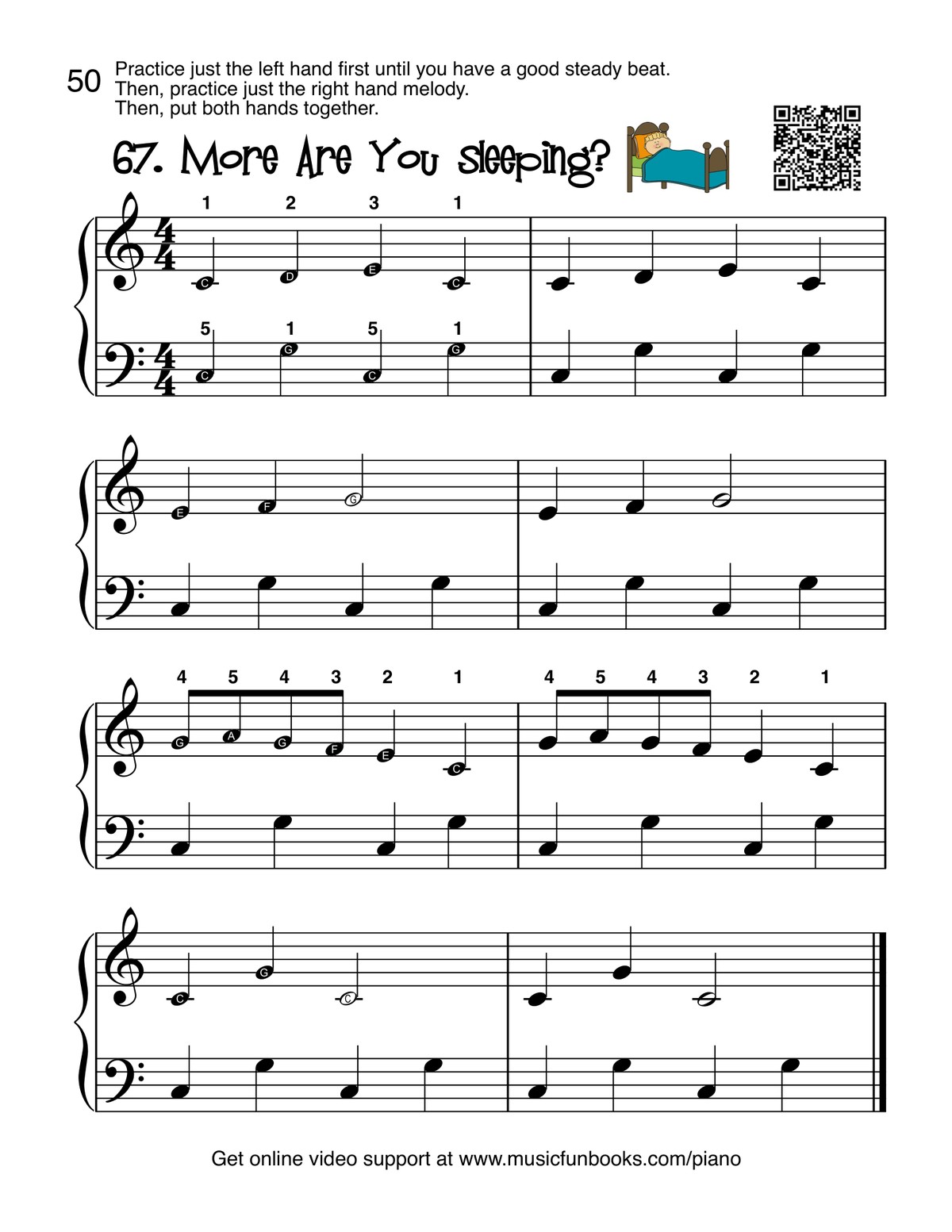
Page 50 — Putting Both Hands Together
Students are encouraged to practice each hand separately and then
combine the left-hand pattern with the right-hand melody.
Open full size
Page 50 — Putting Both Hands Together
Students are encouraged to practice each hand separately and then
combine the left-hand pattern with the right-hand melody.
 Open full size
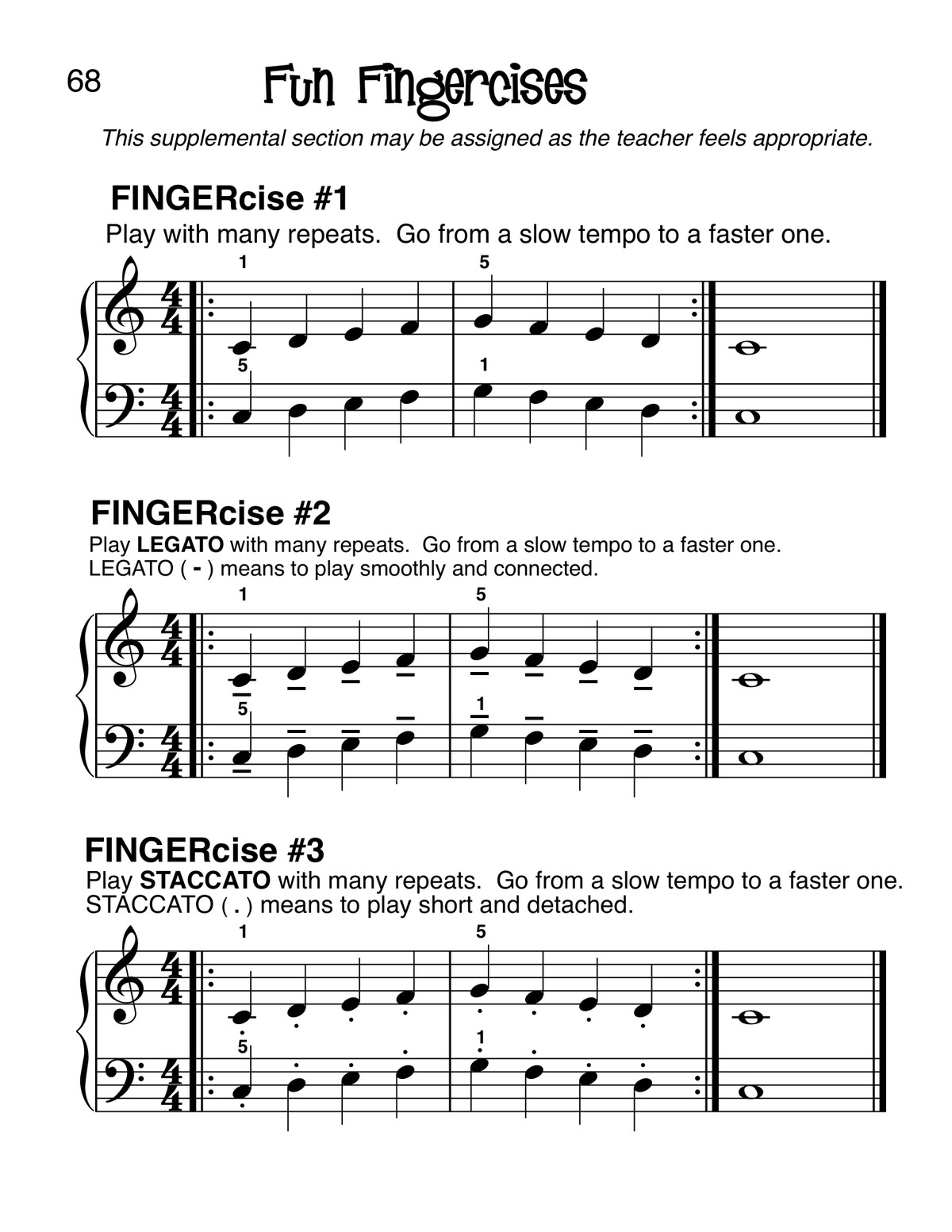
Page 68 — FINGERcises
A supplemental technique section works on coordination, legato,
staccato, finger independence and steady tempo.
Open full size
Page 68 — FINGERcises
A supplemental technique section works on coordination, legato,
staccato, finger independence and steady tempo.
 Open full size
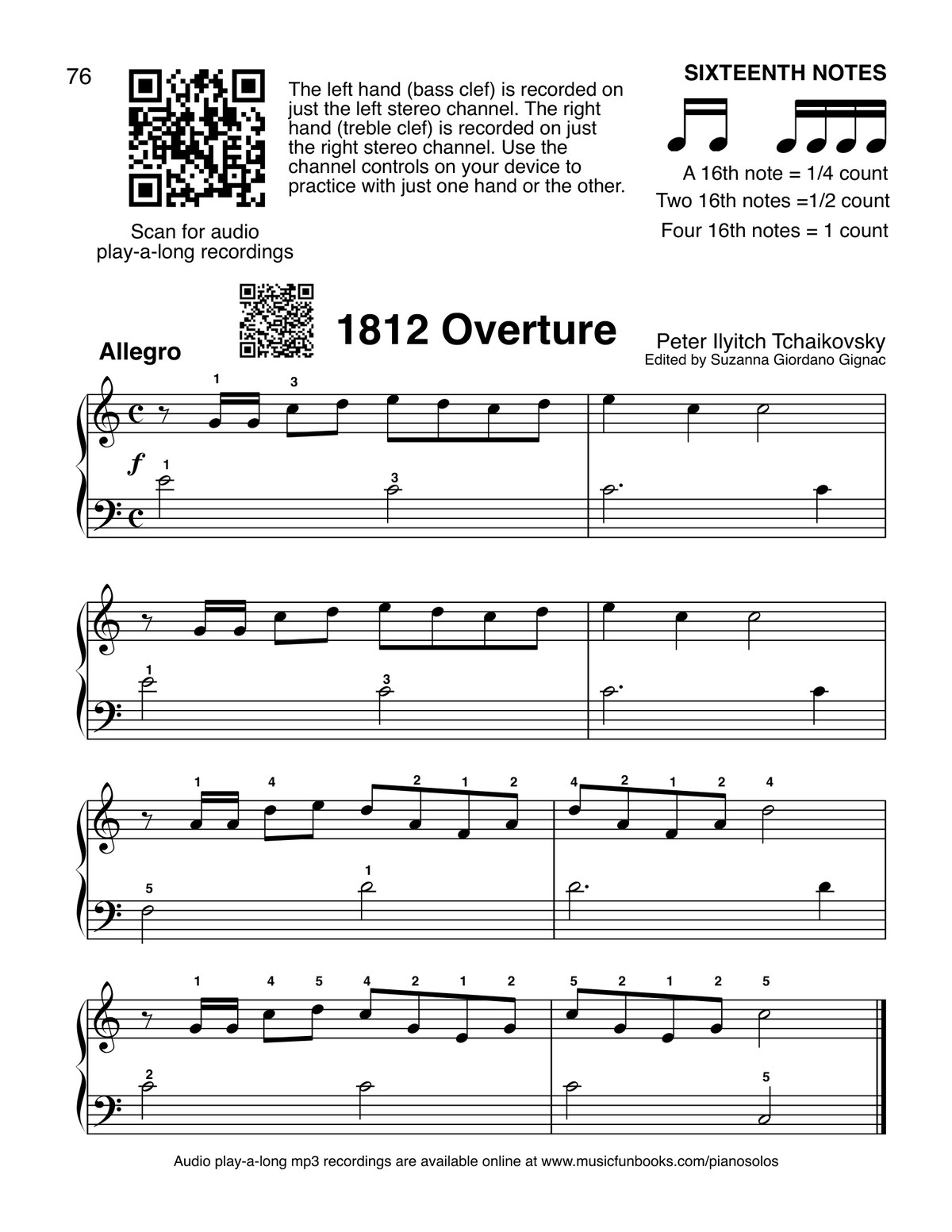
Page 76 — 1812 Overture & Sixteenth Notes
The later portion moves into more developed classical arrangements
and introduces sixteenth-note reading.
Open full size
Page 76 — 1812 Overture & Sixteenth Notes
The later portion moves into more developed classical arrangements
and introduces sixteenth-note reading.
 Open full size
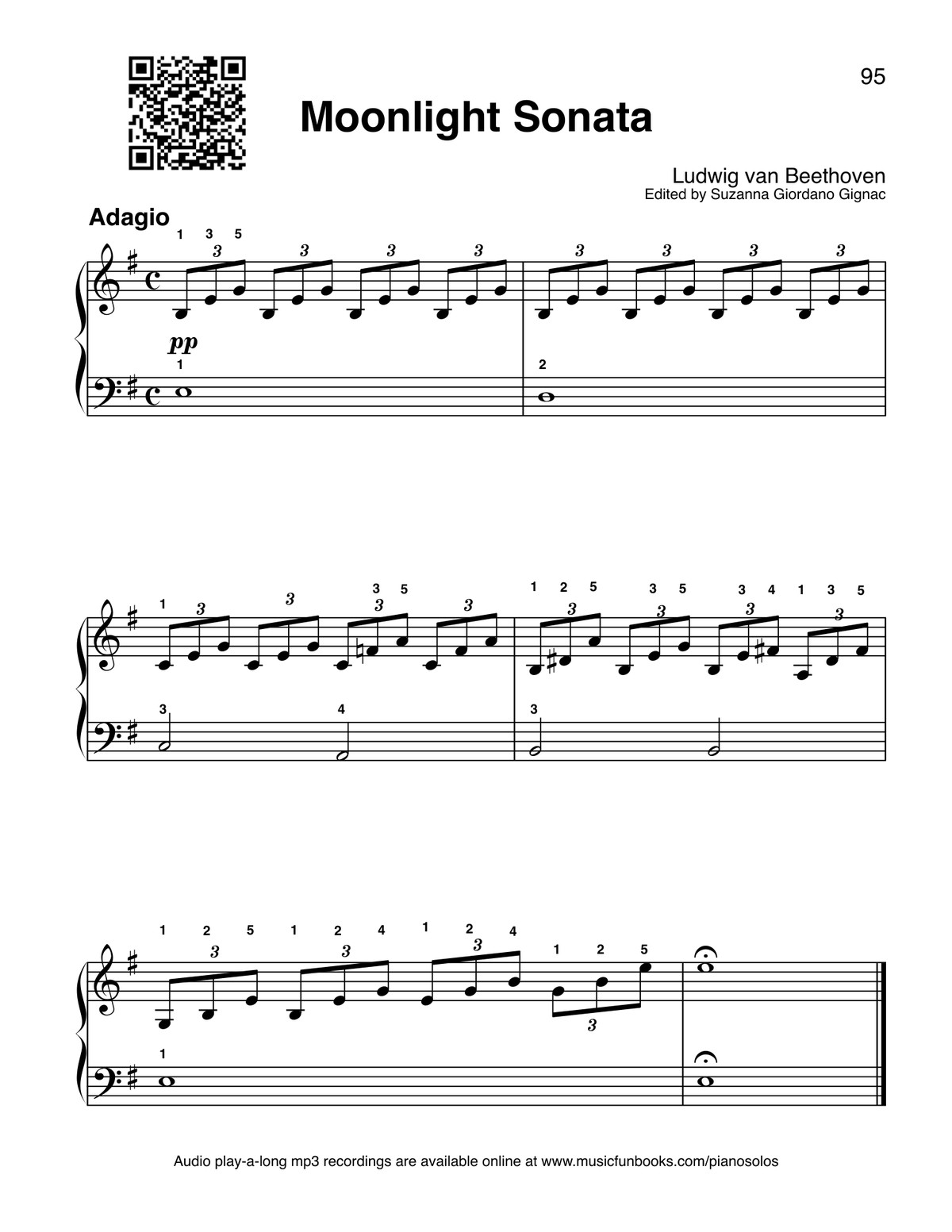
Page 95 — Moonlight Sonata
Beethoven’s famous theme demonstrates how far the student can
progress from the first Middle C exercises.
Open full size
Page 95 — Moonlight Sonata
Beethoven’s famous theme demonstrates how far the student can
progress from the first Middle C exercises.
Each Hand Learns Its Job Before the Student Combines Them
Young beginners often find two-hand coordination to be one of the biggest challenges in learning piano. This method does not begin by asking a child to manage everything at once.
Right-hand note reading is established first. Bass-clef notes and left-hand patterns are then introduced, followed by increasingly complete hands-together pieces.
- Treble-clef reading begins gradually
- Bass-clef reading is introduced visually
- Simple left-hand harmony develops in stages
- Hands can be practiced separately before combining them
- Finger crossings and changes of hand position are introduced later
A Dedicated Technique Section Helps Build the Fingers
Once students have learned the principal notes and basic coordination, the book includes a substantial series of “FINGERcises” that can be assigned as the teacher feels appropriate.
The exercises develop both hands together while introducing articulation, repeated patterns, finger stretching, crossings and greater independence.
A Substantial Classical Section Rewards the Student’s Progress
Near the final third of the book, the presentation becomes more mature and the student begins playing arrangements of recognizable classical works.
These pieces use both hands and incorporate musical ideas developed earlier in the method, including finger changes, articulation, dynamics, accidentals and more active rhythms.
Free Piano Solo Play-Along Recordings
The later classical pieces have separate online audio support. Students can hear the arrangements and use the recordings during practice as they work through the more advanced portion of the book.
Need a More Mature Beginning Piano Book?
Music Fun Books also offers a Teens & Adults edition for older beginners who want the same approachable learning philosophy without the child-centered artwork and presentation.
Best Beginning Piano Book for Kids
Large notation, playful illustrations, keyboard diagrams, short explanations and manageable amounts of material help younger students stay focused.
The book is particularly well suited to elementary-age students who benefit from a visually friendly and highly supported first method.
You are viewing this edition.Best Beginning Piano Book for Teens & Adults
Older beginners can follow a similar step-by-step learning approach in a cleaner, more mature presentation designed for teens, adults, returning students and self-directed learners.
The same companion piano video page supports the beginning method, making it easy to choose the presentation that fits the student.
Learn about the Teens & Adults edition
Helping Young Pianists Grow Beyond the First Few Notes
Beginning piano students need simple first steps, but they also need a method that continues to reward them as their coordination, reading and confidence improve.
This book begins with large notation, clear keyboard diagrams, finger numbers and short pieces. As the student develops, the visual support becomes less central and the music itself becomes more substantial.
By the final portion of the book, the student is working with both hands, technical exercises, musical expression and recognizable classical repertoire — a very different experience from the first Middle C lesson.
Questions About Best Beginning Piano Book for Kids
Can a child with no previous piano experience start with this book?
What age or grade is the book intended for?
Does the book teach both hands?
Are free video lessons included?
Does the video series cover the later classical pieces too?
Does the book go beyond very easy beginning piano?
Is there a version for teens or adults?
Can I download a free sample before buying?
Give a Young Pianist a Clear Beginning — With Room to Grow
Start with the first notes, follow along with free video lessons and progress toward two-hand playing, technique and recognizable classical repertoire.