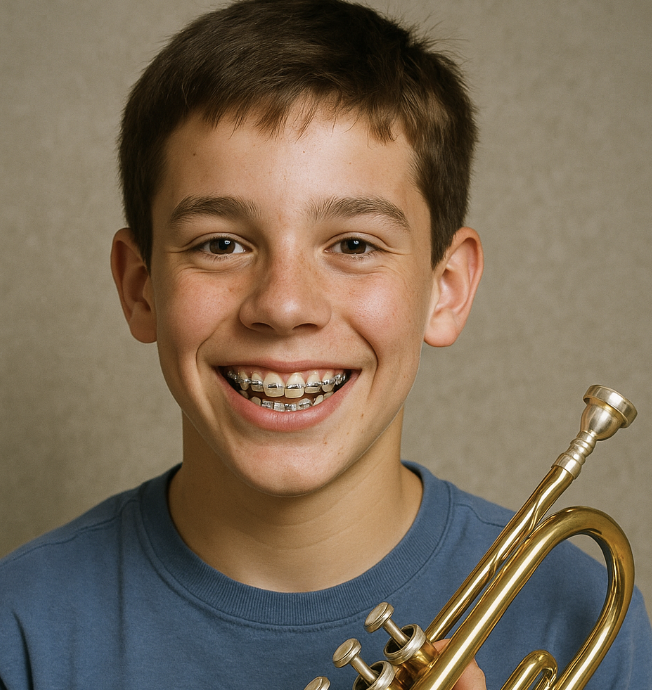
How to Play the Trumpet with Braces

Trumpet and Braces

You Got Braces—Now What Should You Do About Playing Trumpet?

Braces can temporarily change how the trumpet mouthpiece feels, but most students can continue playing successfully by adjusting gradually, avoiding excessive pressure, and working closely with their orthodontist and trumpet teacher.

Quick Answer

After getting braces, follow your orthodontist’s instructions and return to trumpet gradually. Begin with short, gentle practice sessions at a comfortable volume rather than immediately attempting long rehearsals or high notes.

Use orthodontic wax when brackets irritate the lips, avoid pressing the mouthpiece hard against the braces, and stop playing when you experience significant pain, cuts, or bleeding.

Playing trumpet with braces presents a temporary adjustment, not the end of a student’s musical progress. The brackets can make the inside of the lips and cheeks feel tender, particularly after braces are first placed or adjusted. The mouthpiece may also feel different because the surface behind the lips has changed. With patience, careful practice, and appropriate professional guidance, students can usually adapt and continue developing as trumpet players.

What Should You Do During the First Few Days?

The mouth may be tender immediately after braces are placed or tightened. Follow the orthodontist’s instructions about soreness, wax, cleaning, food, and when normal activities may be resumed.

When playing feels comfortable enough to begin, start with a few minutes of easy notes at a soft or medium-soft volume. Gradually increase the length of practice as the lips adapt.

Seven Tips for Playing Trumpet with Braces

Every student’s orthodontic treatment is different, so these suggestions should be used together with advice from the student’s orthodontist and trumpet teacher.

1
Return to Playing Gradually
Begin with easy middle-register notes, gentle long tones, and simple melodies. Avoid trying to prove that nothing has changed by immediately playing loudly, practicing for a long time, or forcing the upper register.
2
Use Less Mouthpiece Pressure
Excessive pressure pushes the lips against the brackets and can increase discomfort. Support the instrument with the hands, keep the corners of the mouth firm but not rigid, and let the air do more of the work.
3
Use Orthodontic Wax When Needed
Orthodontic wax can cover brackets or wires that rub against the inside of the lips and cheeks. Use it according to the orthodontist’s directions, particularly after an adjustment or when a particular bracket is causing irritation.
4
Practice Softly at First
Soft and medium-soft playing encourages efficient air and reduced pressure. Begin with a comfortable sound rather than chasing volume, endurance, or high notes before the embouchure has adjusted.
5
Take Frequent Breaks
Several short periods of playing may be more comfortable than one long practice session. Rest before the lips become swollen, deeply marked, numb, or painful.
6
Maintain Excellent Oral Hygiene
Brackets and wires create additional areas where food and plaque can collect. Follow the dentist’s or orthodontist’s instructions for brushing, flossing, rinsing, and cleaning around the braces.
7
Communicate with Both Professionals
Tell the orthodontist that the student plays trumpet and tell the trumpet teacher about the orthodontic treatment. The orthodontist addresses the health and condition of the braces, while the teacher helps adjust technique and practice expectations.
Do Not Make Major Equipment Changes Too Quickly
Do not assume that braces require a completely different mouthpiece. Discuss mouthpiece changes with an experienced trumpet teacher before purchasing new equipment.

A Gentle Practice Plan After Getting Braces

The exact schedule should be adjusted according to comfort and professional advice.

Step 1: Easy Air
Take relaxed breaths and release a smooth stream of air without the trumpet.
Step 2: Middle Notes
Play a few comfortable notes without pushing for range or volume.
Step 3: Long Tones
Hold short, gentle tones while concentrating on steady air and reduced pressure.
Step 4: Easy Music
Finish with a familiar melody that stays in a comfortable register.

Return to Basic Trumpet Fundamentals

Braces may temporarily affect range, endurance, articulation, and tone. This is a good time to concentrate on relaxed breathing, steady air, clear attacks, moderate dynamics, and a centered sound.

Long tones and simple scales can be useful, but they should not be continued through significant pain. Comfort and efficiency are more important than completing a predetermined number of minutes.

When Should a Trumpet Player Stop and Ask for Help?

Stop playing and seek guidance when there is significant pain, repeated bleeding, a cut that is not healing, a loose wire, a broken bracket, swelling, numbness, or a sudden change that makes the mouthpiece unusually uncomfortable.

Dental and orthodontic problems should be discussed with the orthodontist. Playing-technique questions should be addressed by the trumpet teacher.

What Happens After Each Orthodontic Adjustment?

Students may experience temporary tenderness after braces are tightened or adjusted.

Helpful Adjustments
  • Shorten practice temporarily
  • Play in the comfortable middle register
  • Use softer dynamics
  • Take more frequent breaks
  • Use orthodontic wax as directed
  • Tell the teacher when an adjustment affects playing
Things to Avoid
  • Forcing high notes through discomfort
  • Pressing the mouthpiece harder
  • Ignoring cuts or bleeding
  • Playing until the lips become numb
  • Changing mouthpieces without guidance
  • Attempting to repair wires or brackets yourself

Be Patient with Temporary Changes

The sound may feel less stable for a while, and familiar notes may require a slightly different approach. That does not mean the student has lost the ability to play trumpet.

Progress may temporarily slow while the embouchure adapts. Consistent, comfortable practice is more useful than forcing the student to sound exactly as before.

Frequently Asked Questions About Trumpet and Braces

These answers address common concerns from young trumpet players and their parents.

Can you still play trumpet with braces?
Yes. Many students continue playing successfully, although they may need time to adjust their embouchure, pressure, range, endurance, and practice routine.
How soon can a student play after getting braces?
Follow the orthodontist’s instructions and begin when playing is comfortable enough. Resume gradually with short, gentle sessions rather than returning immediately to a full rehearsal schedule.
Does orthodontic wax help trumpet players?
Wax can cover brackets or wires that irritate the lips and cheeks. Students should use it according to instructions from their orthodontist.
Will braces reduce a student’s high range?
The upper register may temporarily feel more difficult because the mouthpiece and lips interact differently. Range should be rebuilt gradually without excessive pressure.
Should trumpet players change mouthpieces after getting braces?
Not automatically. Technique and comfort should be evaluated first. Any equipment change should be discussed with an experienced trumpet teacher.
What happens when the braces come off?
The embouchure may need another period of adjustment because the surface behind the lips has changed again. Students should rebuild comfort, range, and endurance gradually.

Beginning Trumpet Books for Young Musicians

Explore trumpet books designed to help young students develop note reading, rhythm, fingering, breathing, tone, and confidence through clear instruction and familiar music.

Explore Trumpet Books
The Bottom Line
Braces can temporarily make trumpet playing less comfortable, but they do not have to end a student’s musical progress. Follow the orthodontist’s instructions, return to playing gradually, reduce mouthpiece pressure, use wax when appropriate, take frequent breaks, and communicate with the trumpet teacher. Patience and careful fundamentals will help the student adjust and continue making music.
Scroll to Top